
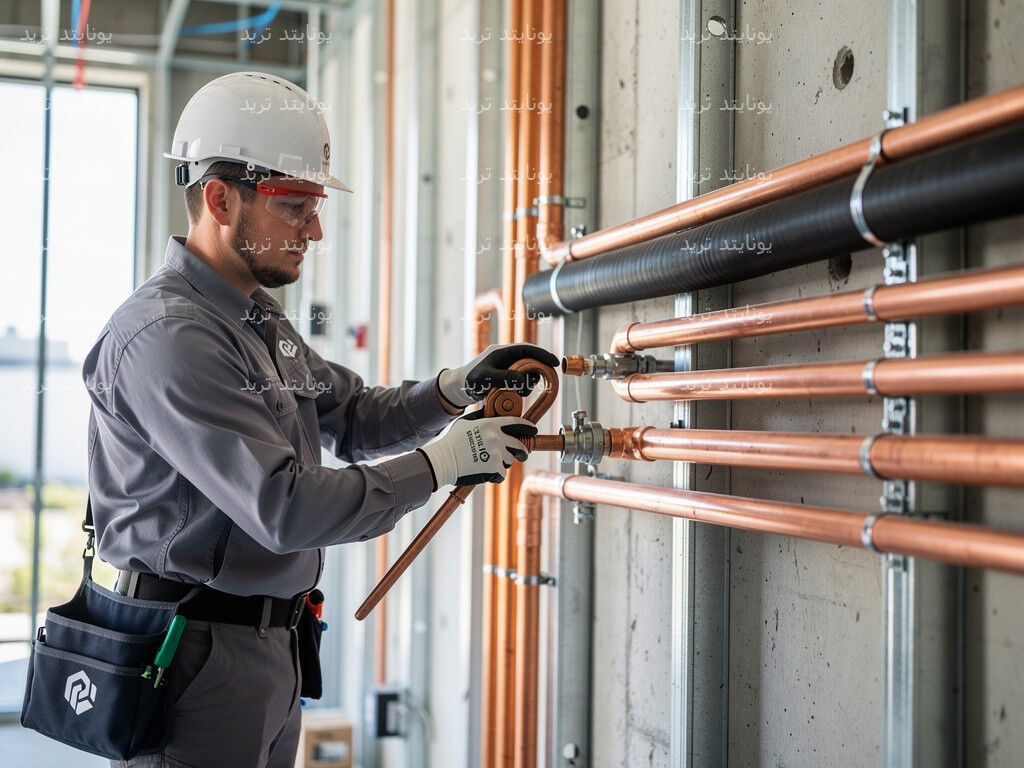
Extending the air conditioning ducts represents the essential foundation that ensures the stability of the refrigeration cycle and protects the mechanical compressor from premature damage. This technical guide explains all the standard requirements and field steps for choosing diameters, applying thermal insulation, and testing pressures with extreme precision. Here you will gain integrated applied knowledge that increases cooling efficiency and reduces electrical energy consumption in the long term.
Quick Answer: What are the basic conditions for a successful extension?
Air conditioning duct extension is an engineering path to transfer refrigerant gas between the indoor and outdoor units with minimal pressure drop and ideal flow speed for oil return. For its success, it is necessary to use pure copper tubes insulated with elastomer with sufficient thickness, avoid sharp bends, and pressurize the system with dry nitrogen gas to completely ensure that it is free of any leaks.
The importance of choosing the appropriate diameters for the Freon paths
Pipe diameters determine the speed of refrigerant flow and the efficiency of the lubricating oil's unhindered return to the compressor. Therefore, choosing a diameter that is too small will choke the gas flow and overheat the engine. In contrast, the larger diameter causes a sharp drop in gas velocity, which prevents the oil deposited inside the evaporator from being swept away.
Accurate calculations depend on the estimated cooling capacity in tons and the total path length between the units. Furthermore, you should always refer to the manufacturer's catalog to determine the liquid line and suction line measurements very accurately. This engineering compatibility extends the life of all mechanical components.
Stages of implementing a copper network in detail
A successful route requires following a strict execution sequence that prevents any clogging or internal contamination. Therefore, you must start by cleaning the site and identifying penetration points in the structural walls very carefully.
- Determine paths with the shortest possible distance while avoiding sharp bends at a ninety degree angle.
- Cut the pipes using a dedicated cutter to prevent deformation of the circular section of the pipes.
- Clean the inner edges of the copper pipe with a deburring tool to avoid blocking the expansion valve.
- Apply thermal insulation to each cooling line separately before mechanical connection.
- Install metal supports at regular intervals to prevent vibrations resulting from compressor operation.
Moreover, this arrangement ensures that the pipes are protected from direct contact with the concrete walls. As a result, the system remains protected from continuous mechanical stresses throughout its operation.
Thermal insulation standards for suction and liquid lines
Proper thermal insulation prevents water vapor condensation on the outer surfaces of the pipes, protecting suspended ceilings from damage. For example, closed-cell flexible foam insulation is the ideal choice to resist absorption of atmospheric moisture. It should be noted that cold intake line insulation keeps the return gas cool and protects the engine from overheating.
In addition, the liquid line and the suction line should never be combined within a uniform thermal insulator. Direct thermal contact between the two lines leads to unwanted heat exchange that reduces the efficiency of the refrigeration cycle by significant proportions. The joints should also be sealed with a specialized, moisture-resistant adhesive tape to avoid hot air infiltration.
Comparison of specifications of copper pipes used in refrigeration
| Technical standard | Certified American Brass | Korean standard copper | Commercial copper of unknown origin |
|---|---|---|---|
| Purity percentage | 99.9% pure oxygen-free copper | 99.7% high quality copper | Less than 95% with metal impurities |
| Wall thickness | Conforms to ASTM B280 standard specifications | Regular medium thickness | Irregular thickness and prone to punctures |
| Resistance to high pressures | Withstands Freon R410A pressures exceeding 600 lbs | Holds up to 450 psi | Weak and susceptible to cracking when flanging |
| Flexibility when bending | Excellent flexibility without choking the duct | Good flexibility with bending tools | Solid and susceptible to breakage quickly |
| Expected life span | Over 25 years of age in hard working conditions | It ranges between 15 and 20 years | Less than 5 years with high risk of leakage |
Air vacuum and nitrogen pressure testing procedures
The pressure test represents the most important basis for detecting welding defects or loose nuts before shipping the system. Therefore, dry, moisture-free nitrogen gas is pumped at pressures up to 400 psi for 24 continuous hours. The stability of the pressure gauge indicator is conclusive evidence that the air conditioning piping extension lines are safe and free of vents.
Immediately after the successful pressure test, the vacuum stage comes using a specialized vacuum pump to extract air and moisture. In other words, moisture trapped inside the circuit creates harmful acids that react with the lubricating oil and burn out the compressor coils. Vacuuming continues until the digital gauge reaches a reading of less than 500 microns to ensure complete dryness.
These technical installations are directly integrated with the stage Air conditioning installation According to engineering principles, installing the internal and external units requires precise balancing and tight connections that prevent any leakage. Adjusting the drainage paths and ensuring proper electrical supply in this step ensures that the system operates with the highest operational efficiency and longest lifespan.
Common errors that lead to failure of the cooling system
Some unprofessional practices at work suddenly reduce operational efficiency. Furthermore, these problems can be avoided by strictly following engineering controls.
The first construction phase requires the implementation of works Establishing pipes Cooling according to well-studied geometric paths that avoid sharp bends and reduce heat load losses. This includes installing copper circuits within protected ducts before pouring concrete or finishing finishes to ensure ease of future maintenance and prevent Freon gas leakage under high pressures.
After installation is completed, the system requires a periodic schedule for procedures Preventive air conditioning maintenance Ensures sustained heat exchanger efficiency and accurately monitors refrigerant levels. Continuous inspection of electrical and mechanical parts contributes to avoiding sudden malfunctions and maintaining the life of the device with minimal energy consumption.
Maintaining the efficiency of the extended system requires implementing a plan Regular air conditioning maintenance It relies on careful mechanical inspection and early detection of refrigerant gas leaks. This preventative measure helps address cooling capacity decline and adjusts operating pressures, protecting the compressor from fatigue and reducing emergency repair costs in the long term.
Maintaining the integrity of walls and architectural finishes requires adherence to the principles of advance planning of cooling paths, as it ensures reliance on standards Air conditioner copper extension Avoid problems with cooling media leakage and protect devices from sudden drops in performance. This precise engineering foundation also reduces routine maintenance burdens and ensures sustainable operational efficiency in the long term.
The first construction phase requires implementation Establishing pipes Air conditioning with geometric precision that takes into account the paths of the walls and avoids sharp bends that impede the flow of the refrigerant. This includes choosing appropriate copper thicknesses and permanently installing insulators before finishing work to ensure that Freon does not leak in the future.
To ensure the sustainability of this system after the completion of construction equipment, the importance of implementing procedures is highlighted Regular air conditioning maintenance Includes cleaning filters and monitoring refrigerant charges to avoid engine stress. Periodic inspection of mechanical and electrical units contributes to early detection of any leaks in the piping network and avoids sudden malfunctions. This preventive commitment is directly reflected in reducing energy consumption and extending the lifespan of the entire device.
The efficiency of the system does not stop at the limits of proper establishment, but rather the sustainability of performance requires action Regular air conditioning maintenance To detect any minute leaks in the cooling medium and treat blockages early. This continuous inspection ensures that heat exchangers are cleaned and pressure levels are adjusted to protect the compressor from excessive operational stress.
The next stage requires the application of a precise engineering protocol when Air conditioning installation To ensure that the indoor and outdoor units are installed in perfect alignment to prevent vibrations and water leakage. This includes mechanically tightening the valves and completely emptying the circuit of air and moisture before releasing the refrigerant to achieve the highest energy efficiency rates.
The first construction phase requires careful attention to the cross-feeding paths Establishing cooling pipes Inside the walls and ceilings according to studied engineering trends that prevent the accumulation of oils and ensure ease of subsequent maintenance. Executing this step carefully protects the air conditioning network from bottlenecks and ensures the smooth flow of the refrigerant compound between the indoor and outdoor units.
The next stage requires executing an operation Professional air conditioning installation Ensures that the indoor and outdoor units are installed in precise alignment and ensures efficient Freon drainage. This proper mechanical adjustment helps avoid operational vibrations and ensures quietest airflow within the required space.
- Manually bending pipes without using a mechanical bender, which causes a choke that raises the flush pressure.
- Using a direct welding flame without passing nitrogen gas, which creates a black oxidation layer that clogs the filters.
- Leave the ends of the pipes open during construction work, allowing dust and cement residue to enter.
- Exceeding the permissible lengths of the vertical path without placing regular oil traps every five metres.
- Neglecting to install plastic hoses to protect electrical signal cables extending next to cooling pipes.
As a result, addressing these errors ensures that complex failures are avoided in the future. It should be noted that regular inspection prevents the exacerbation of small problems and conserves energy.
Frequently asked questions about cooling paths
What is the maximum length allowed when extending air conditioning ducts?
The maximum depends on the manufacturer's specified device capacity, but is usually between 15 and 25 meters in home split units. On the other hand, exceeding these distances requires adding additional amounts of oil, carefully calculated Freon charges, and installing oil traps to maintain the engine.
How does pipe diameter affect electricity consumption efficiency?
Using inappropriate diameters increases the mechanical load on the compressor, forcing it to draw a higher electrical current to reach the required temperature. Therefore, adherence to factory measurements ensures a smooth flow that reduces consumption by up to 15%.
Can copper pipes be buried directly inside walls without a protective case?
It is prohibited to bury pipes directly under layers of cement mortar because building salts cause rapid chemical corrosion of copper metal. Therefore, cooling lines must be run inside rigid UPVC plastic conduits to protect them and facilitate future maintenance.
When should an oil trap be installed in vertical lines?
An oil trap must be implemented when the outdoor unit is located more than three meters higher than the indoor unit. This trap helps collect the oil and gradually draw it out with the flowing gas stream, preventing it from remaining stagnant at the bottom of the internal evaporator.
Why are the suction line and liquid line isolated separately?
Each line is individually insulated to prevent heat transfer between the warm fluid line and the cold intake line. This engineered separation maintains maximum cooling power and prevents the formation of dew drops that cause dampness to walls and damage to interior decorations.
What is the difference between silver soldering and regular copper soldering in extensions?
Silver solder wire contains between 2% and 15% of pure silver metal, which gives it excellent fluidity and withstands high pressures and vibrations. In contrast, ordinary copper welding is characterized by fragility and is susceptible to cracks at connection points subject to constant stress.
Extending air conditioning ducts requires high professionalism, starting with careful selection of copper thickness and ending with mechanical tests to ensure that the path is free of leaks. Apply sound technical standards and use certified technicians to protect your investment and ensure clean, cool air flow for many years.
















Community dialogue
0 comments