
Common mistakes while laying pipes and how to avoid them
Many technicians and consumers are exposed to serious errors during the installation process that directly affect the efficiency of the air conditioner. Avoiding these errors saves a lot of future maintenance costs and ensures a longer life for the system.
- Severe bending and bending: This error occurs when pipes are bent manually without using a zipper or a designated bending tool, which causes narrowing of the Freon gas channel and leads to compressor fatigue.
- Not cleaning the pipes from the inside: Neglecting to wipe the pipes or covering their ends during installation allows dust and moisture to enter, causing the expansion valve to become clogged.
- Excessive tightening of the nuts: Tightening the nuts with excessive force leads to cracking of the copper flange (flaring) and the occurrence of a slow gas leak that is difficult to detect quickly.
Comparison table between virtual and buried extension styles
The method of foundation varies based on the nature of the building and the available budget. The following table shows the basic differences between extension inside the walls and extension outside:
| Comparison | Buried extension (inside the wall) | Virtual extension (external) |
|---|---|---|
Occupational safety guidelines while working
It requires an operation installation Pipes Copper Adherence to strict safety standards to protect the technician and the place from potential dangers, especially when using heat welding tools and high gas pressures.
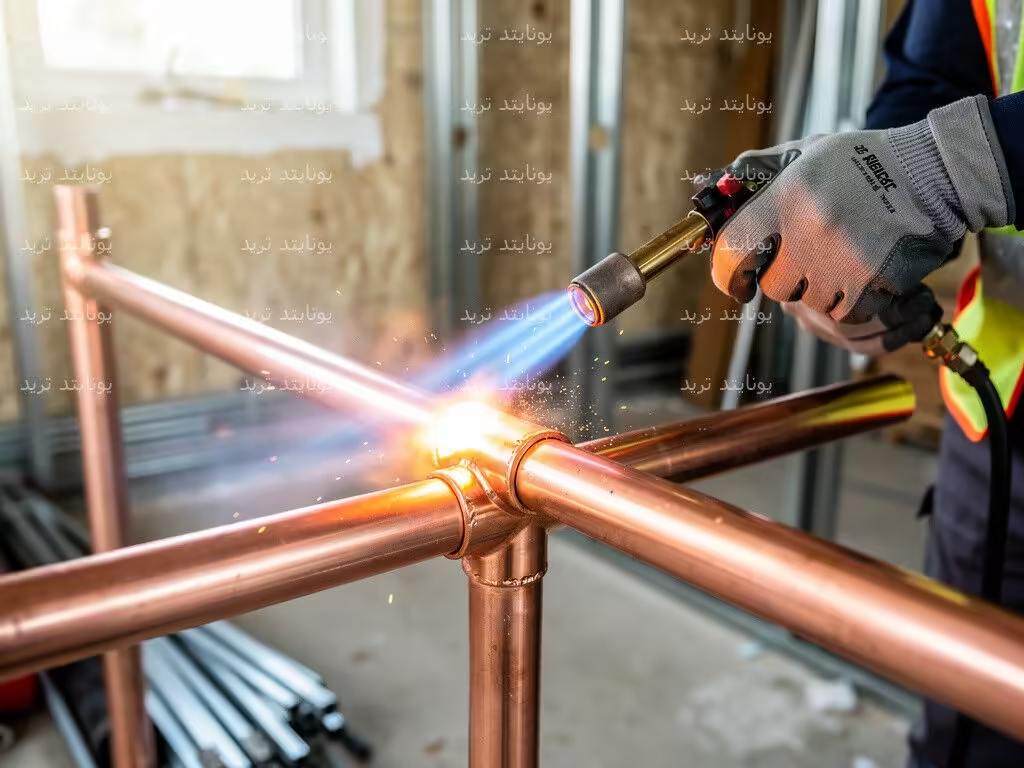
- Wear protective gloves and safety glasses during the welding process to prevent sparks or high heat from hurting the eyes and hands.
- Provide a fire extinguisher close to the work area, especially when welding near flammable materials such as polyurethane insulation or wood.
- Ensure that the place is well ventilated to avoid inhaling gases resulting from the burning of flax or oil residues inside the pipes.
- Use a nitrogen gas pressure regulator and do not connect the pressure cylinder directly to the network to avoid bursting pipes due to sudden high pressure.
practical installation Pipes Copper is the cornerstone of modern HVAC systems, and the performance of the entire device depends on the integrity of these copper paths. Carrying out this task according to precise technical standards ensures that there is no leakage of Freon gas, which maintains cooling efficiency and extends the life of the compressor. In this guide, we will review the professional steps and field methods followed by expert technicians to ensure a perfect installation that is not affected by weather factors or operational stresses.
Quick answer
installation Copper piping is a precision joining process for refrigerant pipes using silver welding and thermal insulation techniques to prevent refrigerant gas leakage. The process is done by choosing the appropriate diameter of the pipes, then bending them flexibly, and finally welding the connections tightly to ensure a completely closed cooling circuit.
The importance of choosing copper ores and their specifications
The quality of extensions depends primarily on the quality of the material used, as the use of poor-quality copper inevitably leads to the formation of pinholes over time. Copper intended for air conditioning systems must have high flexibility (annealed copper) that allows it to be bent without cracking or breaking.
Quality standards in pipes
Pipes must comply with global standards such as ASTM B280, which specifies the copper purity and wall thickness required to withstand high pressures. The professional technician always makes sure to inspect the pipes for any burrs or scratches before starting the installation process, because any minor defect may turn into a weak point under constant operating pressure.
The role of thermal insulation in extension efficiency
Thermal insulation (Armaflex) is not a secondary option, but rather an integral part of the system installation Copper pipes to prevent condensation. Water condensation that occurs as a result of the temperature difference between the cold gas and the surrounding atmosphere leads to rust in pipes and damage to walls and ceilings. Therefore, every meter of pipe must be covered with insulation of appropriate thickness, making sure to close the joints with a special adhesive tape to prevent moisture leakage.
Professional path extension steps
The process begins by drawing the pipe path in a geometric manner that reduces the number of sharp bends that may impede the flow of refrigerant gas. The straight and direct path is always the best choice; Because it reduces pressure loss and makes future maintenance easier for technicians.
Necessary installation tools
- Tubing Cutter to ensure even cuts.
- Spring Bender to prevent narrowing during bending.
- Pipe expansion device (Swaging Tool) to connect the pieces together.
- Oxy-acetylene soldering torch for making strong connections.
- Metal file to remove any feathers resulting from cutting.
Correct bending method
Do not use excessive force when bending copper, but rather use special bending tools to keep the inner diameter of the tube constant. Any narrowing of the diameter reduces the efficiency of heat exchange and places undue additional stress on the compressor, which may lead to premature failure of the entire device.
Requires implementation of steps installation conditioning The air is supplied with extreme precision and adherence to engineering standards to ensure the safety of the entire cooling cycle. Failure to properly handle copper lines and insulation reduces the quality of cooling and may cause premature compressor failure.
The first construction stage requires extreme precision, as proper procedures begin with proper planning of cooling paths and choosing appropriate diameters for the walls. The completion of the process Installing air conditioning ducts According to engineering standards, it prevents any future blockages and maintains the stability of the refrigerant flow with high efficiency.
It requires an operation installation air conditioning Following precise engineering standards, from choosing the appropriate copper path to tightening the electrical and mechanical connections. Adhering to these steps will help avoid problems of poor cooling and compressor damage, giving you stable performance and optimal airflow within the room.
Maintaining cooling efficiency requires action Regular air conditioning maintenance For early detection of any blockage or leakage in gas lines that may result from poor installation. Regular inspection helps address low Freon pressure and cleans filters and condensers to ensure the system operates at the highest possible performance without stressing the compressor.
Achieving optimal cooling system performance requires following... steps installation Air conditioner pipes With extreme precision to reduce pressure loss and ensure smooth flow of the refrigerant compound. This begins with proper planning of copper paths and avoiding sharp bends that may impede the movement of Freon between the indoor and outdoor units. Adherence to technical standards during connection and tight insulation also ensures protection of the circuit from leaks and significantly increases the efficiency of energy consumption.
After preparing the tracks and carefully extending the pipes, comes the stage of installing the internal and external units and carefully adjusting their balances to avoid any future vibrations. Follow the steps installation air conditioning A properly engineered method ensures ideal cooling efficiency and significantly reduces electrical energy consumption in the long term.
Severe tapping and bending of copper piping prevents proper refrigerant flow, placing stress on the compressor and reducing overall cooling efficiency. To avoid this problem, be careful when using tools Bend pipes Specialized instead of random manual bending, which ensures a smooth flow of liquid and protects the device from sudden malfunctions.
The efficiency of the refrigeration cycle depends entirely on the accuracy of the work carried out Installing air conditioning ducts Copper and choose shorter and less curved paths inside the walls. Commitment to good thermal insulation and using diameters that match the manufacturer’s specifications prevents refrigerant leakage and maintains ideal system pressure.
Deadlift and sharp bending: This error occurs when... Bending copper pipes At narrow angles without using proper twisting tools, which reduces the refrigerant flow area and leads to excessive pressure on the compressor. To avoid this problem, it is necessary to adhere to a safe bending radius and use specialized bending tools that ensure that the inner diameter of the pipes is maintained without deformation.
The efficiency of the cooling system depends entirely on the accuracy of pre-planning of cooling paths and drainage networks during the construction phase. The implementation of the process Installing air conditioning ducts According to sound engineering standards, problems with Freon leakage and poor insulation are prevented in the future. Choosing the appropriate diameters and thicknesses of copper also contributes to protecting the compressor and ensuring the highest performance of the device.
Safe welding and bonding techniques
Brazing is the most dangerous and most important stage in... installation Copper pipes, which require high manual skill to obtain a homogeneous and strong connection. Pipe ends should be cleaned well before welding with a wire brush to remove any oxidation that may prevent the welding material from bonding, which should be at least 5% to 15% silver to ensure durability.
It requires an operation Air conditioning installation Following precise engineering standards, starting with choosing the appropriate location for the two units and installing them securely. Adherence to the principles of proper conduction and good insulation prevents the leakage of Freon gas and ensures highly efficient air distribution throughout the place.
Ensuring impurities do not penetrate
It is necessary professional practice to pass dry nitrogen gas into the pipes during the welding process. This procedure prevents the formation of oxide layers inside the pipe as a result of high temperature, and if these impurities are left inside the pipes, they will later move to the expansion valve and cause its blockage.
Comparison table between extension methods
| Extension method | Features | Disadvantages |
|---|---|---|
| Direct extension | Less expensive, easier to inspect | Prone to breakage if not protected well |
| Extension inside walls | Aesthetic appearance, high protection | Difficulty detecting leaks in the future |
| Use of mechanical connections | Fast, no welding required | Higher possibility of leakage with vibration |
Frequently asked questions
How do I ensure the quality of copper pipe installation?
The quality is confirmed by conducting a pressure test using nitrogen gas for a period of no less than 24 hours. If the pressure indicator remains constant without any decrease, this means that the extensions are intact and tight.
Can used copper pipes be used?
It is never recommended to use used pipes as they may contain internal impurities or invisible micro-cracks. New piping ensures that the circuit is free of moisture and old oil that may harm the compressor.
Why should copper pipes be insulated?
Insulation prevents the phenomenon of condensation that causes water to drip into the room. It also keeps the refrigerant temperature from being lost as it moves from the outdoor unit to the indoor unit.
What is the difference between silver soldering and regular soldering?
Silver welding is characterized by its high ability to withstand pressures and vibrations resulting from air conditioning operation. Ordinary solder or tin cannot withstand high Freon gas pressures and may break quickly.
What is the appropriate diameter of the pipes for air conditioning?
The diameter of the pipes is determined based on the air conditioning capacity (tons of cooling) and the length of the distance between the two units. Always refer to the device manufacturer's instruction manual for the exact size.
Technical evaluation of practices box
| Standard | Rating |
|---|---|
| Quality of materials used | 5/5 |
| Pressure test accuracy | 4.5/5 |
| Insulating extensions | 4.5/5 |
| Welding proficiency | 5/5 |
| Overall evaluation | 4.8/5 |
In conclusion, investing in proper copper pipe installation remains the wisest option to avoid frequent maintenance breakdowns. Always make sure to deal with specialized technicians who follow the aforementioned engineering protocols to ensure the operation of a sustainable and effective cooling system for many years.
















TQTAG76 Community dialogue
0 comments