
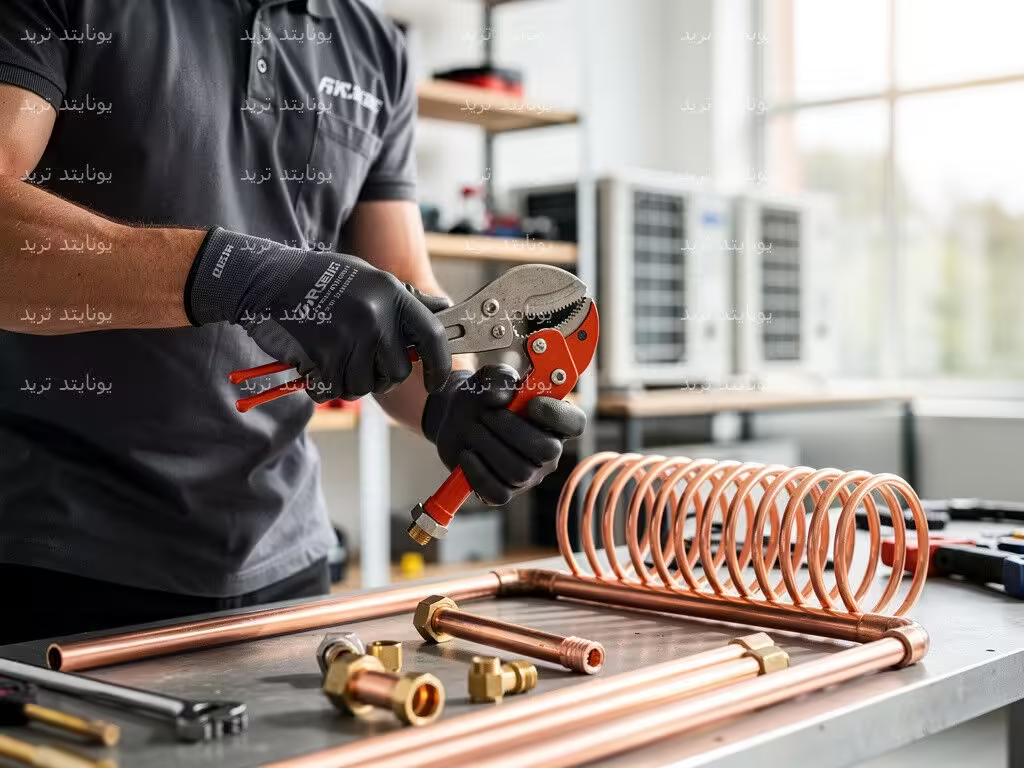
The installation of copper pipes represents an essential pillar in the construction of cooling systems and advanced fluid transportation networks, due to this material’s superior ability to withstand high pressures and resist chemical corrosion. This application guide aims to provide you with technical standards and direct field steps to carry out extension works without errors, ensuring maximum operational efficiency of your home or industrial equipment and saving future maintenance costs.
Quick answer
Copper piping installation is an engineering process intended to connect cooling or water lines through defined paths using precise cutting, welding and insulating techniques. This procedure is characterized by ensuring proper flow of media under different pressures and completely preventing chemical or thermal leaks. Successful installation depends on the use of appropriate diameters, application of silver solder at controlled temperatures, complete vacuuming and pressure testing with nitrogen prior to actual commissioning.
Choosing pipe sizes and thicknesses according to operating requirements
Determining the appropriate diameter to calculate coolant flow rates requires consideration of gas pressures and the vertical and horizontal distances between different units. Using a diameter that is too small leads to an increase in fluid friction and a decrease in the efficiency of the system, while an excessive diameter causes a decrease in the speed of movement of the lubricating oil within the engine return lines.
Copper pipes are commercially classified into three basic grades that differ in terms of wall thickness and ability to withstand mechanical stresses. The thicker type is preferred for the high pressures associated with modern Freon gases, while the medium type is suitable for hot water installations and typical central heating networks within residential buildings.
Comparison of copper pipe types common in installations
The professional technician relies on an objective comparison to choose the appropriate pipe for each operational environment, as not all types are equal in wall thickness or functional use. The following table shows the fundamental differences between the most popular categories used in engineering:
| Tube class | Wall thickness | Pressure tolerance level | Main use |
|---|---|---|---|
| Type K (green) | Very thick | Very high (above 40 bar) | Underground installations, high pressures and heavy cooling lines |
| Type L(Blue) | Medium thickness | High (suitable up to 30 bar) | Residential air conditioning installations and public internal water networks |
| Type M (red) | Thin wall | Low to medium (below 20 bar) | Central heating lines and light water installations only |
Mandatory tools and equipment before embarking on the extension
Site preparation requires specialized equipment to ensure that jobs are completed reliably, as random replacements damage fragile pipe walls. Investing in proper equipment ensures accuracy of work, speed of execution, and protection of the technician during heat treatments.
- Rotary pipe cutter with sharp blade to avoid crushing the circular pipe section during mechanical cutting.
- A scraping and edge reaming tool to remove internal mineral deposits that may impede fluid flow.
- A mechanical pipe bender or bending spring intended to prevent wall snapping while forming bends.
- Oxy-acetylene soldering kit with silver rods and fusing aid to secure connections.
- Flare device for forming conical edges when needed to attach to threaded nuts without welding.
Steps to prepare and prepare the tracks before installation
The first stage begins by determining the shortest and least complicated path between the starting point and the end point, while reducing sharp turning angles to avoid pressure drops. As a result, less stress is put on the air conditioning compressor or flow pumps, ensuring stable performance over the long term.
In addition, walls should be cleaned and rubber-coated metal pipe stands installed at regular intervals not exceeding one and a half meters to reduce vibrations. These holders prevent direct contact of copper with other metals, eliminating galvanic corrosion causing microscopic leakage holes.
Practical stages of carrying out the installation of copper pipes accurately
Correct technical practice is based on a linear sequence that prevents structural deformations in metal pipes throughout the period of use. The following sequence shows the standard arrangement for implementing mechanical and thermal connections with high efficiency:
- Cut the pipe at exactly right angles using the rotary cutter, rotating it slowly to prevent distortion of the diameter.
- Remove internal and external feathers with a scraper to ensure a smooth surface that does not cause friction to the refrigerant gas.
- Form the required bends slowly and steadily using the mechanical bending tool without causing any wall sagging.
- Clean the overlap terminals with a non-metallic abrasive sponge to remove surface oxidation layers before heating.
- Perform neutral flame welding with dry nitrogen gas pumped at low pressure into the tube to prevent internal charring.
- Cool the welding area gradually in the open air without pouring water suddenly to avoid brittleness of the welded metal.
Thermal insulation procedures and network pressure tests
Insulation represents the first line of defense to prevent atmospheric moisture from condensing on external surfaces and to avoid loss of thermal energy during operation. Therefore, closed-cell foam insulation with a thickness of at least nine millimeters is used and the joints are sealed with moisture- and weather-resistant adhesive tapes.
It requires an operation Air conditioning installation Air High engineering precision in determining the locations of the indoor and outdoor units, to ensure ideal air flow and facilitate regular maintenance operations. It should also be ensured that electrical connections and cooling paths are carefully insulated to prevent moisture leakage or loss of cooling efficiency over time.
Furthermore, pressure testing is a mandatory step that detects any manufacturing defects or invisible holes before commissioning the equipment. Dry nitrogen gas is pumped at a pressure of up to thirty bar and left for twenty-four hours while monitoring the manometer indicator to verify the complete stability of the reading, followed by emptying the system via a vacuum pump to extract moisture and air.
The primary stage requires high geometric precision in work Establishing pipes Cooling inside walls and ceilings before completing final finishes. This advance planning ensures smooth paths and secure installation that protects the lines from mechanical vibrations and facilitates future maintenance.
The efficiency of cooling networks requires continuous monitoring and periodic inspection to ensure that cooling media does not leak through the various connection points. So they are procedures Air conditioning maintenance Periodicity is an absolute necessity to maintain stable mechanical stresses and prolong the lifespan of copper lines and related equipment.
The success of the entire system requires consideration of engineering principles when embarking on Air conditioning installation Air. Proper installation of indoor and outdoor units directly affects the cooling efficiency and compressor lifespan. Commitment to selecting appropriate locations and ensuring secure installation prevents mechanical vibrations and limits sudden electrical failures, ensuring balanced airflow and long-lasting operational stability.
He depends Successful establishment of copper networks We focus on engineering precision in choosing the appropriate diameters and applying professional welding techniques, which ensures ideal refrigerant flow and protects the compressor from premature failure. Adherence to the correct laying paths and advanced thermal insulation techniques directly contribute to reducing energy consumption by up to 20%, which enhances the sustainable operational efficiency of the entire system.
In this context, it requires a process Installing air conditioning ducts High accuracy in selecting appropriate diameters and determining short paths to ensure efficient refrigerant flow and reduce pressure loss. This procedure also requires careful insulation of the extensions to prevent moisture condensation and protect the network from direct weather factors.
The efficiency of the system does not stop only at the accuracy of the initial extensions, but also extends to periodic follow-up through the implementation of procedures Regular air conditioning maintenance Ensures stable refrigerant pressures and clean flow paths. This technical commitment protects the compressor from thermal stress and prevents micro-leaks that can degrade overall performance over time.
Sustaining the system's efficiency requires implementing periodic procedures that include checking refrigerant levels and cleaning evaporators and condensers to ensure smooth air flow. Sticking to a schedule helps Regular air conditioning maintenance It avoids potential leaks and protects compressors from premature damage, which significantly increases the efficiency of energy consumption.
It requires an operation Air conditioning installation Extreme precision in installing the internal and external units and adjusting the refrigerant flow paths to ensure the highest operational efficiency. Adhering to proper engineering standards during connection reduces energy consumption and avoids sudden malfunctions in the long term.
It requires a process Installing air conditioning ducts Great care is taken in choosing the shortest and least curved paths to ensure efficient Freon flow and reduce stress on the compressors. Correct installation also requires the use of durable protective covers and complete heat insulation to prevent condensation leakage and the pipes being affected by external weather factors.
The subsequent stage of preparing the piping network requires extreme precision in installing the internal and external units and adjusting their levels to ensure ideal cooling efficiency. Adherence to engineering standards during implementation is a step Air conditioning installation A crucial factor to prevent refrigerant leakage and ensure smooth airflow in the required space.
Catastrophic errors that negatively affect the safety of the system
Some technicians make the mistake of neglecting to pass nitrogen during welding, which leads to the formation of black carbon scales inside the tube that later separate and clog the micro expansion valves. It should be noted that this common error causes premature burnout of compressors and damage to the lubrication system.
On the other hand, excessive tightening of the copper nuts leads to the breakage of the flange flange and the appearance of gas leaks that are difficult to quickly identify. Therefore, a mechanical torque wrench should always be used to tighten connections within the limits recommended in engineering manuals for each specified diameter without arbitrary effort.
Frequently asked questions
What is the correct way to bend copper pipes without breaking them?
Customized mechanical benders are used for each diameter or external bending spring, applying a gradual and uniform compressive force. This method prevents buckling or sagging in the copper pipe wall and keeps the inner section smooth for fluid flow without resistance.
How to prevent water condensation around copper cooling lines?
This is achieved by wrapping each pipe with independent closed-cell elastomer foam insulation of sufficient thickness to maintain the temperature of the area. All cracks and joints must be closed with tight thermal tape to completely prevent moisture-laden air from penetrating the cold metal surface.
Why is nitrogen gas used during welding copper with silver?
Dry nitrogen flow into the pipe prevents oxygen from reacting with the hot copper, preventing the formation of black oxidation scales that contaminate the system. This step ensures that the inner surface remains clean and shiny, protecting expansion valves and actuators from future mechanical clogging.
Is the copper piping installation for a suction line different from a liquid line?
Yes, they differ in the approved diameter and level of thermal insulation, as the suction line is larger in diameter and requires superior thermal insulation to prevent condensation. In contrast, the liquid line has a smaller diameter and often requires thinner insulation depending on installation conditions and span distance.
When should copper pressure be checked after welding operations are completed?
The inspection is carried out after all the welding areas have cooled completely and reached normal room temperature to avoid contraction of the gas due to heat. Nitrogen is injected immediately and the mechanical indicator is monitored for 24 hours to ensure that there is no drop in pressure before charging the Freon.
Installing copper pipes according to sound technical principles provides the highest standards of mechanical safety and prevents costly gas leaks over the years. Always adhere to careful insulation and vacuuming procedures to protect your equipment, and start today by inspecting your installations to ensure they comply with these approved engineering standards.
















TQTAG76 Community dialogue
0 comments