
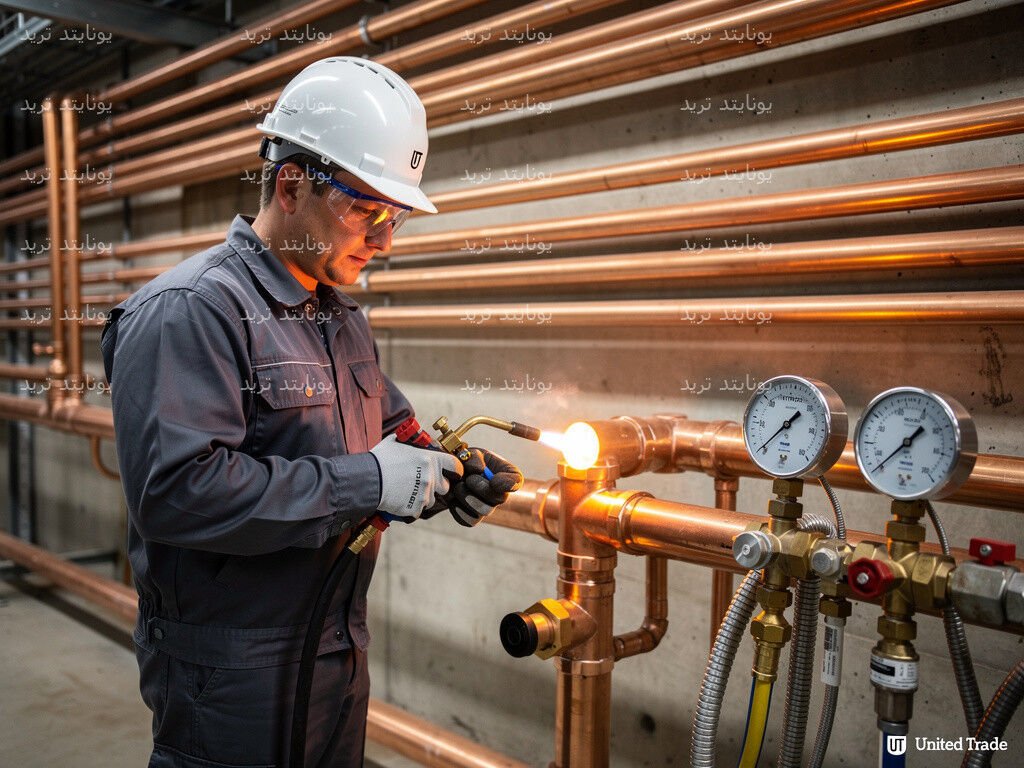
Installing copper pipes represents the basic foundation for ensuring the efficiency of cooling, heating and water supply systems without unexpected leaks. This field guide provides a summary of technicians’ practices in forming and installing copper lines, to help you create a durable network that will live for many years with the highest levels of structural and thermal safety.
Quick answer
Installing copper piping is a precise mechanical process that involves measuring routes, cutting the pipe, silvering the connections, and then pressure testing with dry nitrogen to ensure there are no leaks. This process requires careful cleaning of the ends and the use of specialized rubber insulators to prevent condensation and loss of thermal energy through the conveyor lines.
Tools and equipment necessary for field operations
Effective technical extensions require that a complete package of specialized tools be prepared before field work begins. Choosing the right tools contributes to reducing material waste and avoiding damage to pipe walls during handling.
Cutting and reshaping tools
Rotary pipe cutter: A sharp cutting tool that gives a flat pipe end without distorting the circularity of the cross-section. The use of a hand saw is prohibited because it leaves sharp metal inclusions that may clog the precision expansion valves.
Deburring reamer: A conical tool that removes internal metal excess resulting from the cutting process to facilitate the flow of liquids and gases. In addition, edge cleaning maintains the integrity of the weld path and the integrity of the mechanical joints.
Flame and gas injection devices
Heat bonding operations require an oxy-acetylene gas torch to ensure uniformly distributed, concentrated heat. Also, a dry nitrogen cylinder must be provided with an approved pressure regulator to pass an inert current that prevents the formation of black oxidation inside the extension during high heating.
Precision processing and cutting of copper tubes
The accuracy of the installation begins with the initial preparation of the pipe paths and determining their actual lengths with extreme engineering precision. Any slight error in measurement results in continued mechanical stress on the connection points after final installation.
- Take direct measurements between connection points using a flexible tape measure, adding overlap margins inside the connection sleeves.
- Install the hand cutter at the specified point and gradually rotate it in one direction while tightening the tension handle slowly to avoid crushing the outer wall.
- Use an edge scraper to empty the inner cavity of the metal filing, with the pipe opening facing downward to prevent the blades from falling inside.
- Sand the outside of the pipe end and the inside of the insert with oil-free wire pads to a pure metal shine.
Furthermore, the straightness of the cut should be checked before proceeding to the next stage to ensure that the pipe enters its full depth into the assembly joint.
Techniques for soldering and joining copper connections
Strong welding is the first line of defense against loss of coolant or fluid leakage under high operating pressures. Professional welding requires a thorough knowledge of the melting temperatures of alloys and the behavior of the metal under direct flame.
Application of silver welding technology
This method relies on heating the common overlap area between the pipe and the fitting until it acquires a faint cherry color that matches the temperature of the alloy used. As a result, the welding wire flows thanks to the capillary action and completely fills the microscopic void without the need to introduce a direct flame to the bonding material.
Avoid overheating the copper to avoid weakening its crystalline structure and making it brittle and susceptible to future cracks. For example, it is preferable to move the flame in balanced circular motions to ensure homogeneous heat distribution over the entire circumference of the circle.
Use mechanical connections by pressure
Mechanical snap connectors provide a safe and quick solution in locations where open flames are prohibited such as critical installations. The copper tube is inserted into a sleeve with built-in rubber rings, and a hydraulic press is then used to calibrate the connection to a pre-set standard precision.
Standards for insulation and installation of structural supports
The installation of copper pipes requires rigid mechanical support to prevent unwanted bends due to the weight of the installation or operational vibrations. Proficient insulation also ensures the stability of the system’s thermal efficiency and prevents condensation water from dripping onto the false ceilings.
- Installing two fixing jumpers lined with rubber layers, each distance not exceeding 1.5 meters for horizontal pipes and two meters for vertical pipes.
- Insulate copper suction lines using closed-pore flexible elastomer foam hoses of appropriate standard density.
- Cover the insulation joints with a specialized, moisture-resistant adhesive tape without putting too much pressure on the insulating material to reduce its effective thickness.
- Leave sufficient thermal expansion spaces at the corners to avoid tearing the copper lines as a result of continuous expansion and contraction with the change of seasons.
On the other hand, neglecting the rubber pads leads to direct electrochemical and tribological corrosion between the copper and the iron bases bearing the tracks.
Comparison of copper pipe welding alloys
Thermal bonding alloys vary according to the proportions of their constituent elements and their suitability for different operating pressures and applications within networks. The following table shows the most important engineering differences to choose the most appropriate alloy for your project:
| Alloy type | Basic components | Melting temperature | Recommended field use | Vibration resistance level |
|---|---|---|---|---|
| 15% silver alloy | Copper, phosphorus, 15% silver | 645 - 800 C | Air conditioning networks and industrial cooling lines | Very high |
| Phosphorus-copper alloy | Copper, 7% phosphorus | 710 - 820 C | Domestic hot and cold water networks | Medium |
| Tin-lead alloy | Tin, soft lead | 180 - 230 Celsius | Drainage extensions and low pressure water connections | low |
| silver alloy 45% | Silver, copper, zinc | 620 - 640 C | Bonding copper to various metals such as iron and steel | excellent |
Vacuum pressure and vacuum testing protocol
Testing the system with inert gas represents the most sensitive stage before charging the cooling media or releasing water into the network. This step ensures the detection of the smallest microscopic holes that are not visible to the naked eye to avoid sudden malfunctions.
It requires completion Efficient air conditioning installation High precision in connecting the copper network to the internal and external units to avoid any loss of the cooling medium. It is also necessary to insulate the lines tightly to ensure stable temperatures and protect the compressor from constant mechanical stress.
High nitrogen test
Dry nitrogen gas is gradually injected into the pipes through pressure measuring stations, reaching the approved pressure levels for the system. After that, the network is left under monitoring for a period ranging from 12 to 24 hours to verify that the meter indicator is accurately stable without any drop resulting from a leak.
The initial stage requires careful planning of extension paths and calculation of line diameters suitable for flow rates, as it ensures a step Establishing distribution pipes Avoid interference with other electrical and structural installations. Proper installation of insulators and clamps at this early stage also reduces vibrations and protects the system from future mechanical wear.
Proficient installations are only effective if they follow a regular service schedule Air conditioning maintenance Air, as continuous inspection helps discover any hidden Freon vent before it worsens. Regular cleaning of the heat exchangers also reduces mechanical loads on the compressor, ensuring high-quality cooling flow and keeping the copper connections safe from premature corrosion.
Requires implementation of Air conditioning duct extension Great care is taken in choosing the appropriate geometric diameters and thermal insulation paths, to ensure the stability of the refrigeration cycle and protect the mechanical compressor from sudden malfunctions. Adhering to sound technical standards while laying and installing copper lines helps avoid pressure drops and achieve maximum operational efficiency of the system.
The efficiency of the system does not depend only on the quality of the installations, but rather requires sustainability of performance Conduct periodic air conditioning maintenance To detect any mechanical defect or decline in refrigerant gas pressures early. This inspection includes reviewing the integrity of copper connections and cleaning the filters and evaporator to ensure airflow at the highest operating capacity possible.
The success of extensions requires careful care at some stage Establishing pipes The network, where the paths are determined and the wall openings are carefully prepared before laying the copper lines. This advance planning ensures that the pipes are protected from mechanical stresses and avoids any conflict with other structural connections within the building.
The efficiency of copper lines is not complete without implementing steps Regular air conditioning maintenance The system protects against blockage of Freon paths and accumulation of sediments inside the connections. This continuous check ensures that optimal pressure levels are maintained within the piping and avoids thermal stress that can shorten the life of the compressor.
The durability of cooling lines is not limited only to the quality of the initial connection, but their sustainability depends on the implementation Regular air conditioning maintenance Monitors gas pressures and the integrity of the thermal insulation surrounding the pipes. This regular inspection protects the network from moisture buildup and corrosion, ensuring that the system operates with the highest flow efficiency and lowest energy consumption.
It requires an operation Air conditioning installation Extreme precision in adjusting the paths of the Freon lines and installing the internal and external units to avoid any future vibrations. Tight thermal insulation of the refrigerant piping and air discharge from the entire circuit helps protect the compressor and achieve the highest operating efficiency of the device.
A correct start requires careful planning of feed paths and very careful identification of penetration points in walls and floors. Mastering the stage Establishing cooling pipes Plumbing prevents subsequent mechanical stresses and ensures the straightness of the lines and the ease of insulating them later. This pre-fitting significantly reduces the possibility of sharp bends that may impede the flow of liquids and gases.
It requires a stage Air conditioning installation With high precision matching the diameters of copper tubes to the pressure requirements of the refrigerant to ensure the highest levels of heat exchange. These paths should also be insulated with moisture-resistant materials to prevent condensation and protect the walls from long-term damage.
Microdetection foam is used on all solder joints as an additional audit during the initial testing period. Therefore, any decrease in the pressure reading requires re-scanning the connections carefully and correcting the defects immediately without hesitation.
Vacuuming moisture and air
The air and moisture intake stage comes via a two-stage deep vacuum pump to reach a negative pressure of less than 500 microns. This procedure ensures that moisture drops suspended inside the tube are completely evaporated and withdrawn to prevent the formation of harmful acids in the compressor oil in the future.
Common mistakes during installation of copper pipes and how to avoid them
Some technicians make operational errors that shorten the life of copper networks and incur huge losses in maintenance. It should be noted that most of these problems stem from negligence in applying safety instructions and cleaning internal lines.
The first mistake lies in bending pipes manually without using an external bending spring or a hydraulic machine designated for this purpose. Manual bending results in partial throttling of the flow path, which increases compressor stress and reduces overall efficiency.
The second mistake is neglecting to pass nitrogen gas during welding, which causes the accumulation of black carbon scales inside the pipes. In other words, these scales later drift away with the fluid movement and clog the fine filters and sensitive feeding holes.
Frequently asked questions
What is the best type of copper pipes for air conditioning extensions?
Type L and Type ACR seamless copper pipes are the best choice for refrigeration applications due to their ability to withstand high pressures and resist internal corrosion. These tubes also come cleaned, dried and sealed directly from the factory to protect them from environmental contamination.
How to bend copper pipes without snapping?
The pipe is bent using a hydraulic-mechanical bender for large diameters, or using a steel bending spring for small flexible diameters. This procedure gives external or internal support to the copper walls, maintaining the circularity of the cross-section and completely preventing buckling of the walls.
Why should nitrogen be used when welding copper pipes?
Inert nitrogen gas prevents the reaction of atmospheric oxygen with the hot copper surface, thus eliminating the formation of volatile black copper oxide within the tracks. This field procedure ensures that the network is kept clean and prevents clogging of sensitive expansion valves during operation.
Can copper pipes be mixed directly with iron pipes?
It is not permissible to bond copper to iron directly to avoid rapid galvanic corrosion resulting from the difference in the electrochemical properties of the two metals in the presence of moisture. To avoid this problem, non-metallic insulating connections (Dielectric Unions) that separate the two metals mechanically must always be used.
How long does the pressure test take after delivery is completed?
Nitrogen pressure testing usually takes a minimum of 24 continuous hours while measuring the ambient temperature and its effect on pressure. This sufficient period of time ensures that any microscopic gas leakage will be detected at all ported connection points.
What is the difference between solid copper pipes and soft copper pipes?
Soft conduits are highly flexible, allowing them to be easily bent around obstacles and come in extended coils, while rigid conduits have absolute straightness and superior mechanical strength and come in straight lengths that require the use of special angles and fittings to change directions.
Field safety guidelines and securing the work environment
Handling welding torches and compressed gases requires strict adherence to industrial safety rules on construction sites. The technician must wear dark safety glasses to protect the eyes from flame radiation, in addition to thick leather gloves to protect against direct metal burns.
Always have a usable dry powder fire extinguisher near the heating area throughout the welding period. Non-flammable thermal barriers should also be used behind the pipes to protect adjacent walls and building insulation from damage from radiated heat.
Long-term success in copper piping installation projects requires strict adherence to craftsmanship standards, from balanced cutting to stringent pressure testing and installation of insulation. Follow the technical steps described in this field guide, and do not hesitate to consult a qualified engineer to ensure safe and reliable operation of your metal system.
















Community dialogue
0 comments