
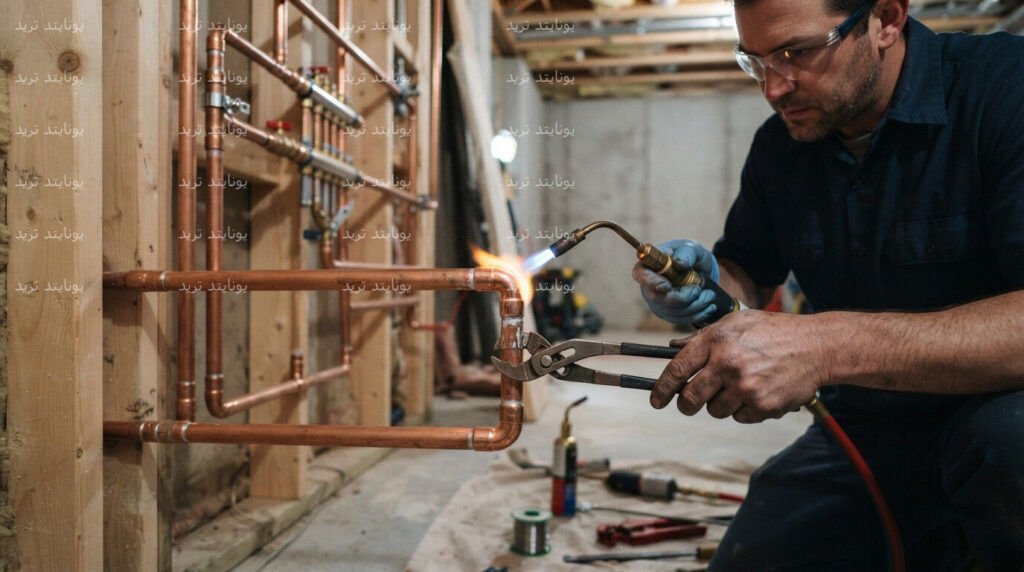
He promises Installation of copper pipes An essential step in building cooling and air conditioning networks, as the lifespan and efficiency of the virtual device depend directly on the quality of these extensions. Careful implementation from the beginning ensures that problems with loss of pressure and Freon leaks that lead to poor cooling over time are avoided. By following engineering standards in connection and insulation, technicians protect the system from corrosion and external weather factors, saving the user the costs of repeated repairs.
Quality standards for materials used in extensions
It requires an operation Installation of copper pipes Choosing materials that conform to standard specifications to ensure they can withstand high pressures and changing climates. Engineers prefer soft (annealed) copper for its ability to bend without breaking, and hard-drawn copper for straight lines that do not require sharp corners.
❓ The importance of wall thickness in pipes
The thickness of the copper wall directly affects the system's ability to maintain stable internal pressure. Using pipes of insufficient thickness exposes the system to the risk of buckling during bending or compression operations, which reduces the efficiency of coolant flow within the circuit.
| Pipe type | Common usage | Basic feature |
|---|---|---|
| Flexible copper (coils) | Winding paths | Ease of formation and installation |
| Solid copper (pipe) | Straight lines | Withstand high cooling pressures |
| Foam thermal insulation | Pipe packaging | Prevent condensation and keep cool |
Steps to carry out extensions professionally
The work stages begin by defining the paths with complete precision to avoid any sharp bends that may hinder the movement of natural gas inside the pipes. Depends on quality Installation of copper pipes The ends of the pipes must be clean before starting welding or mechanical connection operations, in order to prevent impurities from leaking into the system.
After completion of the extensions, a pressure test with nitrogen should be performed to ensure that there are no pinholes in the weld points. This step is crucial, as even a small leak can result in the loss of all refrigerant over time.
Correct welding and joining techniques
Welding is done using a minimum of 5% silver alloy to ensure a strong thermal bond between the pipe and the fitting. The professional technician uses a carefully adjusted oxy-acetylene torch to heat the copper to the proper melting point without damaging the metal structure of the pipe.
❓ Avoid common welding mistakes. Using excessive amounts of Flux, which causes internal corrosion of the pipes. Excessive heating, which leads to mechanical weakness in the joint area. Neglecting to clean up the oxidation resulting from heat after the welding process is completed. Following these procedures reduces the chances of micro-cracks occurring that often appear as a result of vibrations resulting from the air conditioning compressor. Paying attention to the details of the connection ensures the stability of the system for many years without the need for periodic maintenance intervention. The importance of thermal insulation in installations: Thermal insulation provides double protection against temperature loss and prevents the phenomenon of condensation that causes damage to the walls. Insulation should cover the entire length of the pipes, with special emphasis on connection points that are most susceptible to heat exchange with the surrounding environment. Furthermore, successfully installing a home air conditioner requires choosing the ideal location for the indoor unit away from direct heat sources, while ensuring that the device level is balanced to ensure smooth water drainage. The tight installation of the units and the approved electrical connection reduce noise and vibration, which increases the efficiency of the overall system performance in the long term. The use of high-density insulation materials such as “neoprene” protects the pipes from moisture and high temperature, especially in outdoor installations exposed to direct sunlight. Moreover, good insulation reduces the thermal load on the compressor, which has a positive impact on electrical energy consumption. The process of establishing cooling pipes requires careful engineering planning of the extension paths inside the walls and ceilings, to ensure their protection from external factors and provide ease of future maintenance. The elaborate thermal insulation process of the pipes also contributes to preventing condensation and maintaining the required temperatures, which enhances the performance of the system as a whole and prevents damage to the building’s structural structure. Hence the utmost importance of scheduling periodic air conditioning maintenance, which includes checking refrigerant levels and early detection of any micro-cracks that may affect the copper connections. This continuous monitoring helps maintain stable thermal circuit efficiency and avoid sudden malfunctions that deplete the compressor's efficiency and raise energy consumption unnecessarily. Professional air conditioning installation requires careful engineering controls when balancing and installing the indoor and outdoor units to avoid vibrations that cause damage to the refrigeration cycle. Precisely adjusting the spacing and air discharge protects the compressor from premature fatigue, giving the system stable performance and optimal cooling in the long term. Implementing professional extensions requires high precision in selecting extension paths and avoiding sharp bends that may impede the flow of the refrigerant. Adherence to air conditioning duct extension strategies ensures that Freon gas pressure is maintained within its ideal levels, which prevents energy loss and increases the efficiency of the device’s operational performance. The work requires extreme care in the stage of establishing air conditioning and cooling pipes inside the walls and ceilings to ensure smooth paths free of bottlenecks or sharp bends. This tight fit and good thermal insulation of the pipes contribute to protecting the system from condensation and structural damage over time. This construction work is integrated with a regular program that includes air conditioning maintenance to ensure sustained high performance and regular monitoring of refrigerant pressure levels. Continuous inspection of the cooling system and comprehensive cleaning of filters and evaporators protect the installations from damage and prevent sudden malfunctions that may waste the efficiency of the entire system. Insulation, maintaining optimal unit performance depends on adhering to a regular schedule of air conditioning maintenance services and checking the refrigeration cycle regularly. Continuous monitoring allows early detection of the slightest decrease in heat exchange efficiency or decline in refrigerant levels and immediate treatment. This proactive approach protects the compressor from overstress and ensures stable energy consumption in the long term. The process of installing a home air conditioner requires high skill in adjusting the electrical connections and installing the units accurately to ensure optimal air distribution. Adherence to the approved technical steps in choosing the appropriate location for the indoor and outdoor unit prevents annoying vibrations and prolongs operating efficiency for the longest possible period. Completing the work accurately requires taking into consideration all the stages of establishing buried air conditioning ducts, starting from choosing the shortest paths to avoid sharp bends, to ensuring thermal insulation that prevents condensation. This pre-planning protects the lines from damage during architectural finishes and ensures a smooth flow of the refrigerant compound with the highest operational efficiency. Insulating these connections using appropriate thermal insulating materials, harmful condensation is prevented and the gas within the path is kept cool. Taking care of these technical details contributes to enhancing cooling efficiency and ensuring the sustainability of the air conditioning system’s functional performance for many years. Frequently Asked Questions How to ensure the quality of copper pipe installation?
This is confirmed by conducting a pressure test with nitrogen for 24 hours and monitoring the pressure indicator to ensure that it is stable and that there is no decrease.
❓ Does the length of the piping path affect the cooling efficiency?
Yes, the longer the path exceeds the distance specified by the manufacturer, the lower the cooling efficiency, which necessitates an increase in the amount of Freon charge.
❓ What is the best tool to cut copper without distorting the diameter?
The manual pipe cutter is the ideal tool, as it provides a clean cut perpendicular to the pipe axis without leaving any metal debris.
❓ When should copper pipes in air conditioning be changed?
They should be replaced when holes due to corrosion are observed, a severe dent occurs that reduces coolant flow, or before an entirely new device is installed.
❓ Can old copper pipes be combined with new ones?
This is not recommended, as old copper may have hardened or internal corrosion, which may cause future leaks that are difficult to reach.
Conclusion
Attention to detail Installation of copper pipes It is a direct investment in the performance and continuity of the air conditioning system. By adhering to technical standards and choosing the appropriate materials, you ensure a comfortable home environment and avoid unexpected cooling malfunctions.
















Community dialogue
0 comments