
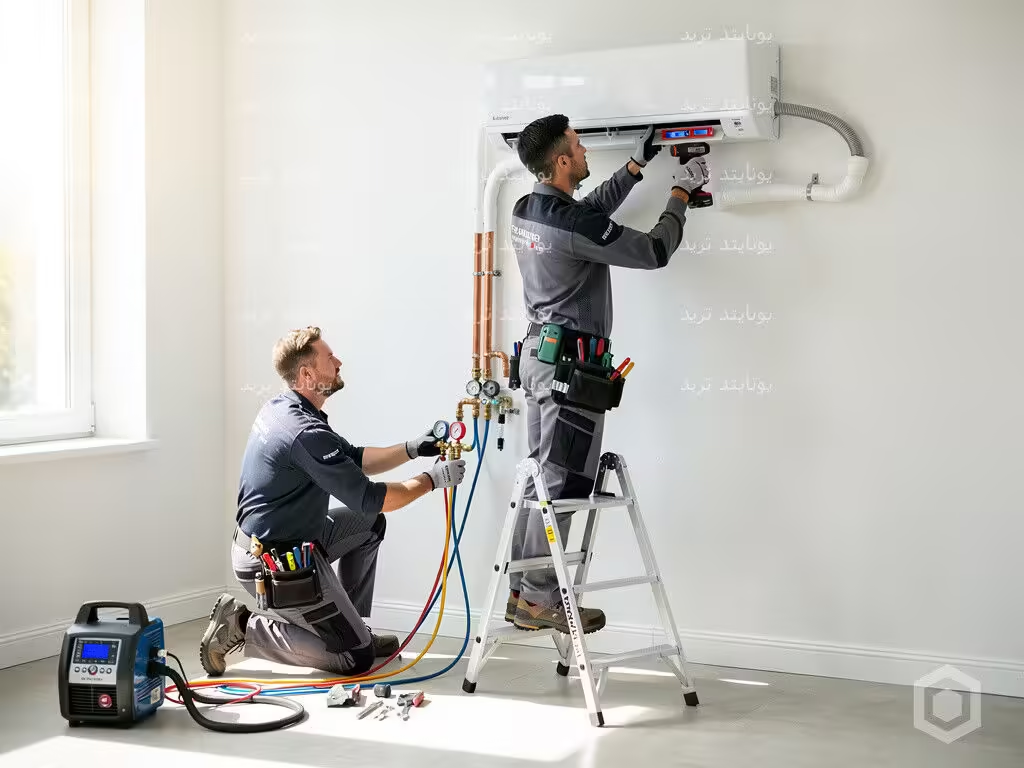
represents implementation Air conditioning installation New An essential step that requires extreme precision to ensure fresh air and effective cooling inside your home or office. This article provides comprehensive technical guidance for preparing the space, choosing the correct heights, and avoiding common operating errors. You will learn in detail how to protect your unit from premature breakdowns and reduce energy consumption from day one.
Quick answer: What are the basic rules for successful air conditioner installation?
Air conditioning installation Airing successfully is an engineering procedure that requires installing the indoor unit on a solid wall at least 2 meters high, leaving at least 15 cm from the ceiling for air to flow freely. It also requires connecting a sealed cooling circuit completely emptied of moisture via a specialized vacuum pump, and installing the external unit in a well-ventilated place to ensure proper heat exchange.
How do you choose the ideal location to install the indoor and outdoor units?
Determining the location of the device definitively determines the efficiency of electricity consumption and the flow of cool air throughout the room. Therefore, the indoor unit must be placed away from direct heat sources such as cooking ovens or windows exposed to sunlight throughout the day. It is preferable to install the air conditioner in the middle of the longest wall in the room to distribute the air homogeneously.
In addition, the outdoor unit needs to be located as open and shaded as possible to facilitate the expulsion of heat outside the building. For example, placing the compressor in an enclosed space or tight corner will cause hot air to reflux back into it. As a result, the compressor heats up and automatically shuts down via the protection circuit breaker, which significantly reduces the life of the device.
Furthermore, avoid installing the outdoor unit directly under rainwater gutters or near gas flues. These simple precautions help prevent corrosion of the aluminum cooling fins and ensure a safe and sustainable operating environment for the entire mechanical system in the long term.
Stages of mechanical installation and preparation of the cooling path
The mechanical work begins by installing the metal suspension plate of the indoor unit using a water level very precisely. Any slight tilt in the mounting plate will cause condensation from the drain pan to seep into the room walls instead of draining out.
The process of perforating the wall for the passage of the pipe bundle requires a slight angle of inclination downward and outward, to facilitate the flow of drain water by the force of natural gravity. The main delivery package includes the following items:
- Larger diameter copper tube for low pressure gas intake line.
- Smaller diameter copper tube intended for high pressure liquid line.
- Condensate drain hose made of twist-resistant reinforced plastic.
- Electrical connection cables and control signals between the indoor and outdoor units.
- Weatherproof thermal insulation tape to protect assembled pipes.
Why is the process of vacuuming air considered a condition that cannot be skipped?
Circuit unloading: It is the use of a special suction pump to empty the air and moisture from inside the copper pipes before opening the refrigerant valves. It should be noted that the trapped air contains moisture that reacts with synthetic compressor oil, creating harmful acids that damage the electrical insulators inside the compressor motor.
On the other hand, the presence of water vapor atoms inside the cooling system causes them to freeze at the expansion valve, causing a partial or complete blockage of the Freon gas flow. This phenomenon causes operating pressures to fluctuate and the air conditioner’s sound to become louder, with a noticeable decline in cooling performance. Therefore, using the vacuum pump for at least 20 minutes is not a secondary option, but rather a basic pillar that entails accepting the manufacturer’s warranty for the device.
Table of technical requirements and standard criteria for home air conditioning systems
The following table shows the standard specifications and engineering requirements required for each cooling capacity, to help you match the correct components before starting field work:
| Air conditioner capacity in tons (horsepower) | Diameter of intake/liquid pipe | Electrical wire cross-section (mm) | Maximum distance of copper track |
|---|---|---|---|
| 1.5 tons (2.25 hp) | 1/2 inch / 1/4 inch | 4mm with 20 amp breaker | 15 meters maximum |
| 2 tons (3 hp) | 5/8 inch / 1/4 inch | 6mm with 26 amp breaker | 20 meters maximum |
| 2.5 tons (4 hp) | 5/8 inch / 3/8 inch | 6mm with 32 amp breaker | 25 meters maximum |
| 3 tons (5 hp) | 3/4 inch / 3/8 inch | 10mm with 40 amp breaker | 30 meters maximum |
Steps for final inspection and test operation after completing the room air conditioning installation
The trial testing phase begins by reviewing all electrical connections and ensuring that the ground wire is tightly connected to avoid any risk of electric shock. Next, the service valves are slowly opened to allow the refrigerant to circulate within the closed pipelines.
The efficiency of the refrigeration cycle depends entirely on how accurately it is used Establishing copper pipes Extending between the internal and external units to avoid any leakage of Freon gas in the future. Good thermal insulation and the inclinations of the drainage lines must also be carefully taken into account during installation to ensure smooth air flow and protect the walls from moisture.
Field verification steps include a series of precise procedures to ensure work safety:
The efficiency of cooling does not stop only with proper installation, but also extends to periodic follow-up that maintains the life of the device. Sticking to a professional schedule will help you Air conditioning maintenance Air filters are cleaned and refrigerant levels are checked, which prevents dust accumulation and ensures airflow at the highest possible power without straining the engine.
Once the installation process is complete, adherence to a periodic schedule is requiredAir conditioning maintenance The basic foundation for ensuring efficient cooling and significantly reducing electricity consumption. Technical inspection of the electrical circuits and pressure testing of the cooling system not only extends the life of the device, but also prevents energy waste resulting from common errors in operation.
Maintaining cooling efficiency requires the application of engineering standards in Air conditioning duct extension With great precision, from choosing the diameters of copper pipes appropriate for the unit’s capacity to sealing their insulation. Proper practices in installing the horizontal and vertical paths also ensure that the Freon network is protected from leakage and avoids excessive pressure on the compressor, which enhances the lifespan of the entire air system.
This operational stability is not complete without a commitment to implementing periodic procedures that include checking Freon gas levels and regularly cleaning internal filters and coils. Paying attention to the process helps Air conditioning maintenance It continues to detect minor technical problems before they escalate, ensuring the sustainability of cooling efficiency and extending the life of the device.
The efficiency of the refrigeration cycle depends entirely on how accurately it is used Establishing copper pipes It is thermally insulated to protect it from condensation and refrigerant leakage. This path requires choosing appropriate diameters and avoiding sharp bends that may impede the flow of Freon, ensuring stable compressor performance for many years.
Cooling efficiency is not complete with proper installation alone, but rather is a procedure Regular air conditioning maintenance The basic foundation for maintaining the integrity of the compressor and the cleanliness of the internal filters. Continuously checking Freon gas levels and cleaning vital parts prevents sudden corrosion and ensures the continuity of fresh air flow with the highest efficiency and lowest electricity consumption.
The true readiness of the cooling system begins from the initial construction stage, as the process requires extreme precision Installing air conditioning ducts Copper and extend it with well-thought-out paths to avoid any bends that impede the flow of the cooling medium. Choosing the appropriate diameters and insulating the copper network with the best materials also contributes to increasing the efficiency of the device and reducing future Freon leaks.
- Test all mechanical connection points using specialized soap foam to ensure that there are no gas leaks.
- Run the device in cooling mode and set the thermostat to 22 degrees Celsius for a continuous quarter of an hour.
- Measure the temperature difference between the return air inlet and the cold air outlet in the indoor unit.
- Ensure the wastewater flow runs smoothly by pouring a small amount of water into the internal drain pan.
- Check the power consumption in amps using a clamp meter and compare it to the data on the manufacturer's label.
In other words, the appearance of a temperature difference ranging between 8 to 12 degrees Celsius between the incoming and outgoing air clearly indicates the efficiency of cooling and the safety of the pressures of the entire system.
Common mistakes that damage air conditioning units and how to avoid them
Some unqualified technicians bend copper pipes by hand without using a bending spring or a special mechanical device. This error results in a diagonal choke in the Freon stream, which doubles the mechanical stress on the pumping motor and leads to its premature combustion.
In addition, some resort to extending copper lines over distances beyond specified standards without compensating for the appropriate amount of refrigerant for each additional meter. The lack of charge results in the accumulation of ice on the evaporator coils and a sharp decrease in cooling efficiency, in addition to an unjustified increase in the monthly electricity bill.
Frequently asked questions about air cooling operations and equipment
What is the appropriate height to install the indoor unit of the air conditioner?
The ideal height is between 2.10 to 2.40 meters above floor level. This height allows the heavy, cold air stream to flow down smoothly, and also provides enough vacuum at the top of the unit to efficiently draw in and cool the warm air.
How do I know that the air conditioning circuit needs to add additional gas?
This is known by accurately measuring the length of the copper pipe path; If the total length exceeds 5 or 7 meters (according to the manufacturer's catalog), a specific amount, usually 20 to 30 grams of refrigerant, must be added for each additional meter.
Is it possible to install a split air conditioner without using a vacuum pump?
It is not technically permissible to operate the air conditioner without emptying the circuit using the vacuum pump, because the suspended air contains water vapor that oxidizes the cooling oil and damages the mechanical parts. This also voids the warranty granted by the device manufacturers.
Why does water leak from the air conditioner inside the room after installation?
The cause of water leakage is often due to misalignment of the mounting plate, which makes the drain chute slanted in the opposite direction, or due to a kink and blockage in the external water drain hose that prevents water from exiting smoothly.
When should the gas pressure be checked for the first time after turning on the device?
It is recommended to perform the first field check of the refrigerant pressure 20 to 30 minutes after the start of the test operation, in order to ensure that the temperatures inside the room are stable and that the compressor reaches a stable operating rotational speed.
Adherence to technical standards and methodological steps during... Air conditioning installation The air ensures a comfortable indoor environment and strong cooling performance that lasts for many years. Do not hesitate to consult a professional and certified technician to carry out the precise installation steps to save your money and ensure the safety of your family and home from any emergency malfunctions.
















TQTAG76 Community dialogue
0 comments