
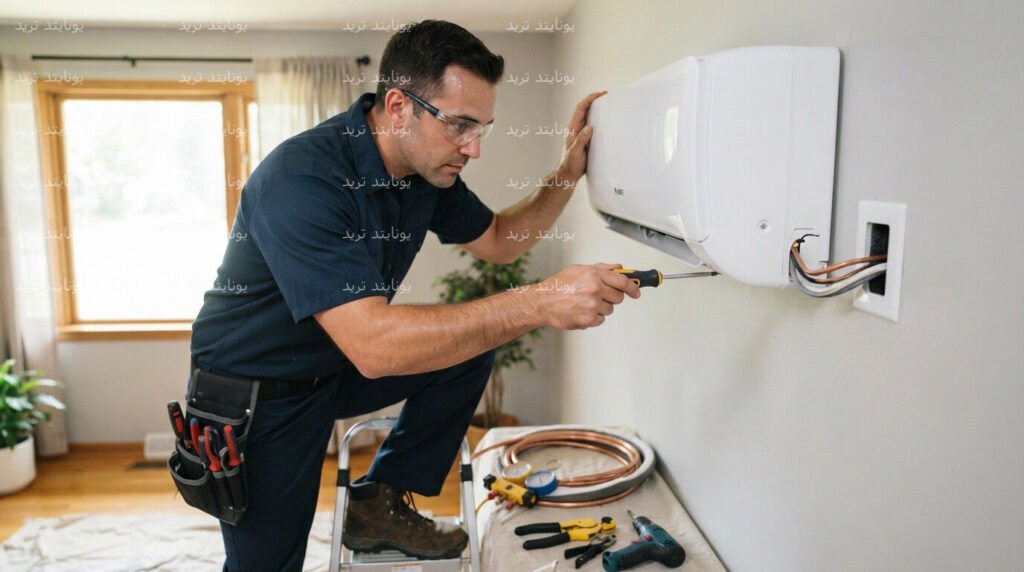
practical Air conditioning installation Air requires high engineering precision to ensure that the device operates as efficiently as possible and to avoid refrigerant leaks or poor performance. Professional technicians realize that proper installation of both indoor and outdoor units significantly reduces electricity consumption and prevents annoying noise during operation. In this article, you will learn about the basic steps and techniques that ensure you get optimal, long-term cooling without the need for frequent maintenance.
Steps for correct installation of the indoor unit
Installing the indoor unit requires choosing a strategic location that ensures uniform air circulation away from direct heat sources or strong sunlight. Air conditioning installation The room begins by installing the metal plate (Mounting Plate) with an accurate water level to ensure the level of the device.
❓ Determine drainage paths and pipes
The slope of the water drain hose should be angled downwards to the outside to ensure that condensed moisture escapes without refluxing into the room. Ensure that copper pipes are insulated with a high-quality thermal insulating material that prevents water droplets from forming on the walls and maintains the cooling efficiency inside the pipes.
Criteria for choosing the location of the outdoor unit
Place the outdoor unit in a well-ventilated area to allow effective heat exchange with the surrounding air away from confined spaces. Installing this unit on rubber feet effectively absorbs the vibrations generated by the compressor motor and reduces the noise transmitted to the building.
❓ Securing electrical and copper connections
Use electrical cables that match the operating capacity of the device to avoid any overheating of the wires or fire hazards. Tight fitting of copper pipes using specialized compression tools prevents the leakage of Freon gas, which is vital to the operation Air conditioning installation Sustainable.
The previous diagram shows the practical path to completing the installation process, starting from planning until the final testing phase to ensure the safety and efficiency of the system.
Technical differences between types of air conditioners
| Air conditioning type | Ease of installation | Space efficiency | Installation cost |
|---|---|---|---|
| Wall split | Medium | Excellent | Economical |
| Concealed | complicated | Not visible | High |
| window | Easy | Limited | Low |
| desert | Simple | For open spaces | Low |
Requirements vary Air conditioning installation Depending on the type of system chosen; Concealed systems require prior construction preparations, while window systems are easy to install in their designated openings.
Frequently asked questions
❓ How to test for refrigerant gas leakage after installation?
Test with an electronic leak detector or with a soap solution on copper connections to ensure there are no bubbles indicating gas loss.
It is a stage Establishing copper pipes One of the most important preliminary steps before installing the units is that the paths are carefully extended inside the walls to ensure smooth movement of the refrigerant gas and to avoid any sharp bends that may hinder performance. Proper planning of these extensions ensures that the pipes are protected from damage or external factors, which extends the life of the device and maintains cooling efficiency for many years.
After successfully completing the installation, it emerges Air conditioning maintenance As a crucial element to maintain the device's lifespan and ensure its continued cooling with high efficiency. Regularly checking the components and cleaning the filters regularly protects the air conditioner from sudden malfunctions and guarantees you fresh, fresh air throughout the summer days.
It is considered a step Air conditioning duct extension The essential substrate that ensures the stability of the cooling cycle and protects the system from sudden malfunctions. Determining the precise path and avoiding sharp bends maintains the balance of Freon gas pressure and prevents compressor fatigue, which directly reflects on energy efficiency and extends the life of the device.
The efficiency of the device does not only depend on completing the installation accurately, but also represents... Air conditioning maintenance Periodicity is the basic foundation for ensuring the continuity of its strong performance by cleaning filters and monitoring Freon shipments. This regular preventative commitment helps extend the life of the indoor unit and compressor components, avoiding unplanned breakdowns and expensive replacement costs in the long run.
A stage comes Establishing copper pipes As an essential step prior to installing the units, the internal wall paths are carefully extended to ensure refrigerant flow without obstructions or sharp kinks. This proper establishment ensures that the installations are protected from external damage and maintains the aesthetic appearance of the space, paving the way for smooth and sustainable operation of the HVAC system.
The effectiveness of the device does not stop only at the stage of proper installation, but also extends to the necessity of conducting a procedure Regular air conditioning maintenance To maintain air purity and cooling power. This inspection includes cleaning filters and reviewing Freon levels, which extends the lifespan of air conditioning units and prevents sudden malfunctions.
Operational efficiency doesn't just stop at correct installation, continuity of performance requires action Regular air conditioning maintenance To detect any early malfunctions and clean filters and cooling coils. This regular inspection helps maintain the quality of cool air flow and extend the life of the AC unit without a decline in its capacity.
❓ Does the length of copper pipes affect the efficiency of the device?
Yes, increasing the length of the pipes beyond the limit permitted by the manufacturer reduces the cooling capacity and places an additional load on the compressor.
It is a stage Establishing cooling pipes Copper is the basic pillar on which the success of the installation process depends, as it is extended with great care inside the walls to ensure the smooth movement of Freon gas without any obstacles. Paying attention to the quality of these extensions and securing them professionally ensures the longevity of the device and prevents any future leaks that may affect the cooling efficiency.
❓ Why should a water scale be used when installing?
The water level ensures that the indoor unit is level, preventing water drainage problems or abnormal vibration sounds.
❓ Can I install the air conditioner myself?
This is not recommended; It's practical Air conditioning installation It requires special tools such as a vacuum pump and experience with electrical connections to ensure warranty and safe operation.
❓ What is the expected time to complete the installation?
The standard installation process for a single air conditioner takes two to four hours depending on the complexity of the installations and location.
Final evaluation
| Standard | Rating |
|---|---|
| Ease of implementation | 3.5/5 |
| The importance of professionalism | 5/5 |
| Cost versus value | 4/5 |
Overall rating: 4.1/5. Hire a professional technician Air conditioning installation It ensures peace of mind and avoids repair costs resulting from initial installation errors.
Always remember that the quality of installation is the first pillar of the performance of any air conditioning device. Do not hesitate to seek the services of specialists to ensure a refreshing and comfortable indoor environment in your home.
















Community dialogue
0 comments