
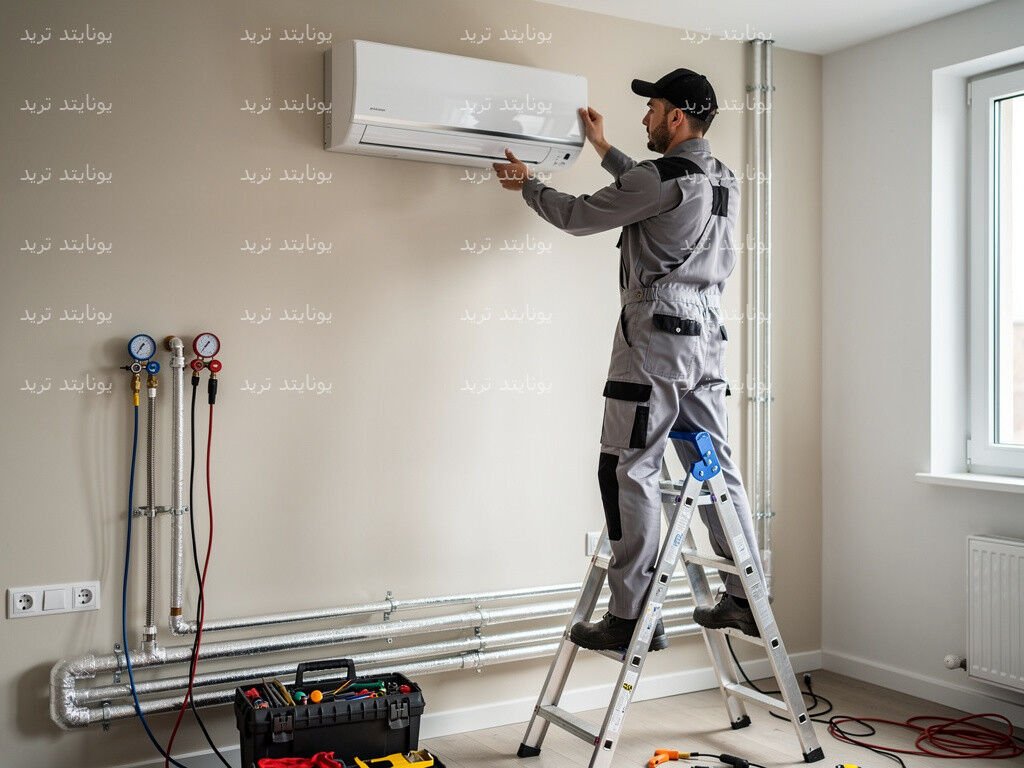
The efficiency of home cooling devices depends on the quality of the technical procedures followed during each step Air conditioning installation The air inside the dwelling, as the installation environment directly affects the lifespan of the compressor and electrical current consumption rates. Moreover, this technical guide shows the correct path to the implementation phases with an emphasis on internationally recognized engineering standards to avoid gas leaks and internal water drips. Therefore, in the following lines, you will discover the best field practices that guarantee exceptional cooling performance from the first day of operation.
What are the basic rules for successful air conditioning installation?
It requires an operation Air conditioning installation Air Install the indoor unit on a flat wall with a clearance of no less than fifteen centimeters from the ceiling, and empty the copper mesh with an air pump to extract moisture before opening the gas. In addition, a slight inclination of the drain channel of one centimeter per meter must be ensured and the outdoor unit installed on rubber vibration dampers to ensure stable cooling and silent operation.
The importance of choosing the exact location before installing room air conditioning
The operational success of any refrigeration device begins with selecting an appropriate wall that allows for uniform air distribution without structural obstructions. As a result, HVAC engineers recommend completely staying away from direct heat sources such as windows exposed to constant sun or electronic devices that emit continuous heat that results in misleading temperature readings on electronic sensors.
It should be noted that the strength of the concrete or brick wall plays a crucial role in preventing annoying noise resulting from internal engine vibrations. For example, installing load-bearing bolts in weak gypsum partitions without metal backings will cause the structure to loosen over time, exposing the gas piping to the risk of micro-cracks and discharging the refrigerant into the atmospheric air.
On the other hand, the outdoor unit requires a shaded, well-ventilated location that allows the condenser to comfortably expel the heat absorbed from the inside. Therefore, leaving a distance of at least half a meter behind the outdoor unit accelerates heat exchange and reduces the mechanical stress on the compressor during extreme summer peak periods.
Engineering stages followed during the installation of a split air conditioner
The proper implementation steps follow a strict technical framework that links the electrical components and the mechanical refrigeration cycle with utmost precision. Therefore, adhering to the correct arrangement prevents catastrophic errors that may cost the device owner expensive maintenance expenses in the later stages.
- Install the back metal plate of the indoor unit using a water level to ensure perfect leveling to prevent flooding of the indoor condensate tank.
- Make a hole for passing pipes in the wall with a suitable diameter of no less than seventy millimeters, with a slight outward slope to ensure the flow of wastewater under the influence of gravity.
- Connect insulated copper tubes and control cables between the two units and tighten the nuts with a standard torque wrench to prevent damage to the flange ends.
- Install the outdoor unit on a metal stand treated against rust and equipped with rubber bases to absorb mechanical movement and vibration.
- Extract air and moisture from the entire circuit using a dedicated vacuum pump down to a minimum of five hundred microns.
- Open the gas valves and perform a professional foam test to ensure that there are no leaks around the mechanical fastenings.
📊مخطط توضيحي لمسار الخطواتالخطوة 1\"تحديد الموضع ومسار الصرف\↓الخطوة 2\"تثبيت الحامل الداخلي وحفر الجدار\↓الخطوة 3\"تمديد شبكة الأنابيب والأسلاك\↓الخطوة 4\"تثبيت المكثف الخارجي على المخمدات\↓الخطوة 5\"تفريغ الدائرة بمضخة الفاكيوم\↓المرحلة النهائية\"فتح الغاز واختبار توازن الضغوط\✓ مسار تسلسلي لتنفيذ وإتمام المراحل بنجاحالمعدات الهندسية الفاصلة بين التثبيت المتقن والعمل العشوائي
يمثل امتلاك الفني لأدوات الفحص المتطورة المعيار الحقيقي الذي يفصل بين الخدمة الهندسية المؤهلة والتدخلات اليدوية القاصرة. علاوة على ذلك، لا يمكن إتمام عملية تفريغ وسيط التبريد وضبط مساره الميكانيكي بالاعتماد على التخمين المجرد أو الحلول البدائية التي تضر بصمامات المكيف الحساسة.
| Certified engineering tool | Technical impact on the installation process | The common random alternative and its risks |
|---|---|---|
| Vacuum vacuum pump | Complete air and moisture intake to prevent oil acidity and compressor damage | Rapid gas expulsion by self-pressure which wastes the charge and destroys the valves |
| Newtonian torque wrench | Seal the copper flap to the exact manufacturer-specified pressure | Using a regular English wrench leads to a crack in the mouth of the tube |
| Digital water scale | Adjust the level of appliances to prevent water accumulation inside the condensate tank | Relying on mere sight, which causes water to spill over the room's furniture |
| Centered brass expanding tool | Smooth, symmetrical flange construction prevents silent Freon leakage | Deformed expansion tools that leave sharp burrs that later discharge gas |
Common technical errors that lead to deterioration of the cooling system
Ignorance of kinetic and thermal standards leads to common mistakes that are frequently repeated during hasty home installations. Accordingly, technicians detected a number of violations that prevent the user from obtaining the actual cooling capacity indicated on the device’s efficiency card.
- Neglecting to insulate each copper line separately, which leads to heat transfer between the intake line and the expulsion line and a decrease in evaporation efficiency.
- Bend copper pipes by bare hands without using the bending spring or hydraulic crimper, which causes a bottleneck in the refrigerant channel and high compressor pressure.
- Reducing the length of the copper path to three meters, which is the recommended minimum, to absorb pressure pulsations and avoid the return of non-evaporated liquid to the air conditioner motor.
- Installing the water drainage hose with a winding path that contains high protrusions, which prevents the natural flow of water and causes mold in the internal basin.
Copper line isolation and extension controls to ensure efficient cooling
Refrigerant transport lines require extreme care in the insulation stages to protect the liquid from gaining unwanted heat from the external environment. As a result, high-density foam rubber insulators with high resistance to atmospheric abrasion and UV rays should be used to ensure they remain flexible for many years.
It is a stage Establishing copper pipes A core substrate designated for the passage of the refrigerant medium ensures the smooth flow of Freon between the internal and external units without loss of pressure. This procedure requires choosing precise diameters that match the manufacturer’s specifications, while insulating the tracks thermally to avoid moisture condensation and corrosion of the walls in the future.
In addition, insulated pipes and electrical wiring must be wrapped with non-flammable protective tape, protecting the system as a whole from rodents, moisture and rain. On the other hand, avoiding making intermediate copper welds inside the hidden paths inside the walls ensures that the property is protected from sudden leaks that are difficult to locate later without breaking the concrete walls.
Maintaining this ideal performance requires periodic continuity that is inseparable from the accuracy of the initial installation, as works contribute Air conditioning maintenance Regular air flow helps avoid sudden malfunctions and maintain the purity of indoor air flow. This follow-up includes cleaning the filters and checking the refrigerant pressure to ensure stable temperatures without stressing the electric motor.
Protecting these systems requires the application of periodic procedures based on... Refrigeration air conditioning maintenance To avoid unexpected malfunctions and ensure smooth air flow during peak usage. Regular cleaning of filters and coils also contributes to reducing the operational voltage on the compressor, which prevents sudden stoppages and keeps energy consumption rates within their economic limits.
In this context, it represents Air conditioning duct extension With high precision engineering, the true guarantee of protecting the refrigeration cycle from declining efficiency. Choosing straight and appropriate paths prevents a drop in the pressure of the refrigerant and reduces mechanical stress on the compressor. Adjusting pipe diameters and avoiding sharp bends also contribute to stable Freon flow, preventing poor cooling and maintaining balanced energy consumption.
Maintaining this ideal performance requires adherence to a specialized periodic schedule Air conditioning maintenance Air to ensure the integrity of the mechanical circuits and clean the filters and cooling paths regularly. This precise technical follow-up contributes to avoiding sudden malfunctions of the compressor and reduces the increasing waste of electrical energy in the long term.
It is a stage Establishing cooling pipes Copper is the first engineering substrate to ensure the efficient and smooth flow of the refrigerant between the internal and external units. This procedure requires selecting precise diameters and applying tight thermal insulation that prevents moisture condensation or loss of cooling energy inside the walls.
Maintaining this ideal performance requires continued periodic technical follow-up, as it represents Air conditioning maintenance An essential pillar to prevent dust accumulation and ensure the safety of the refrigerant gas cycle from any invisible leaks. Preventive inspection of the internal and external unit components also contributes to reducing the electrical voltage expended and avoiding sudden malfunctions during peak periods.
It is a stage Establishing copper pipes It is an essential pillar that ensures the flow of the refrigerant smoothly and without the slightest leakage that may harm the internal components of the system. This procedure requires thermally insulating the intake and exhaust lines with the highest precision, in addition to avoiding sharp bends that impede gas movement and reduce the overall cooling efficiency.
It should be noted that the electrical cable installation process requires custom circuit breakers that match the starting amperage of the compressor. Therefore, it is always recommended to connect the grounding line to the external metal structure to protect the residents of the house from any stray electrical charges resulting from the operation of complex induction motors.
Frequently asked questions
❓ How long does it take to complete a split air conditioning installation?
The usual process takes between two to three hours when the work is carried out by specialized technicians and field equipment is available. Furthermore, the time period may extend to four hours if the route requires laying long copper meshes beyond standard distances or drilling thick reinforced concrete walls.
❓ Does installing a new air conditioner require charging Freon gas immediately?
Most modern devices come pre-charged from the factory with an amount of gas sufficient for five to seven meters of copper tracks. Therefore, the device does not require additional charging unless the length of the field extension exceeds the distance specified in the original manufacturer's manual, where gas is added in a specified amount of grams for each additional meter.
❓ How to avoid leaking waste water into the room after installation?
This is achieved by holding the base of the indoor unit at a slight inclination towards the drain hose outlet and manually testing the flow of a full liter of water before closing the interface. In addition, you should avoid immersing the finished hose end in standing water to prevent air reflux and backwater accumulation in the drain.
❓ What is the appropriate distance to leave between the ceiling and the indoor air conditioner?
A free distance of not less than fifteen centimeters must be left between the upper edge of the device and the ceiling of the room to enable the fan to draw the return air freely. As a result, this geometric clearance prevents airflow congestion and reduces aerodynamic noise caused by pressure relief above the internal evaporator.
❓ Can air conditioning be installed without using a vacuum pump?
The air conditioner must never be operated without using a vacuum pump to extract moisture and non-condensable gases from the copper grille. Neglecting this step will cause moisture to react with the lubricating oil and produce dangerous chemical acids that cause the compressor coils to burn out and become completely damaged within a short period.
❓ Where should the outdoor unit be placed to avoid summer malfunctions?
The outdoor condenser is placed in a shaded, well-ventilated place away from headwinds to blow out the cooling fan. Furthermore, sufficient front and rear service space must be provided to allow maintenance engineers to measure pressures and clean the aluminum fins without wall obstructions trapping hot air.
Adherence to precise engineering standards is the cornerstone that protects your financial investment when implementing Air conditioning installation A quality home for years to come. Therefore, do not hesitate to review the efficiency of the connections and test the thermal insulation levels periodically to ensure that the system continues to operate at the highest efficiency and lowest possible electrical consumption.
















Community dialogue
0 comments