
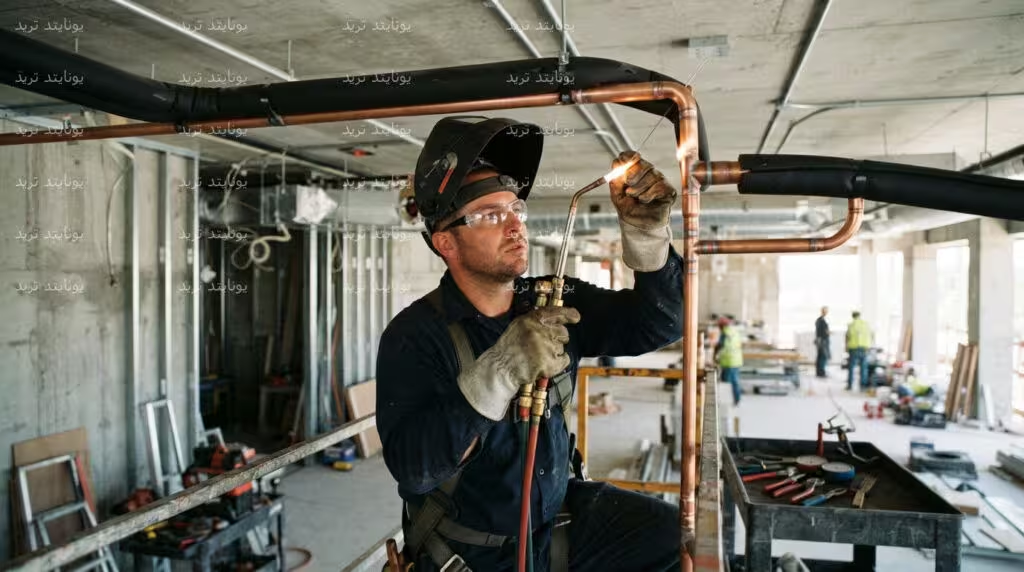
It is considered practical Establishing pipes Air conditioning The most sensitive step in equipping residential and office units, as the lifespan of the device and the actual cooling efficiency depend on it. Correct installation begins with an engineering layout of the paths that ensures the flow of Freon without pressure losses while preserving the aesthetics of the place by hiding all connections inside the walls. Executing this stage accurately protects the user from leakage problems or poor performance later, which makes adherence to technical specifications non-negotiable.
Why is advance planning for air conditioning installation a cornerstone?
Represents advance planning of an operation Establishing pipes Air conditioning A real guarantee to avoid cracking the walls and modifying the decorations after finishing the finishing work. Successful establishment depends on precisely locating the internal and external units, taking into account the distances specified by the manufacturers to ensure smooth pumping of Freon.
❓ The importance of matching the pipes to the device’s capacity
Copper piping diameters should be selected based on the capacity of the air conditioner measured in horsepower or tons of cooling to ensure pressure stability. The use of inappropriate diameters leads to compressor fatigue or reduced cooling efficiency, which is a common technical error that directly affects electrical energy consumption.
Insulation and welding standards to ensure long life
The golden rule is Establishing pipes Air conditioning Use high-quality thermal insulation such as Armaflex to prevent moisture condensation. Condensation, or what is known as sweating, leads to damage to the gypsum and paint surrounding the pipes, which requires replacing the damaged insulation at great costs later.
❓ Welding assets to prevent future leaks
It is strictly prohibited to make any welding connections within the wall path to avoid the possibility of a Freon gas leak later. Nitrogen gas must be passed into the pipes during the welding process to prevent the formation of internal oxides that may cause blockage of the expansion valve or damage the compressor in the long term.
| Technical standard | Established professionally (🏆 Editor's choice) | Traditional incorporation |
|---|---|---|
| High density thermal insulation | ✓ Available (9.8/10) | ✕ |
| Use of nitrogen gas | ✓ Available (10/10) | ✕ |
| Type L copper pipes | ✓ Available (9.5/10) | ✕ |
| Nitrogen pressure check | ✓ Available (9.9/10) | ✕ |
The table above shows the fundamental differences between professional and traditional foundation, where foundation based on quality standards excels in preserving assets and avoiding costly periodic maintenance.
Organizing water drainage paths during the establishment stages
Integrated installation requires observing a continuous and constant inclination of the water drainage pipes to ensure its smooth exit from the indoor unit. It is always preferable to allocate a separate drainage pipe for each device with a diameter of no less than 3/4 inch to avoid the accumulation of dust or unpleasant odors resulting from overlapping drainage paths.
These sequential steps demonstrate the necessity of testing before closing the tracks, which enhances the technical reliability of the system before plastering and finishing work begins.
Advantages and disadvantages
Features:
Execute a process Air conditioning installation It is important to choose high-quality copper pipe materials and take into account complete thermal insulation to prevent moisture condensation. Adherence to technical standards during installation also ensures future refrigerant leaks are avoided, thus achieving optimal device performance for long periods.
- Complete protection of the infrastructure from moisture and condensation.
- Extending compressor life by reducing operating loads.
- Significant savings in electricity consumption due to the efficiency of the refrigeration cycle.
- A clean aesthetic appearance free of unwanted external extensions.
Disadvantages:
No matter how accurate the initial extensions are, action remains urgently needed Regular air conditioning maintenance Includes checking refrigerant levels and the cleanliness of internal filters and condensers. This periodic follow-up protects the entire system from sudden malfunctions and reduces electrical energy consumption, which enhances the stability of the units’ operational performance in the long term.
requires Air conditioning duct extension Great care should be taken to choose copper paths that are as short and straight as possible, to ensure smooth Freon flow and to avoid a decrease in cooling efficiency over time. Insulating these pipes with high-quality thermal materials also contributes to preventing water condensation inside the walls and protecting the system from sudden gas leaks. Observing these precise standards is the basic foundation for avoiding recurring maintenance problems and ensuring a long operational life of the air conditioner.
No matter how accurate the initial extensions are, action remains urgently needed Regular air conditioning maintenance Includes checking refrigerant levels and the cleanliness of internal filters and condensers. This periodic follow-up protects the compressor from premature fatigue, and detects any blockage or invisible leak before it turns into a serious malfunction that threatens the efficiency of the entire system.
Once the paths are prepared, the process begins Air conditioning installation By installing the internal and external units and carefully adjusting the suspension balances to prevent vibrations or water leakage. This is followed by connecting the cooling lines and discharging the air from the circuit to ensure that the compressor works at the highest operational efficiency and distributes the cold in a balanced manner throughout the room.
No matter how accurate the initial extensions are, there remains an urgent need for action Regular air conditioning maintenance It ensures that refrigerant levels and the cleanliness of filters and heat exchangers are checked periodically. This continuous checking protects the compressor from operational stress and prevents the accumulation of deposits that may impede the flow of cool air completely efficiently.
Once the paths are prepared and the extensions are secured, the installation phase begins Air conditioning installation By installing the internal and external units with extreme precision to ensure balanced air flow and avoid annoying vibrations. This procedure requires tightly connecting the refrigerant lines and vacuuming the air from the circuit before injecting Freon gas to test the maximum operating efficiency of the system.
- High initial cost of materials used such as original copper and certified thermal insulation.
- It requires high technical skill to ensure the quality of welds and avoid leakage.
- Difficulty in making major modifications after completing the final finishing work.
❓ Editor's judgment and final rating
It is worth adhering to standards Installing air conditioning ducts The mentioned rating is 9.6/10. This option is ideal for homeowners seeking a long-term investment and avoiding the risk of frequent breakdowns, as precision installation reduces regular maintenance costs by more than 40% over the life of the device.
Frequently asked questions
❓ What is the ideal material for insulating air conditioning pipes?
Armaflex is the most efficient option for insulating copper pipes, as it provides excellent protection against condensation and moisture and can withstand varying temperatures for many years.
❓ Can recycled copper pipes be used?
It is absolutely not recommended to use used or recycled copper pipes, as they have often lost their original thickness or have been exposed to microscopic cracks that lead to Freon leakage.
❓ Why are pipes pressurized with nitrogen after foundation?
The pipes are pressurized with nitrogen to ensure that there are no leaks in the welding joints before closing the walls, which prevents technical problems after the place is finished.
❓ When should you start installing air conditioning ducts on the site?
This process begins at the bone stage or before starting plastering work to ensure that pipes are passed and water drainage paths are professionally secured within the walls.
❓ Does the diameter of the copper pipe affect the cooling efficiency?
Yes, the diameter directly affects the flow of Freon, as using diameters that are not compatible with the device’s capacity causes great stress on the compressor and reduces the overall cooling efficiency.
Investing in Installing air conditioning ducts According to the approved engineering principles, it saves you from paying high maintenance costs in the future. We always advise you to contract with professional technicians who adhere to welding and insulation standards to ensure sustainable performance of your home.
















TQTAG76 Community dialogue
0 comments