
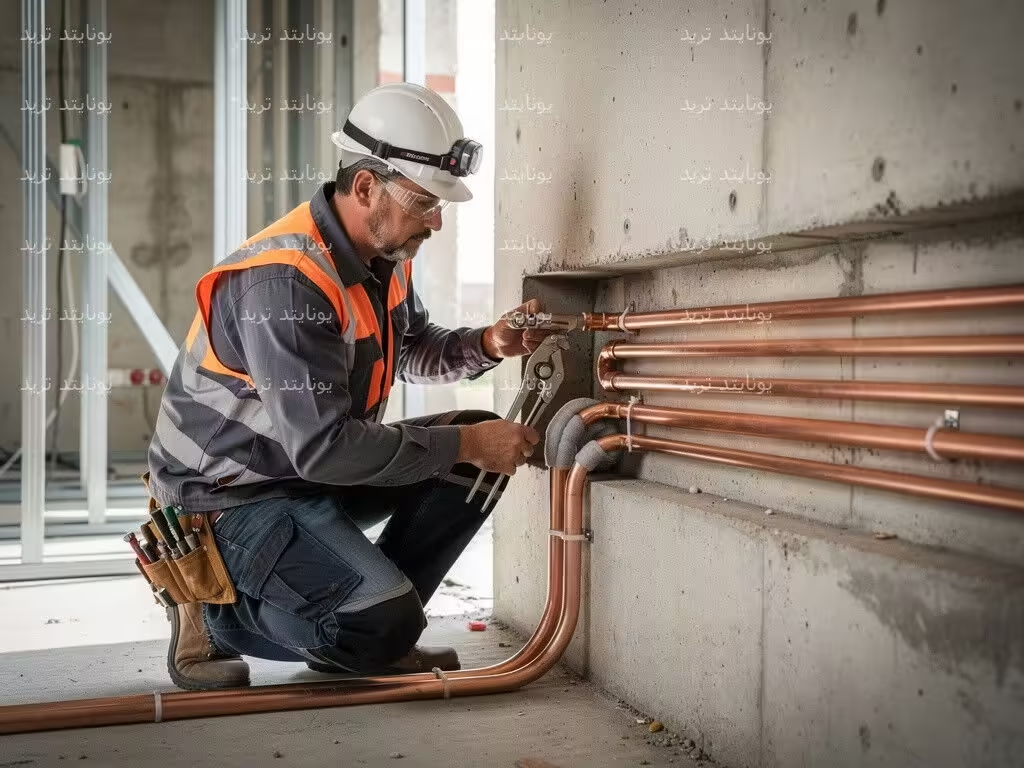
Standard criteria for selecting copper pipe diameters
Success depends Establishing pipes The adaptation directly depends on the precise determination of the diameters of the intake and exhaust lines in accordance with the cooling capacity of the unit, as choosing inappropriate sizes leads to a premature decrease in the refrigerant flow rate and mechanical compressor fatigue.
| Air conditioner capacity (in horsepower) | Diameter of suction line (gas line) | Liquid line diameter (ejection line) | Recommended maximum path (meters) |
|---|---|---|---|
| 1.5 hp | 1/2 inch | 1/4 inch | 10 to 12 |
| 2.25 hp | 5/8 inch | 1/4 inch | 15 |
| 3 hp | 5/8 inch | 3/8 inch | 15 to 17 |
| 4 to 5 hp | 3/4 inch | 3/8 inch | 20 |
Engineering procedures to protect extensions during the finishing stages
Buried networks are exposed to the risks of mechanical damage resulting from subsequent construction works such as installation of gypsum boards and installation of flooring, which requires the application of a strict protection protocol that includes:
- Install clear warning signs on the walls to accurately determine the vertical and horizontal path and prevent holes in the walls near the network.
- Wrapping the ends of copper pipes with tight layers of insulating tape and temporary welding to prevent dust and cement residues from entering the internal cavity.
- Use solid non-plastic polyvinyl chloride (PVC) protection sections and pipes in sensitive crossing areas and construction corners.
Technical instructions to avoid choking Freon lines
Bending copper extensions requires high skill and the use of specialized hydraulic equipment to ensure that the metal wall of the pipes does not sag. It is also necessary to maintain a bend radius that is proportional to the thickness of the metal to avoid obstructing the movement of Freon gas within the closed circuit during continuous operation.
Early planning of cooling networks in modern facilities is an essential basis for preventing subsequent cracking in the walls, and is considered practical Establishing pipes Air conditioning during the construction phase is a precise engineering step that ensures stable thermal performance of the devices. This article aims to clarify the field standards for choosing copper lines, the approved thermal insulation methods, and the details of condensation drainage paths according to the principles of workmanship to avoid any blockage or gas leakage in the long term.
Quick Answer: What are the basic rules for burying refrigerant pipes?
Establishing pipes HVAC is the pre-installation of insulated copper lines with control cables and drain pipes within walls or false ceilings. This process requires choosing original copper with a thickness of no less than 0.8 mm, ensuring a water drainage slope of at least 1%, and testing the pressure of the network with dry nitrogen gas before completing the finishing work.
The importance of installing air conditioning ducts in the initial finishing stage
Early installation of HVAC networks provides structural and aesthetic protection for the building, preventing random modifications to the final finishes. In addition, the carefully thought-out route contributes to reducing the pressure drop within the Freon cycle, preventing mechanical compressor fatigue. As a result, the user gets fast and stable cooling with low electrical consumption.
For example, internal priming reduces the exposure of thermal insulators to direct sunlight and harsh weather elements. On the other hand, external installations are damaged in short periods due to high temperatures, which leads to wasted cooling energy and increases regular maintenance costs.
Technical criteria for selecting approved copper pipes
The correct choice of copper ores depends on the type of refrigerant gas used and the cooling capacity of the device, as modern refrigerants such as R410A and R32 require thicknesses that can withstand high operating pressures. It should be noted that Korean or South African seamless copper, type L or K, is the one that most conforms to internationally approved technical requirements.
Inner wall thickness of copper tube
Wall thickness determines the pipe's resistance to gas explosion at high pressures, and should not be less than 0.032 inches (about 0.81 mm) for small diameters. Moreover, thin tubes are subject to rapid puncture during bending or as a result of coolant vibrations within the system.
Diameters of suction and ejection lines
The pipe diameter is directly related to the air conditioner's capacity measured in BTUs or refrigeration tons, as a 1.5 HP air conditioner typically needs a 1/2" diameter intake line and a 1/4" diameter exhaust line. In contrast, higher capacities such as 3 HP require wider paths up to 5/8 inch to ensure the lubricating oil returns to the compressor smoothly.
| The cooling capacity of the air conditioner | Suction line diameter (in.) | Extrusion line diameter (in.) | Minimum thickness (mm) | Common refrigerant type |
|---|---|---|---|---|
| 1.5 HP (12,000 BTU) | 1/2 | 1/4 | 0.81 | R410A / R32 |
| 2.0 – 2.25 HP (18,000 units) | 1/2 or 5/8 | 1/4 | 0.81 | R410A / R32 |
| 3.0 hp (24,000 btu) | 5/8 | 3/8 | 0.89 | R410A / R32 |
| 4.0 – 5.0 HP (36,000 units) | 3/4 | 3/8 | 1.00 | R410A |
Steps for field extension and insulation of cooling networks
Proper preparation stages begin with determining the shortest possible path between the indoor unit and the outdoor condensing location to avoid loss of efficiency. Therefore, experienced technicians follow a clear engineering sequence that ensures the safety of components from mechanical damage throughout the period of construction and painting work.
It requires an operation Air conditioning installation An engineering skill that considers ideal paths for extending a copper network and adjusts inclination levels to prevent moisture buildup. The tight fit of the indoor and outdoor units also ensures that mechanical vibrations are avoided, which may damage the connection points and lead to refrigerant leakage over time.
Protecting the system from damage requires adherence to a regular schedule of procedures Comprehensive air conditioning maintenance For all mechanical and electrical parts after the extensions are completed. This continuous inspection contributes to detecting any early leakage of Freon gas and adjusting the cooling efficiency to avoid sudden malfunctions.
The efficiency of thermal systems depends entirely on accuracy Installation of copper pipesTight thermal insulation and elaborate technical welding require superior protection to ensure sustainability of performance and prevent any future leaks that may affect operating pressure. Applying these engineering standards reduces heat loss and ensures the longevity of cooling networks in various operating conditions.
It is considered practical Air conditioning installation An essential step that is not limited to mechanical installation only, but also extends to being the first guarantor of cooling efficiency and long operational life of the compressor and sensitive electronic circuits. Therefore, the utmost precision in choosing the location of the units and installing them according to engineering principles is an essential foundation for avoiding future malfunctions and ensuring ideal device performance.
The subsequent stage of extending the copper network requires the implementation of steps Air conditioning installation Air with extreme precision, to ensure tight connection and emptying the circuit of moisture and air via a vacuum pump. This controlled technical procedure helps protect the compressor from premature wear and achieve the highest possible heat exchange efficiency.
The operational efficiency of this system is related to the extent of adherence to procedures Regular air conditioning maintenance Ensures the safety of the refrigeration cycle from leaks and maintains stable gas pressures. Paying attention to the cleanliness of the filters and condenser and checking the efficiency of the compressor contributes directly to extending the life of the device and reducing energy consumption.
To ensure the continued efficiency of the system after the completion of the extensions, it is extremely important to implement procedures Regular air conditioning maintenance A thorough inspection includes checking gas levels and cleaning the filters and evaporator. This continuous technical inspection contributes to avoiding a drop in cooling pressure and protecting internal parts from sudden damage resulting from constant operating pressure.
- Locate indoor units away from direct air ducts and thermal vents such as exposed windows.
- Digging the wall sewers deep enough to allow the pipes and their insulators to be stable without protruding or affecting the plastering work.
- Pass copper pipes through flexible protective hoses or strong plastic bushings to isolate them from aggregate and cement.
- Insulate each copper line completely independently using closed-cell foam rubber insulation with a density of no less than 9 mm.
- Assembling the control electrical wires with copper lines and moisture-proof outer packing tape.
- Close the ends of the pipes with a tight weld or mechanical seal to prevent dust and moisture from entering until the final installation time.
Requirements for condensate water drainage paths
Air conditioning drainage represents a vital artery that is no less important than cooling pipes, as any defect in water drainage leads to damage to wall paints and interior furniture. Accordingly, rigid PVC insulated pipes with a diameter of at least 1 inch are used inside the walls.
Requires completion of a stage Air conditioning installation With high efficiency, strict adherence to the geometric drawings of the pipes, and adjusting the vertical and horizontal distances between the internal and external units to avoid the accumulation of oils in the refrigeration cycle. Pressure and vacuum tests must also be carried out carefully to ensure that the network is free of any leaks that would hinder the system’s operation later.
Horizontal paths require a constant slope towards the outlet of at least one centimeter per linear meter to prevent water stagnation. In addition, a water trap or odor trap (P-Trap) must be installed at the connection point to the general drainage network to prevent the reflux of unpleasant gases into the refrigerated room.
Common mistakes when installing air conditioning pipes
Unprofessional practices cause complex problems that are difficult to remedy after the final finishing of the building is completed. For example, some workers resort to isolating the intake and exhaust lines within a single insulating shell, which leads to internal heat transfer that reduces the system’s capacity by more than 15%.
- Manually bending the pipes at sharp angles, which causes constriction of the path and a decrease in the flow of refrigerant towards the compressor.
- Neglect to pressurize the mesh with nitrogen to test the welds and ensure that there are no hidden leaks before sealing the walls.
- Using thin drainage pipes that are subject to breakage or compression during laying of flooring or paving concrete.
- Exceeding the permissible distances between the indoor and outdoor units without consulting the manufacturer’s engineering catalog.
- Leaving power cables exposed without dedicated protection tubes, which threatens future electrical short circuits.
Frequently asked questions
What is the best time to start installing air conditioning ducts?
The ideal time to implement these extensions is after completing the cutting and building walls and before starting the plastering and interior finishing works. This timing allows the tracks to be opened and footings installed without damaging any finish work.
How is the quality of the installation of air conditioning ducts tested before burial is completed?
The test is done by welding the ends of the pipes and compressing them with dry nitrogen gas under a pressure of 250 to 350 pounds per square inch (PSI). The pressure indicator is left monitored for at least 24 hours to verify its complete stability.
Can air conditioning ducts be buried in concrete floors?
Yes, pipes can be passed inside floors provided they are placed inside a rigid HDPE protective sleeve to protect them from mechanical loads. Furthermore, welding connections within buried parts should be avoided to reduce the risk of irreparable leakage.
What is the difference between independent insulation and double insulation of copper pipes?
Independent insulation means wrapping each pipe with a special insulating material that prevents it from coming into contact with the other pipe, which is the correct engineering choice. In contrast, combined double insulation leads to harmful heat exchange that reduces cooling efficiency and increases energy consumption.
Why do unpleasant odors appear from buried air conditioning ducts?
Unpleasant odors are usually caused by the air conditioner's drain line being connected to the sewer network without a proper water barrier. The drain siphon traps a small amount of water preventing the passage of polluted air into the indoor unit.
conclusion
A careful investment in installing air conditioning ducts represents a safety valve for your home comfort and the efficiency of your electrical appliances for many years. Always make sure to hire certified technicians and apply nitrogen pressure and independent insulation standards before moving on to the next steps in finishing your home.
















TQTAG76 Community dialogue
0 comments