
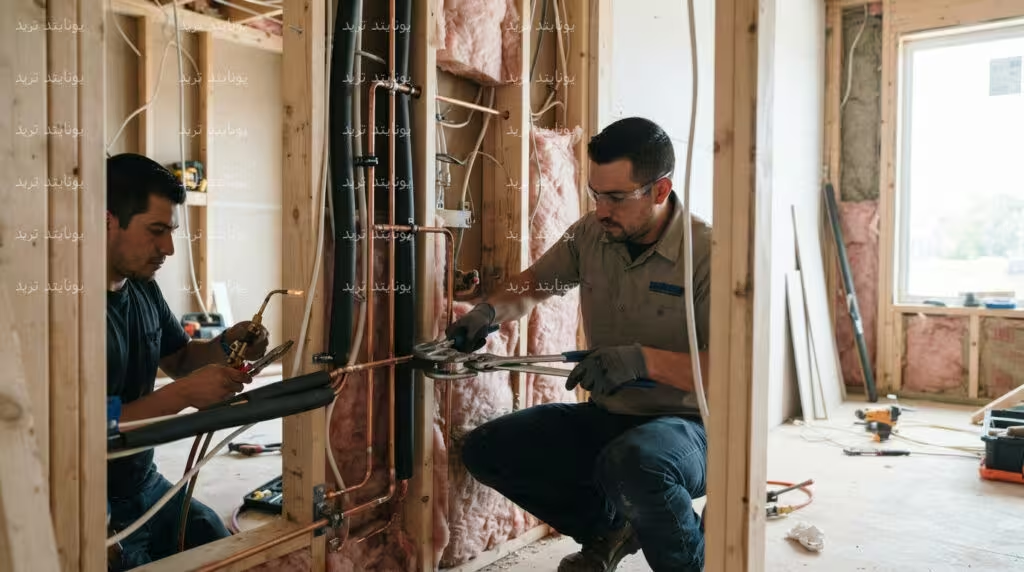
The quality of cooling in any dwelling depends fundamentally on the accuracy of cooling Establishing pipes Air conditioning Since the first construction phase. Pre-planning the copper paths and securing them in the correct way is the real guarantee for the continued efficiency of the device and avoiding annoying malfunctions later. By following strict engineering standards, owners can turn their HVAC experience into a long-term investment that saves energy and reduces regular maintenance costs.
Why is advance planning for air conditioning installations necessary?
Advance planning helps prevent costly modifications later to concrete walls and ceilings. to implement Establishing pipes Air conditioning It thoughtfully protects pipes from mechanical damage resulting from subsequent finishing or decoration works.
❓ Engineering standards in selecting materials
You must rely exclusively on seamless copper pipes that comply with international specifications, such as: ASTM B280 or JIS-H3300 To ensure the durability of the tracks. Choosing the correct diameter (such as 1/4, 3/8, or 5/8 inch) based on conditioning capacity is a critical technical matter; The inappropriate diameter leads to great stress on the compressor.
This diagram demonstrates the importance of reducing sharp bends that may cause suffocation in the flow of Freon, ensuring a smooth flow of refrigerant within the system.
Steps to test and verify the integrity of extensions
The pressure testing process is using Nitrogen gas A mandatory step that cannot be skipped before closing the walls permanently. This procedure gives the owner complete confidence that the tracks are completely free of any minute leaks that may appear after years of operation.
❓ The importance of thermal insulation of pipes
High-quality thermal insulation prevents water condensation on copper pipes, protecting the walls from moisture and rot. We recommend using rubber insulation with a thickness of at least 3/8 inch to ensure high thermal efficiency and prevent energy loss during heat exchange.
| Technical standard | Cheap commercial pipes | Pipes conform to ASTM B280 🏆 Editor's choice |
|---|---|---|
| Durability | ✗ Low | ✓ Very high |
| Endurance | ✗ It oxidizes quickly | ✓ Corrosion resistant |
| Rating | ★ 4/10 | ★ 9.8/10 |
Advantages and disadvantages of installing air conditioning ducts
Features:
- Complete concealment of extensions enhances the aesthetic appearance of the rooms.
- Superior protection for pipes from external damage.
- Increase the lifespan of the device and reduce power consumption.
- Facilitate future maintenance when routes are documented.
Disadvantages:
It requires an operation Air conditioning installation Successful selection of copper materials that conform to international specifications to ensure that refrigerant gas leaks do not occur over time. Skilled technicians must also take into account the precise thermal insulation of each connection, which directly contributes to increasing operational performance and reducing energy consumption.
- The initial setup cost is higher compared to virtual extension.
- It requires high precision in implementation and coordination with the electrical and plumbing team.
- Difficulty accessing pipes in the event of an implementation error after concrete closure.
❓ Editor's judgment and final rating
Our final assessment of this step is: 9.6/10Highly recommend Establishing pipes Air conditioning For anyone building a new home or undertaking a comprehensive renovation, this practice provides long-term peace of mind and ensures the efficient performance of the cooling system in the harshest weather conditions.
However, the stability of the cooling system is not complete without periodic attention to preventive inspections, in which services contribute Air conditioning maintenance Regular in early detection of Freon gas leaks and sediment accumulation inside internal and external units. This continuous technical intervention helps maintain ideal refrigerant pressure and prevents thermal stress of the compressor, doubling the life of the device with the lowest possible energy consumption.
Implementing extensions requires commitment to several things Technical standards to avoid malfunctions The future and ensure that there are no coolant leaks over time. This includes selecting appropriate copper thicknesses and applying tight thermal insulation to prevent moisture condensation within walls and protect energy efficiency. Observing the correct bending angles and avoiding excessive pressure on the pipes also helps extend the life of the air conditioning units.
However, the soundness of the initial establishment is not at all a substitute for adherence to procedures Regular air conditioning maintenance To protect the system from corrosion and accumulation of impurities. Periodic checking of refrigerant pressure and the cleanliness of filters and coils contributes to avoiding excessive pressure on the compressor and ensuring ideal operational performance that lasts for many years.
These preparations are completed by moving to a step Air conditioning installation Air is in accordance with the approved technical principles, where careful attention is paid to installing the internal and external units and ensuring the integrity of the electrical connections and insulation of the pipes. This sophisticated application contributes to enhancing airflow efficiently and reducing energy consumption to a minimum.
However, the stability of the cooling system is not complete without adhering to a periodic schedule that includes: Air conditioning maintenance Check Freon gas levels and clean filters and condensers regularly. This continuous preventive follow-up contributes to detecting any blockage or leakage early before it worsens and affects the compressor, which extends the lifespan of the devices and maintains the highest rates of energy efficiency throughout the year.
This system is completed when a stage begins Air conditioning installation According to precise technical principles that guarantee the secure installation of internal and external units. This requires fine-tuning the suspension balances and vacuuming the circuits before charging the refrigerant to ensure smooth flow and optimal performance. This executive perfection contributes to reducing operational noise and avoiding Freon leaks in the long term.
Frequently asked questions
❓ What is the ideal thickness of air conditioning pipe insulation?
The thickness of the thermal insulation (foam or rubber) should range from 3/8 to 1/2 inch to efficiently prevent condensation.
❓ Is it possible to install air conditioning without prior installation of ducts?
Yes, but the technician will have to extend the pipes visibly on the walls, which affects the aesthetic appearance of the place.
❓ How long does a nitrogen pressure test last?
It is preferable to leave the system under nitrogen pressure for a period of no less than 24 hours to ensure that the indicator is stable and that there is no leakage.
❓ Why should we use seamless copper pipes?
Seamless pipes can withstand high gas pressures, while welded pipes may explode or leak at the welding points.
❓ Where is it preferable to place the water drainage unit (drain)?
The water drain hose must be placed with a suitable slope of no less than 1% to ensure the water flows out and prevent it from backflowing into the indoor unit.
Practical conclusion
Your investment in Installing air conditioning ducts Professionally now, it will save you thousands of dirhams in future maintenance. Start with careful planning and hire professionals who adhere to the mentioned technical standards to ensure a comfortable and cool home all year round.
















TQTAG76 Community dialogue
0 comments