
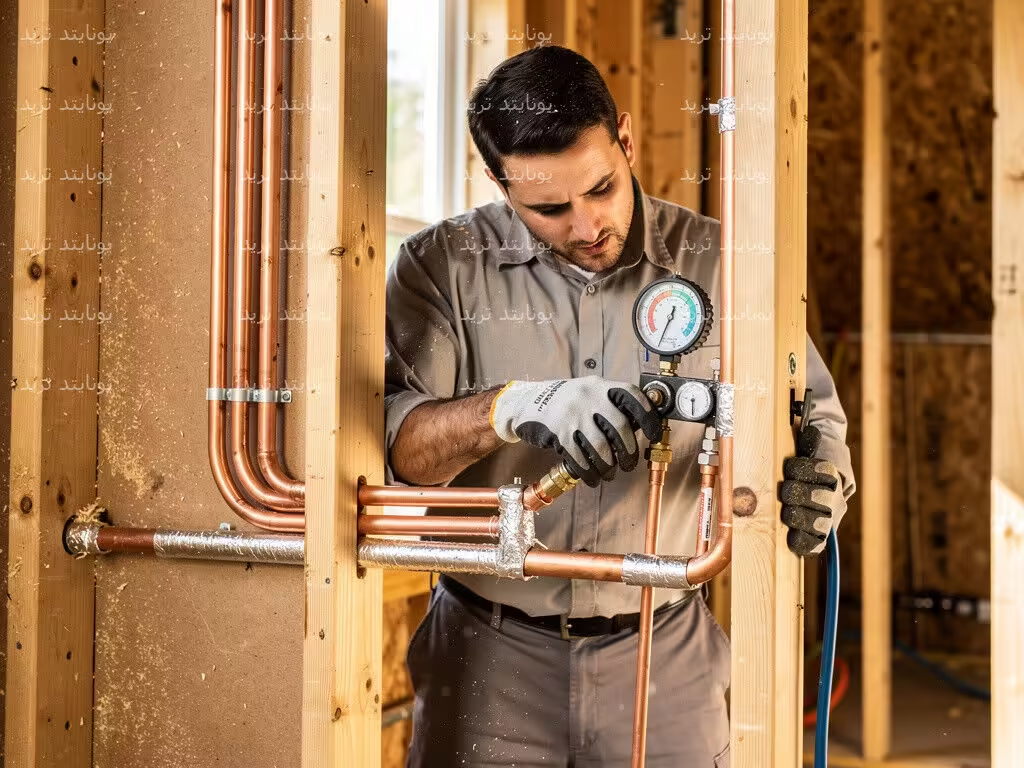
It requires an operation Establishing pipes The air conditioning is carefully engineered to protect the building from problems of leakage and odors, and to ensure efficient cooling for many years. This article aims to provide you with the technical standards and standard sizes approved for insulating and extending cooling lines inside walls and floors with complete professionalism, which saves expensive maintenance costs later.
Quick Answer: What are the basic rules for making a cooling path?
Establishing pipes HVAC is the pre-installation of insulated copper pipes with water drainage lines and electrical cables inside the walls before finishing. The success of this procedure depends on choosing copper diameters appropriate to the device’s capacity, using high-density thermal insulation, and pressurizing the network with nitrogen gas to completely ensure that there are no leaks before covering with cement.
Pre-planning and determining extension paths
The correct path requires careful consideration of the locations of the internal and external units to avoid sharp bends that impede the flow of the refrigerant. Furthermore, the total extension distance should not exceed the maximum limits recommended by the manufacturers, which usually range from ten to twenty-five meters depending on the capacity of the air conditioner.
Architectural plans specify the locations of openings to avoid cutting steel reinforcement in concrete columns and beams. Therefore, it is always preferable to use specialized plastic sleeves during the concrete pouring stage to allow the Freon and electrical lines to pass smoothly and without structural obstacles.
Standard specifications for copper pipes and insulation materials
The wall thickness of the copper tube is a crucial element to withstand high refrigerant pressure, especially in modern cooling systems. As a result, it is recommended to rely on English or American type copper tubes that meet ASTM specifications, due to their high purity that prevents internal corrosion.
The importance of individual thermal insulation
Individual thermal insulation of each copper line prevents water condensation inside the walls. For example, combining the intake and exhaust lines within a single insulating jacket results in faulty heat transfer that significantly reduces the efficiency of the refrigeration cycle.
Closed foam rubber insulation is the best choice to protect pipes from absorbing atmospheric moisture. In addition, the wall thickness of the insulation must be at least nine millimeters to ensure that low temperatures do not reach the outer layers of the wall.
Stages of implementing extension work, step by step
The technician begins by opening the extension ducts to a suitable depth that allows the pipes to be buried without them protruding beyond the level of the clamshell or plaster. The drawn copper lines are then extended inside flexible protective hoses to absorb any movement caused by the natural expansion and contraction of the walls.
- Determine the level of the indoor unit accurately, taking into account the drop of the false ceilings by no less than thirty centimetres.
- Breaking the direct path between the air conditioner location and the exit point of the pipes to the roof or skylight with the least possible number of bends.
- Straighten the copper coils using mechanical bending tools to avoid pinching or suffocating the inner diameter of the pipes.
- Dress foam insulation to each line individually and seal the joints with custom high-adhesive tape.
- Pull the signal and electricity cables into a separate braided pipe next to the cooling lines for easy replacement when needed.
- Fix the entire network inside the stream using galvanized metal jumpers that prevent its movement during construction work.
Chart of common sizes and thicknesses of copper
The following table helps in choosing the appropriate copper diameters for each cooling capacity, ensuring a balanced flow of refrigerant while maintaining the life of the compressor.
| Air conditioner capacity in tons | Suction line diameter (gas) | Liquid line diameter | Recommended minimum thickness |
|---|---|---|---|
| 1.5 tons (18 thousand units) | 1/2 inch | 1/4 inch | 0.028 inch (0.71 mm) |
| 2.0 tons (24 thousand units) | 5/8 inch | 1/4 inch | 0.032 inch (0.81 mm) |
| 2.5 tons (30 thousand units) | 5/8 inch | 3/8 inch | 0.032 inch (0.81 mm) |
| 3.0 tons (36 thousand units) | 3/4 inch | 3/8 inch | 0.035 inch (0.89 mm) |
Safety and network pressure tests with nitrogen
Dry nitrogen gas web pressure testing is the definitive procedure to ensure the integrity of the welds and the absence of microscopic holes. Accordingly, nitrogen is pumped at a pressure of two hundred and fifty pounds per square inch and left under observation for twenty-four continuous hours.
The stability of the pressure gauge indicator throughout the test period indicates tight sealing and quality of field work. On the other hand, any drop in the meter reading indicates the presence of a subtle leak that must be identified and treated immediately before starting to lay the cement mortar layer.
A stage comes Air conditioning installation As a critical implementation step, the accuracy of upfront establishment translates into actual, stable performance. Installing the internal and external units requires careful balancing and tight adjustment of the electrical connections and water drainage paths, to avoid any annoying vibrations or leaks that may harm the efficiency of the cooling cycle.
Design standards for condensate water drainage network
Drain line inclinations of at least one percent ensure that water condensing naturally flows by gravity without stagnation. It should be noted that stagnant water inside drain pipes leads to algae accumulation and blockage of the path, causing water to leak into the room and damage to paints.
Proper incorporation is closely linked to minimizing the need for procedure Frequent air conditioning maintenance And costly resulting from clogged drains or leaking Freon gas. Commitment to the quality of the installations ensures smooth air flow and protects the compressor from stress, which in turn extends the life of the cooling system as a whole.
After completing the preparation of the internal extensions, the installation phase begins Air conditioning installation Air is supplied according to precise standards that determine the best location to distribute air smoothly and prevent excessive load on the engine. Correct installation of the indoor and outdoor units ensures stable Freon gas pressure and protects the compressor from damage, achieving ideal room cooling while significantly reducing electricity consumption.
The success of hidden extensions is based on accuracy Installation of copper pipes According to a strict engineering protocol that ensures the integrity of the tracks and the quality of the welds. Following completion of the extension, performing a pressure check using nitrogen gas is a crucial step to ensure that the system is completely free of any microscopic leaks before the walls are completely sealed.
The efficiency of the cooling system does not depend only on the quality of the initial installation, but its sustainability depends on a procedure Regular air conditioning maintenance For early detection of any blockage in the filters or leakage of Freon gas. Regular inspection of mechanical and electrical parts helps maintain ideal refrigerant pressure and extend the life of the compressor at peak operating efficiency.
It is a stage Air conditioning installation Strictly is a crucial step that is integrated with proper installation, as the tight installation of the internal and external units ensures optimal refrigerant flow without any energy loss. Adjusting the drainage angles and connecting the electrical circuits according to the manufacturer’s instructions also contributes to protecting the device from premature malfunctions and increasing the cooling efficiency in the targeted area.
The sustainability and operational efficiency of these extensions depends on the implementation of periodic plans that include: Air conditioning maintenance Air on a regular basis to ensure the safety of gas pressure and the cleanliness of filters and condensers. Negligence in this aspect leads to the accumulation of sediments inside the drain lines and poor performance of the entire cooling cycle over time.
As a culmination of the sound foundation stage, comes a step Air conditioning installation According to engineering principles to ensure efficient air distribution and avoid annoying vibrations. This requires carefully installing the indoor and outdoor units, taking into account the air being evacuated from the circuit and the Freon gas pressure tested before actual operation.
- Use rigid PVC piping with a diameter of at least three-quarters of an inch.
- Insulating drainage pipes passing through false ceilings to prevent external condensation on gypsum boards.
- Install a U-shaped water trap at the connection point with the main drainage network to prevent the backflow of unpleasant odors.
- Avoid connecting the air conditioning drain to exposed rainwater drainage pipes to avoid the return of water during floods.
Mistakes to avoid while installing air conditioning pipes
Poor connections in the burial stage lead to cooling failure and are extremely difficult to repair, requiring the walls to be broken down. Therefore, welding pipes inside walls should be avoided as much as possible, and rely on continuous coils that cover the distance from beginning to end without intermediate connections.
Professional technicians warn against leaving the ends of pipes open during finishing work to avoid the entry of dust or gypsum and cement residues. In other words, the ends of the pipes must be welded or sealed with a pressure gauge ready for inspection at any construction stage.
Frequently asked questions
What is the appropriate time to install air conditioning ducts in the building?
The ideal stage for foundation is after completing the construction of the walls and before starting the internal plastering or plastering work. This timing allows all tracks to be buried and pressure tested without damaging the final finish work.
How do I ensure the quality of copper pipes used in foundation?
You can confirm by reading the data printed on the laser on the pipe, which indicates the brand, thickness, and approved quality standard. Moreover, high-quality pipes are characterized by pure copper color and moderate flexibility when using a bending tool without cracking.
Can the same foundation be used for an air conditioner with a larger cooling capacity in the future?
This depends on the diameters of copper previously installed, as larger capacities require wider intake line diameters. Therefore, it is always preferable to establish sizes that suit the expected maximum capacity of the place to avoid the need to change the network later.
Why should the suction line and liquid line be insulated separately?
Separate insulation prevents unwanted heat exchange between the refrigerant coming from the evaporator and returning to the condenser. This separation ensures that the refrigerant maintains its correct dynamic state and greatly increases the efficiency of the refrigeration cycle.
Where should the air conditioning water drain line be directed to avoid odors?
The line is directed directly to closed bathroom drains or to the gray water drainage network via an independent water siphon. It is prohibited to connect the line directly to the main sewer pipes without a water barrier that prevents unpleasant gases from leaking into the air conditioner.
What is the appropriate pressure to test the Freon pipe network with nitrogen?
Typical test pressure is between two hundred and two hundred and fifty pounds per square inch for most home HVAC systems. This pressure must remain completely constant for a period of not less than twenty-four hours to ensure that the path is free of any venting.
Provides strict adherence to engineering standards when Establishing pipes The air conditioning provides stable performance and powerful cooling of the building while avoiding costly demolition and repair work. Always make sure to consult a specialized engineer and choose reliable materials to ensure lasting comfort within your space.
















TQTAG76 Community dialogue
0 comments