
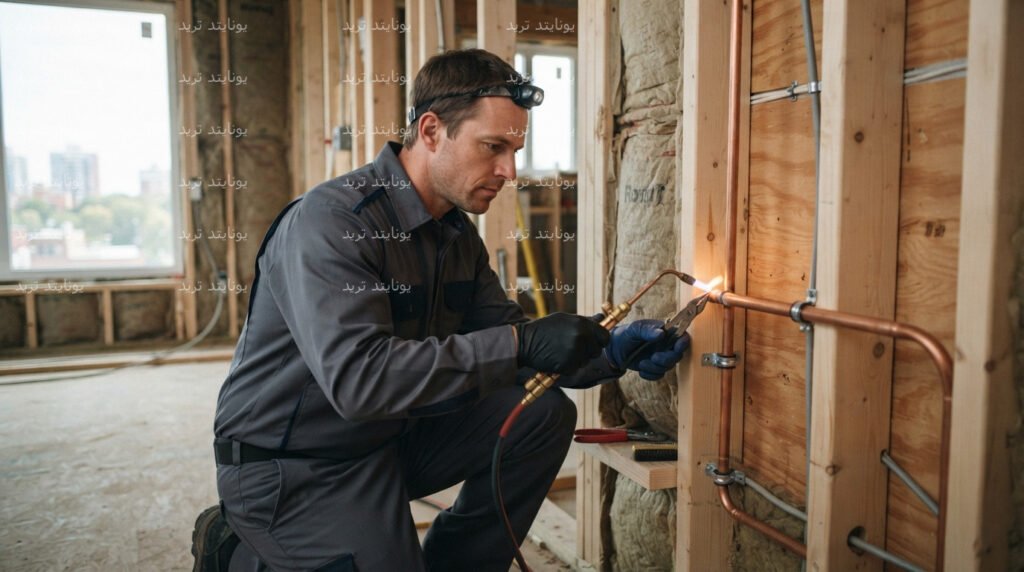
It is considered practical Establishing pipes Air conditioning A strategic step in construction projects, as it ensures the integration of cooling systems within the structural structure of the building before the final finishing stages. By well planning the paths, the owner avoids future crushing costs and maintains the aesthetic appearance of the interior spaces. This stage contributes to providing an ideal environment for the device, which directly affects the cooling efficiency and extends the lifespan of the internal and external units.
The importance of proactive planning before the conch stage
You must start a process Establishing pipes Air conditioning In the structural foundation stage, specifically before plastering work, to ensure easy passage of extensions. Pre-planning of indoor unit locations contributes to precise copper routing, which reduces piping length and improves refrigerant performance.
❓ Determine unit locations and load distribution
The specialist technician determines the locations of the units based on the required air conditioning capacity and room size, taking into account air flow directions. Proper distribution prevents pipes from congesting at one point, and reduces pressure loss inside copper pipes. Moreover, this layout facilitates regular maintenance later without the need to damage the decorations.
Quality standards for copper pipes and thermal insulation
The quality of cooling depends entirely on the use of copper pipes with a thickness commensurate with the air conditioning capacity (in tons), with the necessity of covering them with high-quality thermal insulation. Thermal insulation (at least 3/8 inch thick) protects pipes from atmospheric moisture, which prevents condensation, which in turn leads to water leakage and damage to walls and ceilings.
The above diagram shows the engineering sequence adopted to ensure the integrity of the extensions before completing the final wall finishes.
Technical requirements to prevent Freon gas leakage
It is strictly prohibited to perform any welding inside the walls to ensure that the pipes are not exposed to corrosion or leakage of Freon gas in the future. Extending ducts must be one piece from the indoor unit to the outdoor unit, or use professional connections conforming to international specifications in easily accessible places.
❓ The importance of using benders in forming pipes
It requires an operation Establishing pipes Air conditioning Use a dedicated bending tool to form pipe corners instead of manual bending. Manual bending leads to bending of the pipes, which reduces their internal diameter and negatively affects the flow of refrigerant gas. The specialized duct ensures complete smoothness of the paths, keeping the system pressure stable throughout the operating period.
Technical comparison table for articles of incorporation
| Technical standard | High quality copper (🏆 Editor's choice) | Commercial copper |
|---|---|---|
| Wall thickness | ✓ (conforms to standards) | ✗ (less than required) |
| Insulation quality | ★ 9.5/10 | ★ 5.0/10 |
| Condensation resistance | ✓ Excellent | ✗ Weak |
| Shelf life | ✓ Very long | ✗ Short |
The table above shows the fundamental difference between choosing materials with high specifications and commercial materials that may cause technical problems later.
Secrets of the correct establishment of air conditioning water drainage
requires Installing air conditioning ducts Consider a precise geometric inclination of the drain hose to ensure effective drainage of condensate. Inadequate tilt leads to water accumulating inside the indoor unit, causing leakage inside the room and fungal growth. The drain hose should be connected to the main drain points (such as the bathroom or kitchen drain) with a siphon installed to prevent unpleasant odors.
Frequently asked questions
❓ What is the first step when installing air conditioning ducts?
The first step is to precisely determine the installation locations of the indoor and outdoor units after completing the brickwork and before the clamshell work. This helps determine the copper, electricity and drain routes in a way that ensures efficiency and does not conflict with other work.
❓ Why is nitrogen pressure testing necessary?
Nitrogen pressure testing is a critical step to ensure that welds are intact and free of leaks before sealing pipes inside the walls. A failed test means there is a problem that must be addressed immediately before the build can be completed.
❓ Can air conditioning pipes be installed after the conch?
Yes, it is possible, but at a higher cost and with more effort, as you will need to break down parts of the walls to hide the pipes. Pre-priming is the best and cleanest option to ensure structural integrity.
❓ How thick should the insulation be for pipes?
The thickness of the thermal insulation must not be less than 3/8 inch to ensure adequate protection from condensation. Thin insulation quickly loses its effectiveness and leads to moisture problems inside the walls.
❓ When is the indoor and outdoor unit installed?
The actual units are installed after the walls are painted and the floors are installed to keep the equipment clean. Establishment takes place early only to ensure the readiness of the infrastructure.
Advantages and disadvantages
- ✓Protecting infrastructure from moisture and condensation.
- ✓Extend the life of the air conditioner.
- ✓Providing an aesthetic appearance by hiding pipes.
- ✓Reduced energy consumption due to efficient cooling.
- ✕It requires high precision and strict time planning.
- ✕Higher initial cost compared to external extensions.
- ✕Difficulty in modification after completing the finishes.
❓ Editor's judgment and final rating
The overall rating for this process is 9.2/10. It is highly recommended to invest in high quality materials and specialized technicians when Installing air conditioning ducts Only once. This decision protects the building from cooling failures and humidity problems that may cost many times the cost of proper foundation later.
❝Adherence to these technical standards ensures excellent cooling performance for many years. Make the right decision now with good planning before starting construction and finishing work.
















Community dialogue
0 comments