
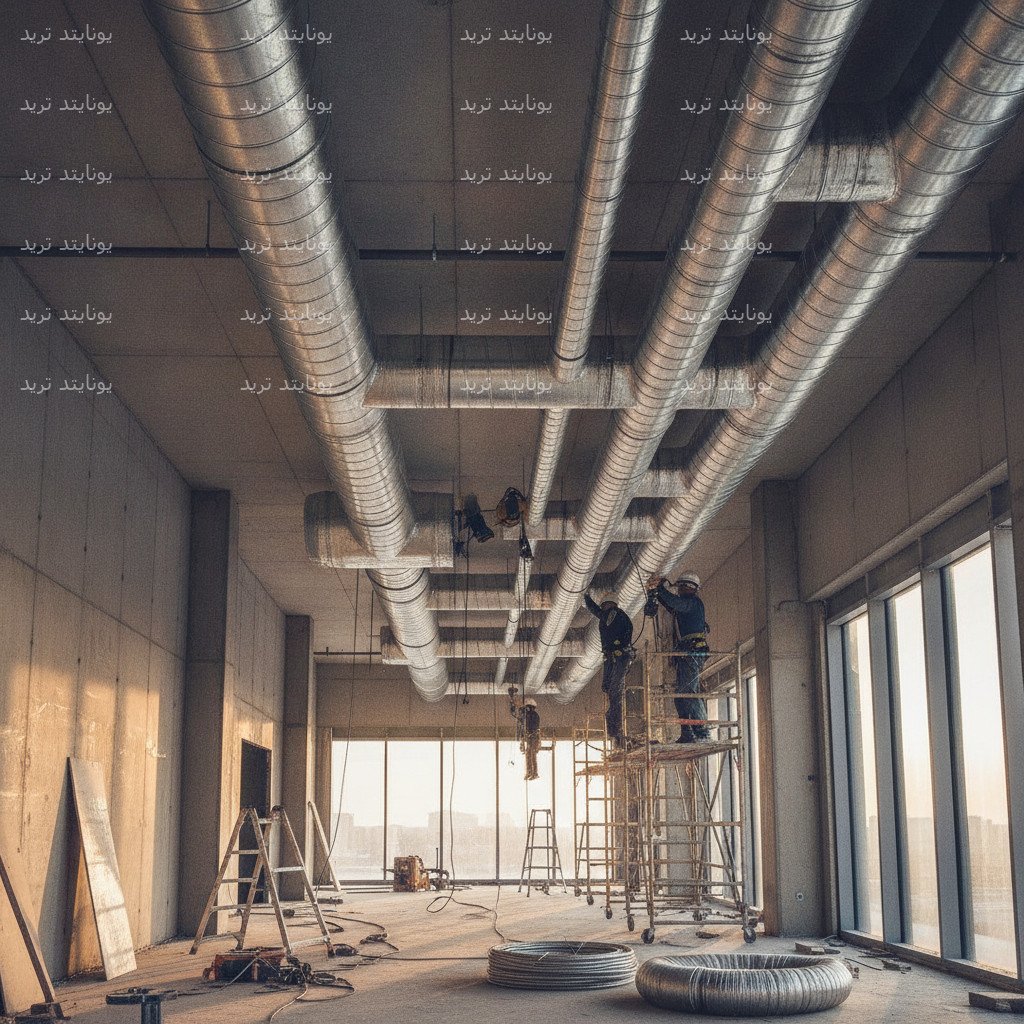
is a process Establishing pipes Air conditioning An indispensable engineering step in any modern construction project to ensure the efficiency of cooling systems and avoid future structural defects. This procedure requires high precision in selecting materials and determining paths, which prevents the need for random breaking of walls later and preserves the aesthetics of the interior design. This article aims to clarify the practical steps and technical standards used to achieve professional and sustainable extensions.
The engineering importance of the foundation stage before finishing
The structural necessity of the process Establishing pipes Air conditioning In integrating extensions into walls or ceilings before starting the plastering or painting stage. Carrying out this procedure in a timely manner will protect the pipes from mechanical damage and provide an organized geometric appearance away from visual distortions resulting from visible extensions.
❓ Basic requirements for the success of initial extensions
The success of the extension is based on careful planning of the pipe paths from the indoor unit to the outdoor unit, taking into account the minimum possible length of the path. Reducing sharp bends helps maintain refrigerant flow speed, which in turn reduces the effort on the air conditioning compressor.
Technical specifications for copper and thermal insulation
Copper is considered the most efficient and common material for transporting refrigerant thanks to its high elasticity and superior ability to withstand constant gas pressures. Specific diameters must be used in accordance with the manufacturer's specifications for each device, as these diameters directly affect the operating pressure and life of the system.
❓ Approved thermal insulation standards
Professional priming requires insulating each copper pipe individually using insulating materials such as foam or synthetic rubber to a thickness of at least 3/8 inch. This insulating layer prevents condensation, which may lead to water leakage into the walls and cause damage to the paint or concrete structure.
| Technical standard | Commercial pipes 🏆 Editor's choice | Poor pipes |
|---|---|---|
| Copper quality | ✓ High purity 99.9% | ✗ High impurity content |
| Insulation thickness | ✓ 1/2 inch (ideal) | ✗ Less than 1/4 inch |
| Pressure resistance | ✓ Withstands 800 PSI | ✗ Frequent leaks |
| Overall evaluation | ★ 9.8/10 | ★ 4.2/10 |
The table above shows the fundamental difference between certified materials and low-quality materials, as high-quality materials contribute to stable long-term system performance.
Steps for implementing extensions and verifying their safety
A process is done Establishing pipes Air conditioning Through a series of interconnected steps that ensure that the system is free of any defects before closing the walls permanently.
The diagram above shows the logical sequence of work. Nitrogen testing is a critical step that cannot be skipped to ensure a tight connection and prevent any future leaks.
❓ The importance of nitrogen pressure testing
A pressure test of the pipes using dry nitrogen gas must be performed before covering the installations, to ensure that there are no microscopic holes in the copper welds. This test gives complete reassurance that the system will operate efficiently under pressure without loss of refrigerant.
Manage condensate water drainage efficiently
Water drainage pipes must be installed with a precise geometric slope of no less than 1% to ensure the flow of condensed water towards the drainage points. This tendency helps avoid water accumulation inside the indoor unit, preventing blockages, fungal growth and unwanted odors inside the building.
This establishment aims to create the ideal infrastructure across Air conditioning installation Professional ensures effective air distribution, taking into account precise thermal insulation of the pipes to prevent moisture leakage or energy loss. Adherence to technical standards during this stage extends the life of the device and ensures stable performance commensurate with space requirements.
❓ Technical principles for establishing the drain: Using PVC pipes of appropriate thickness for heat. Securing the drain connections with strong adhesives to prevent leakage. Testing the slope of the drain by pouring a sufficient amount of water before covering. Advantages and DisadvantagesFeatures: The effectiveness of this system is not complete after its installation except by performing periodic air conditioning maintenance that maintains the efficiency of the compressor and ensures the safety of the cooling lines from blockage or leakage. Paying attention to continuous inspection of the units extends their lifespan and saves energy consumption, which saves facility owners from expensive repair costs. Achieving ideal cooling efficiency requires adherence to precise technical standards when installing copper pipes, from choosing the appropriate diameters to complete thermal insulation that prevents energy loss. Implementing these basics ensures a smooth flow of refrigerant, which extends the life of the device and significantly reduces electricity consumption. Achieving ideal performance requires adhering to the principles of professionalism in installing air conditioning ducts according to precise technical specifications that ensure efficient flow of the refrigerant. This includes choosing appropriate copper thicknesses and tight thermal insulation to prevent moisture condensation and Freon leakage inside the walls, ensuring operational efficiency that lasts for many years without structural failures. Maintaining cooling efficiency is not limited to the establishment stage only, but extends to periodic air conditioning maintenance that ensures the integrity of the Freon cycle and the cleanliness of filters and heat exchangers on a regular basis. This technical commitment helps avoid sudden breakdowns, reduce energy consumption, and extend the life of the entire air conditioning system. Once the paths and networks are prepared, the actual stage of installing the air conditioning begins precisely in accordance with the approved technical specifications. This step includes installing the internal and external units, adjusting the cooling balances, and tightening the connections to prevent any possible leakage. This procedure ensures smooth operation of the system with the highest energy efficiency and without causing any operational noise. Maintaining cooling efficiency is not limited to the establishment stage only, but also includes adherence to periodic procedures that ensure the continued operation of the devices without sudden malfunctions. Regular attention to requesting specialized air conditioning maintenance services contributes to cleaning the filters and checking the refrigerant gas levels accurately, which extends the life of the system and reduces energy consumption. Precise preparation facilitates the air conditioning installation phase and ensures that the indoor and outdoor units operate at the highest possible operational efficiency. Sound engineering standards also contribute to avoiding refrigerant gas leaks and water drainage problems, which extends the lifespan of the device and reduces energy consumption. Complete protection of pipes from weather factors and erosion. Maintaining the aesthetic appearance of the place without external extensions. Increasing cooling efficiency by reducing energy loss. Disadvantages: Requires high precision in implementation and high initial cost. Difficulty in accessing repair in the event of a later implementation error. Editor’s verdict and final evaluation
Professional priming is a long-term investment that ensures stable HVAC performance and protects the property from moisture damage. The final rating is 9.5/10, which is an ideal choice for those looking for quality finishing and outstanding cooling performance without compromises.
Frequently asked questions
❓ What are the best diameters of air conditioning pipes?
The device's power (in horsepower) determines the appropriate pipe diameter, with the most commonly used diameters ranging from 1/4 inch for a liquid line to 3/8 or 1/2 inch for a gas line.
❓ Is it possible to install air conditioning pipes after plastering?
This is not recommended at all because it requires additional cracking in the walls, which weakens the structural structure and increases the costs of refinishing and painting.
❓ Why should copper pipes be insulated with thick materials?
Thick insulation prevents moist air from reaching the cold surface of the pipe, which prevents the condensation of water droplets that cause damage to the walls and affect the efficiency of heat transfer.
❓ How do I ensure that there are no leaks in the extensions?
The only guarantee is to perform a nitrogen pressure test for a minimum of 24 hours and monitor the pressure gauge to ensure it remains at the desired level.
❓ What is the ideal slope for drain pipes?
The slope should be a minimum of 1 cm per meter of length to facilitate the movement of water due to gravity and to avoid any stagnation that may cause blockage.
conclusion
Represents quality Installing air conditioning ducts The foundation upon which the efficiency of the home cooling system is built for many years. We always recommend hiring specialized technicians and adhering to technical standards to ensure peace of mind and protect your investment in air conditioning devices.
















Community dialogue
0 comments