
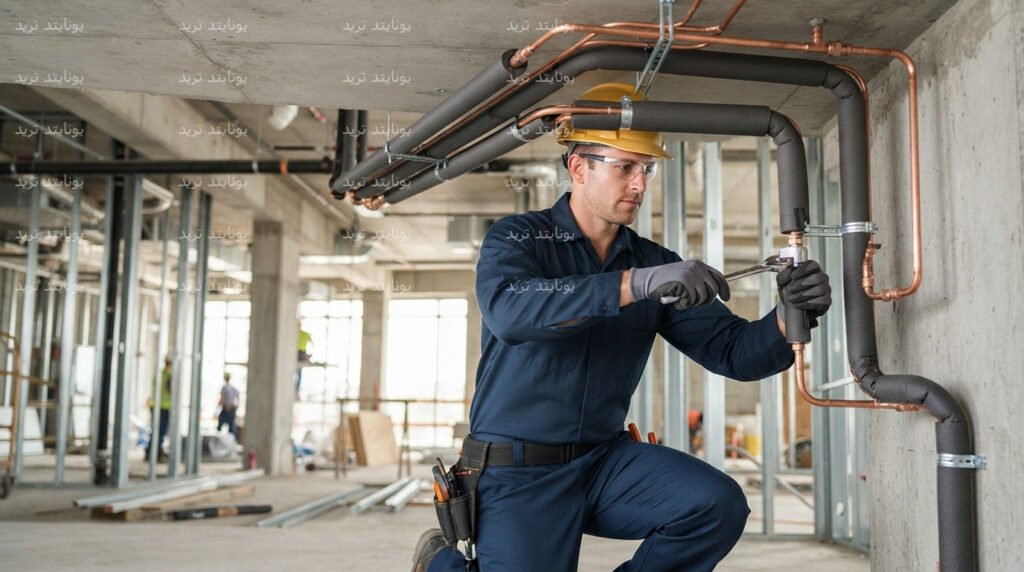
is a process Establishing pipes Air conditioning The most important step in the structural preparation stages of any property that aspires to a comfortable environment. Adherence to the correct technical standards at this stage prevents future cooling malfunctions, protects the walls from the risk of water leakage or moisture condensation, ensuring sustainable operating efficiency of the device in the long term. In this article, we will discuss the precise technical details that every site owner or supervisor needs to ensure that copper extension work is carried out in accordance with the highest international engineering standards.
Engineering standards for selecting and laying pipes
The technical foundation of any air conditioning system begins with the quality of the copper ores used in it Establishing pipes Air conditioningYou must rely exclusively on seamless copper pipes that meet specifications ASTM B280 Universal, which ensures that it can withstand high Freon pressures without cracks or microscopic leaks.
❓ Thermal insulation requirements for pipes
Copper pipes must be thermally insulated using rubber foam with a thickness of no less than 3/8 to 1/2 inchThis insulation prevents water condensation, which in turn leads to damage to paints and gypsum ceilings if this essential technical step is neglected.
❓ Determine the appropriate diameters according to capacity
The quality of refrigerant flow directly depends on the compatibility of the diameter of the pipes with the capacity of the air conditioning device. For example, it requires a high-capacity air conditioner 1.5 tons Diameter is often used 1/4 inch For liquid line and1/2 inch For the gas line, while higher power devices (eg 5 HP) require larger diameters up to 1/2 and 3/4 inch To ensure stable pressures.
This diagram shows the sequence of processes necessary to ensure a successful installation. The stress testing step is the difference between successful establishment and potential construction risks.
Requirements for implementing water drainage paths
The air conditioning drain hose requires a geometric slope of at least 1 cm per linear meter To ensure water flow. Any error in the degree of inclination will inevitably lead to water accumulations inside the installations, causing frequent blockages and the appearance of unpleasant odors or direct leakage into the rooms.
❓ Technical guidelines to avoid water leakage: Avoid making any sharp bends in the plastic drain hose to ensure easy flow. You must ensure that the drain hose is installed away from the power cables to avoid any contact. It is preferable to use high-quality plastic connections that are resistant to pressure and heat. The drain must be tested by pouring a sufficient amount of water before closing any extensions in the walls. The importance of testing the nitrogen pressure before closing. Testing the pressure of the pipes using nitrogen gas is a mandatory procedure before the wall plastering stage. This test detects any hidden holes or weak welds in copper piping that may not become apparent until the device has been operated under actual Freon pressure. Between professional installation and random work, which often leads to exorbitant repair costs later. Advantages and disadvantages of establishing air conditioning ducts. Advantages: A successful air conditioning installation process depends on the accuracy of the copper connections and their distribution in proportion to the interior design of the place, to ensure the flow of refrigerant gas without obstacles. It also requires choosing ideal paths that avoid sharp bends that may affect Freon pressure, giving you an ideal and quiet cooling experience in every corner of your room. Complete protection of the structural structure from moisture damage and condensation. Extending the life of the air conditioning compressor thanks to stable pressures. Saving electricity consumption as a result of maintaining the efficiency of the refrigeration cycle. Obtaining a clean aesthetic appearance thanks to the extensions buried inside the walls. Disadvantages: Despite the accuracy of the initial equipment, maintaining this ideal performance remains dependent on performing periodic and comprehensive air conditioning maintenance for the various parts of the system. Regular inspection helps clean the filters and ensure the safety of refrigerant pressure, which prevents compressor fatigue and extends the life of the air conditioning units. Implementing this stage requires high engineering precision, taking into account the foundations of establishing the correct air conditioning piping to protect the refrigerant path from bottlenecks and invisible leaks inside the walls. Choosing copper diameters that match specifications and insulating them tightly also contributes to avoiding loss of cooling efficiency and ensuring that the compressor operates at its maximum capacity. Implementing these extensions requires avoiding disastrous mistakes and avoiding professional technical work, such as bending copper pipes at sharp angles or neglecting the quality of thermal insulation inside the walls. Avoiding such lapses effectively maintains the refrigerant flow path and protects the building from subsequent cracking damage. Maintaining this ideal performance is not complete with just proper establishment, but rather requires commitment to integrated periodic programs aimed at inspecting mechanical parts, cleaning filters, and accurately measuring refrigerant gas levels. Carrying out regular air conditioning maintenance contributes to avoiding a sudden decline in cooling efficiency. It also extends the lifespan of air conditioning units and significantly reduces electrical energy consumption. The process of professional air conditioning installation requires extreme precision in choosing the locations of the indoor and outdoor units, taking into account the copper extension paths to ensure the flow of refrigerant without obstructions. Relying on specialized technicians ensures tight thermal and mechanical insulation, which enhances the lifespan of the system and prevents any leaks that may affect the cooling efficiency or the safety of the interior decorations. The effectiveness of this sound establishment is not complete without adopting a periodic schedule that ensures that air conditioners are maintained and their vital parts are checked regularly. Continuous monitoring of the system contributes to the early detection of any blockage in the filters or a decrease in Freon gas pressure, which extends the lifespan of the cooling units and maintains the purity of the air inside the place. The process of installing a professional air conditioner requires careful coordination between choosing the location of the indoor unit and the drainage connections, to ensure optimal air distribution and avoid any unwanted noise. Proficient installation of the external units also contributes to extending the life of the device, as it protects it from harsh weather factors and enhances the efficiency of the overall cooling cycle. High initial cost of insulating materials and high-quality copper. Difficulty in making major modifications after completion of foundation and sealing work. The need for professional technicians to ensure the accuracy of the welds and avoid leakage. Editor’s Verdict and Final EvaluationAfter reviewing the technical standards, we give this approach to establishing air conditioning ducts a final rating of 9.6/10. This option is suitable for all those looking for maximum cooling efficiency. Away from the problems of regular maintenance, it is a necessary investment for any homeowner seeking to avoid extensive repair costs resulting from traditional foundation errors. Frequently Asked Questions Why is nitrogen testing necessary when installing air conditioning ducts?
Nitrogen testing ensures there are no leaks at the welds before sealing the walls. This procedure protects the homeowner from breaking the decorations in the future to discover hidden faults.
❓ Can thin copper pipes be used to save money?
Using thin pipes is a big risk, as they cannot withstand high Freon pressures and are easily punctured. This leads to loss of Freon gas and damage to the entire device in a short time.
❓ How do I ensure the quality of insulation of the air conditioning ducts at my site?
It must be ensured that the thickness of the insulation is not less than 3/8 inch Covering the entire copper track without leaving any gaps. Proper insulation prevents water droplets from reaching the walls and causing dampness.
❓ Should air conditioning pipes be separated from electrical extensions?
Yes, it is preferable to place the copper track in a channel (path) completely independent of the electrical wires. This separation prevents any effect of heat on the wires or the occurrence of unwanted structural interference.
❓ How long does the pressure testing process take before the routes are approved?
It is recommended to leave the pipes under nitrogen pressure for a period of no less than 24 to 48 hoursIf the pressure indicator remains constant, this means that the foundation is completely intact and ready to close.
Adhering to these technical steps ensures peace of mind and optimal cooling performance in your home. Do not hesitate to request an inspection report from the responsible technician before closing the walls to ensure compliance with all the mentioned standards.
















Community dialogue
0 comments