
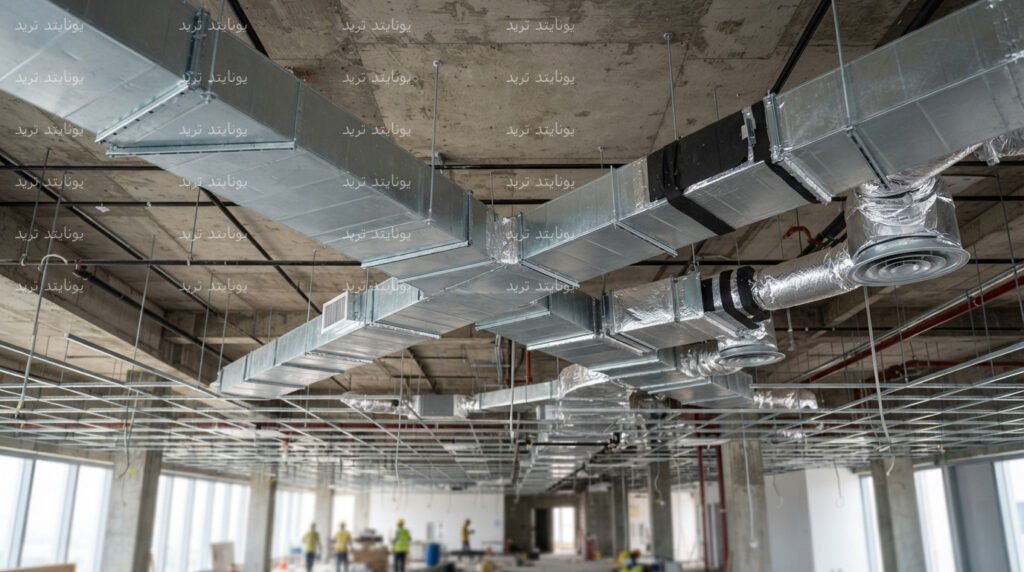
It is a stage Establishing pipes Air conditioning Before starting the finishing work, there is an essential engineering step that ensures the efficiency of the device’s long-term operational performance. Pre-planning copper tracks and their extensions prevents the need to break down walls or ceilings later, which preserves the aesthetics of the place and reduces financial waste and effort in future maintenance operations. This procedure is of utmost importance to ensure the smooth flow of the refrigerant, while maintaining the integrity of the structural structure from moisture and water condensation.
Why is early laying of pipes considered a construction necessity?
The main benefit is Establishing pipes Air conditioning In building an integrated cooling system that does not require costly repair interventions after the completion of paints and decorations. Early establishment helps in accurately determining the locations of indoor and outdoor units, ensuring an ideal balance between piping lengths and compressor capacity.
In addition, this procedure gives complete flexibility in choosing extension paths away from power cables or other water pipes. Keeping the copper pipes safe from sharp bends during installation protects the refrigeration cycle from jams that may lead to poor cooling or damage to the compressor in the long term.
❓ The importance of thermal insulation of copper pipes
Insulating copper pipes with layers of foam or rubber with a standard thickness ranging from 3/8 to 1/2 inch is an absolute necessity to prevent water condensation. Water condensation leads to the appearance of moisture spots on walls and ceilings, which harms interior designs and causes gradual damage to the concrete or gypsum structure.
Good insulation also provides effective thermal protection that prevents the loss of coolness of the gas as it travels between the two units. Integrated insulation enhances energy efficiency, as the device operates under ideal operating conditions without extra effort to compensate for heat losses.
Technical standards for choosing pipe diameters according to air conditioning capacity
Suitable diameters depend on Establishing pipes Air conditioning Directly depends on the device's capacity in horsepower or refrigeration tons to ensure pressure stability. The use of inappropriate diameters necessarily leads to a decrease in cooling efficiency and a significant increase in electricity consumption.
| Air conditioning capacity (hp) | Intake pipe diameter (inch) | Exhaust pipe diameter (inch) | 🏆 Editor's choice |
|---|---|---|---|
| 1.5 – 2.25 | 1/2 | 1/4 | ✓ Perfect |
| 3 – 5 | 5/8 | 3/8 | ✓ Professional |
| More than 5 | 3/4 | 3/8 | ✕ |
The above data demonstrates the necessity of matching diameters to the capacity of the device. 1.5 to 2.25 HP air conditioners require precise diameters to ensure proper flow velocity, while larger 3 to 5 HP systems require larger diameters to meet the needs of the refrigerant.
Implementation steps to ensure the safety of extensions
Professional implementation requires adherence to specific geometric paths that ensure there are no sharp bends that may affect gas flow. Here are the most important practical steps that must be followed while working:
- Determine the locations of the internal and external units accurately, taking into account the inclination of the drain pipe.
- Laying copper pipes within the designated paths and completely thermally insulating them.
- Conduct a pressure test using nitrogen gas to ensure that the system is free of any leaks.
- Close the pipe openings well to prevent the entry of dust or impurities that may damage the expansion valve.
Nitrogen pressure testing ensures the system remains completely airtight before the walls are permanently sealed. Failure to perform this test may result in a hidden refrigerant leak, requiring significant additional costs to detect and subsequently repair the fault.
The above diagram shows the correct path to implementation Installing air conditioning ducts To ensure the quality of work and avoid construction errors. The process begins with planning and ends with safe closure after ensuring that the pressure is safe.
It requires an operation Professional air conditioning installation High precision in choosing the locations of the indoor units to ensure perfect air distribution without affecting the room’s décor. The quality of thermal insulation of copper pipes must also be ensured to prevent moisture condensation, which enhances the lifespan of the device and ensures continued cooling efficiency in the harshest weather conditions.
❓ Advantages and disadvantages
Features:
Maintaining this ideal performance is only complete by adhering to procedures Regular air conditioning maintenance This includes cleaning filters and checking refrigerant levels periodically. Paying attention to these technical details enhances the lifespan of air conditioning units and prevents their cooling efficiency from declining, even at the height of the summer season.
To ensure this sustainable performance, strict technical standards are required when choosing the types of copper and the thickness of the thermal insulation, which prevents any Freon gas leaks or water condensation inside the walls. that Professional installation of air conditioning piping It is based primarily on geometric precision in welding and path distribution, which constitutes the basic foundation for the system to operate with high efficiency throughout its operation period.
This stage requires careful adherence to the highest quality standards in selecting copper materials and determining engineering paths, to ensure that the cooling medium flows smoothly without obstructions. that Professional installation of air conditioning piping In accordance with technical standards, it protects the facility from gas or moisture leaks, and ensures exceptional efficiency of long-term cooling performance.
The efficiency of the cooling system does not depend only on the quality of the initial establishment, but its sustainability depends primarily on a procedure Regular air conditioning maintenance Ensures the safety of the Freon cycle and the cleanliness of the filters and internal evaporator. This regular technical inspection contributes to reducing energy consumption and avoiding sudden malfunctions, which extends the life of the air conditioning units and maintains the purity of the air inside the place.
Once the basic extensions have been prepared, it becomes a step Air conditioning installation Airing with precision and professionalism is the main focus for the completion of the system. Installing the indoor and outdoor units requires careful balancing to ensure regular water drainage and avoid any annoying vibrations during operation. Refrigeration lines should also be tightened and air removed from the circuit to maintain compressor efficiency and achieve the best cooling flow within the space.
To ensure the sustainability of this system with the highest possible cooling efficiency, procedures are in place Air conditioning maintenance Regular air circulation is indispensable for checking refrigerant pressure and cleaning internal filters and coils regularly. This continuous checking prevents the accumulation of deposits that exhaust the compressor, reducing the possibility of sudden malfunctions and prolonging the lifespan of the air conditioning units.
With the completion of construction preparations, a stage comes Air conditioning installation According to precise technical standards to connect the internal and external units and adjust the refrigerant flow levels. This procedure requires tight installation and complete emptying of air and moisture from the cooling circuits to ensure the highest levels of cooling and extend the life of the air conditioning system.
- Complete protection of the aesthetic appearance of walls and ceilings without the appearance of external extensions.
- Increase the lifespan of the device thanks to professional copper extensions.
- Significant savings in periodic maintenance costs resulting from Freon gas leaks.
- Improving cooling efficiency through elaborate thermal insulation of pipes.
Disadvantages:
- It requires high precision in implementation and prior coordination with the interior designer.
- It is difficult to make any modifications to the pipes after the plastering and painting work is completed.
- The initial installation cost may seem high compared to traditional surface installation.
❓ Editor's judgment and final rating
Rating 9.5/10. It is considered Installing air conditioning ducts A strategic choice for those looking for quality of life and a modern appearance for the home. It is the ideal solution for modern buildings to ensure silent and sustainable cooling performance, provided that specialized technicians and materials conform to international specifications.
Frequently asked questions
❓ What are the best types of copper used in foundation?
It is recommended to use high-thickness “roll” copper that conforms to the technical specifications, especially copper that can withstand the pressures of modern Freon gas such as R410A, to ensure that no perforation or leakage occurs.
❓ Is it possible to modify the path of air conditioning pipes after finishing?
No, modifying the tracks after finishing is very difficult and often leads to the breakage of large parts of the walls, resulting in large additional costs for restoration and painting.
❓ How do I ensure the quality of copper pipe insulation?
You must ensure that the thickness of the insulation is not less than 3/8 inch and that the insulation is completely covered without any gaps between the insulation pieces, and use strong thermal adhesive to connect the joints.
❓ When should you start installing air conditioning ducts?
You must start immediately after completing the brick work and determining the internal partition locations, and before starting the wall plastering work or installing the false ceilings.
❓ Is the installation different between split and concealed air conditioners?
Yes, foundation varies in diameters and drainage paths; Concealed air conditioners require precise drainage paths and larger spaces in the false ceiling to install the indoor unit.
❝Commitment to standards Installing air conditioning ducts The right one represents the cornerstone for strong and comfortable cooling performance inside your home. Do not hesitate to consult a certified air conditioning engineer to ensure that the routes are implemented according to precise technical standards.
















Community dialogue
0 comments