
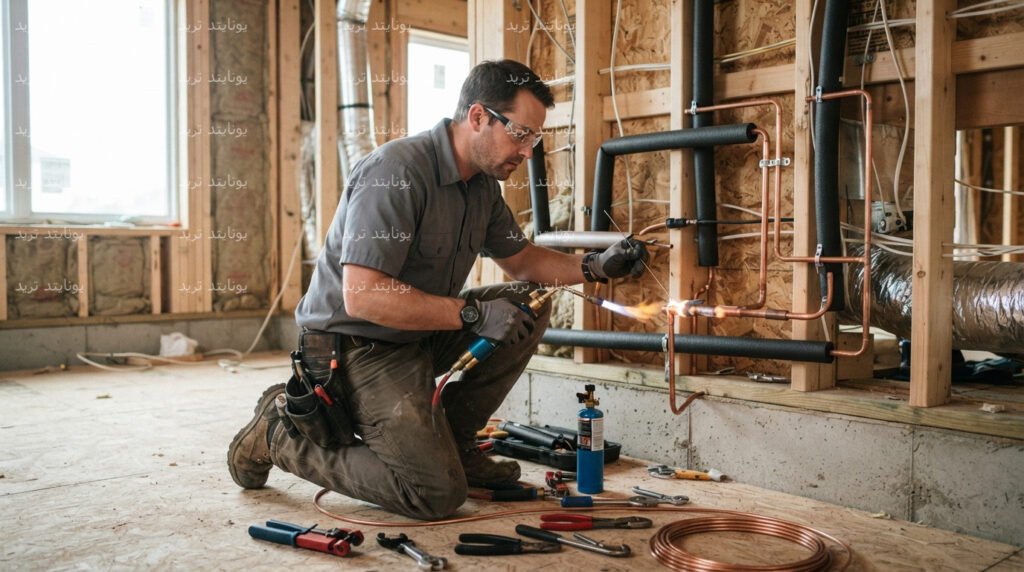
is a process Air conditioning duct extension The most important step to ensure that the cooling system works with high efficiency and without sudden malfunctions. Choosing the correct path and appropriate piping diameter directly affects the flow of refrigerant and prevents any abnormal pressure on the compressor. In this content, we will review the most important engineering standards that must be followed to obtain a durable and sustainable installation that guarantees ideal cooling for your home.
Criteria for selecting materials when extending air conditioning ducts
The quality of copper used in... Air conditioning duct extension It is the difference between a system that has been operating for years and a system that needs constant maintenance. You must use high purity copper with a specific wall thickness that matches the pressure of the refrigerant used in your device.
❓ The importance of thermal insulation of pipes
Thermal insulation (insulating foam) prevents cold loss during gas transmission within the pipes. Absent or damaged insulation causes water to condense on the pipes, causing moisture to seep into the walls and corrode the copper over time.
❓ Determine the appropriate diameter of pipes
The diameter of the ducts depends on the air conditioning capacity measured in horsepower or refrigeration units (BTU). Using a smaller diameter than required leads to a decrease in intake pressure, while a larger diameter reduces the gas flow speed and negatively affects the cooling process.
Engineering planning of internal paths
A process is done Air conditioning duct extension According to a precise engineering plan, it avoids sharp bends that may cause blockage or twisting of the copper. It is always preferable to reduce the number of connections and welds to reduce the chances of any future gas leakage.
❓ Avoid intersections with electrical extensions
An adequate safety distance must be maintained between copper pipes and any other electrical or water pipes. This procedure protects the system from thermal interference and prevents any chemical reactions that may lead to the corrosion of copper due to stray currents.
Stages of carrying out the work professionally
The process includes sequential steps to ensure quality, from inspection to final testing. Here is an illustrative table comparing the types of materials you may encounter in the market:
| Standard | High quality brass 🏆 Editor's choice | Commercial copper | Aluminum tubes |
|---|---|---|---|
| Durability | 9.5/10 ✓ | 6/10 ✗ | 4/10 ✗ |
| Ease of welding | 9/10 ✓ | 7/10 ✓ | 3/10 ✗ |
| Corrosion resistance | 9.8/10 ✓ | 5/10 ✗ | 2/10 ✗ |
| Price | 8/10 (investment) | 9/10 (cheap) | 10/10 (economical) |
The table above shows that high quality copper is the best despite its higher initial cost. This is the safest option in the long term to prevent costly refrigerant leaks.
Systematic action steps for professionals
The previous diagram shows the correct path for establishing extensions. The work begins with planning and ends with pressure testing, which ensures the safety of the system before actual operation.
Advantages and disadvantages when establishing extensions
Features:
The actual installation process begins with installing the indoor and outdoor units with utmost precision, taking into account complete thermal insulation of the copper pipes to prevent condensation and energy loss. It also requires a comprehensive check for gas leaks using nitrogen pressure, to ensure that the refrigeration cycle is completely closed before final operation. Unit installation
A well-done job requires above all the execution of a stage Establishing pipes Air conditioning with great care during the initial structural finishes of walls and ceilings. This pre-preparation ensures that the copper lines are protected from mechanical damage, and subsequently facilitates the connection of the indoor and outdoor units with the least possible path and without the need for any additional breakage.
The culmination of these precise steps requires a stage Air conditioning installation Install the indoor and outdoor units with complete professionalism to ensure balanced air flow and stable operational pressures. It is also necessary to tighten the copper connections and ensure that air and moisture are carefully removed before pumping the refrigerant into the circuit.
The success of the extension is not complete without a periodic plan that includes: Air conditioning maintenance Air, as regular checks contribute to early detection of refrigerant gas leaks and treatment of any blockage that may occur in the refrigeration cycle. This preventive measure protects the compressor from stress and keeps cooling power and energy consumption rates within optimal limits over the long term.
It requires an operation Professional extension Strict adherence to thermal insulation specifications and ensuring the correct bends of the pipes to avoid any bottlenecks in the refrigerant gas path. Checking the pipe pressure before operation is an essential step to ensure that the system is safe from any leaks that may impair the cooling efficiency in the long term.
Once proper establishment is completed, the priority shifts towards Air conditioning maintenance Periodically and regularly to maintain the life of the virtual device. Proactive technical inspection helps detect any minor refrigerant gas leaks or blockages in pipes before they escalate into serious malfunctions that affect cooling performance.
Implementing this path requires a precise stage that precedes the final finishing, which is: Establishing cooling pipes Inside walls and ceilings according to approved plans. This early action helps protect the copper mesh from mechanical damage, and later facilitates smooth and secure connection of indoor and outdoor units.
Once the foundation and extensions are completed, there comes a stage Air conditioning maintenance Periodically as a vital precaution to extend the life of the device and maintain air quality. This requires cleaning the filters and checking Freon levels regularly, ensuring a continuous flow of cool air and protecting the compressor from damage caused by dust buildup or lack of cooling.
The success of this system requires careful planning starting from one stage Installing air conditioning ducts Inside walls and floors before final finishing works, to ensure their protection from damage and sharp bends. These copper extensions must also be insulated with high-quality foam materials to prevent moisture condensation and maintain efficient transfer of the refrigerant.
- Increasing the device's cooling efficiency and reducing electricity consumption.
- Extending the life of the compressor by preventing excessive pressures.
- Ease of future maintenance when relying on clear paths.
Disadvantages:
In order for these extensions to bear fruit, steps must be taken Air conditioning installation According to precise technical standards, starting with the secure installation of the internal and external units and adjusting the water balance to avoid any leakage. Insulation of connections and complete vacuuming are also required to ensure strong cooling performance and longer device life.
- The high cost of certified high-quality copper ores.
- It requires high technical skill to avoid twisting the pipes at the corners.
- The need for professional tools such as pressure device and vacuum pump.
Overall rating: 9.6/10. It is considered an investment in Air conditioning duct extension Using original materials and trained workers is the best choice for every homeowner. The consequences of this decision are significant savings on electricity bills and the avoidance of recurring repair costs that result from poor foundation.
Frequently asked questions
❓ Can old air conditioning ducts be combined with a new device?
This is not recommended at all because old pipes may contain residues of oil or dirt, or may have been subjected to invisible internal corrosion that leads to the leakage of new refrigerant.
❓ Why should you use a vacuum pump?
A vacuum pump is used to extract air and moisture from the piping before opening the gas valves, preventing moisture from freezing within the system and subsequent damage to the compressor.
❓ How do I know if the air conditioning pipes are leaking?
The leak appears through sudden poor cooling, ice forming on the external valve, or hearing a slight hissing sound resulting from gas escaping from the cracks.
❓ Does the length of the pipes affect the performance of the air conditioner?
Yes, increasing the length of the pipes beyond the limit permitted by the manufacturer reduces the cooling capacity and the compressor carries additional effort that sometimes requires adding additional refrigerant gas.
❓ When should A/C pipes BE replaced?
It must be replaced immediately when noticing the presence of holes, sharp twists, or when moving the device from one place to another, as it is difficult to ensure its safety after disassembly and installation.
Compliance with technical standards Air conditioning duct extension Gives you peace of mind throughout the summer seasons. Always make sure to contract with technicians who have the right tools, and follow the foundation stages yourself to ensure the quality of insulation and connections.
















Community dialogue
0 comments