
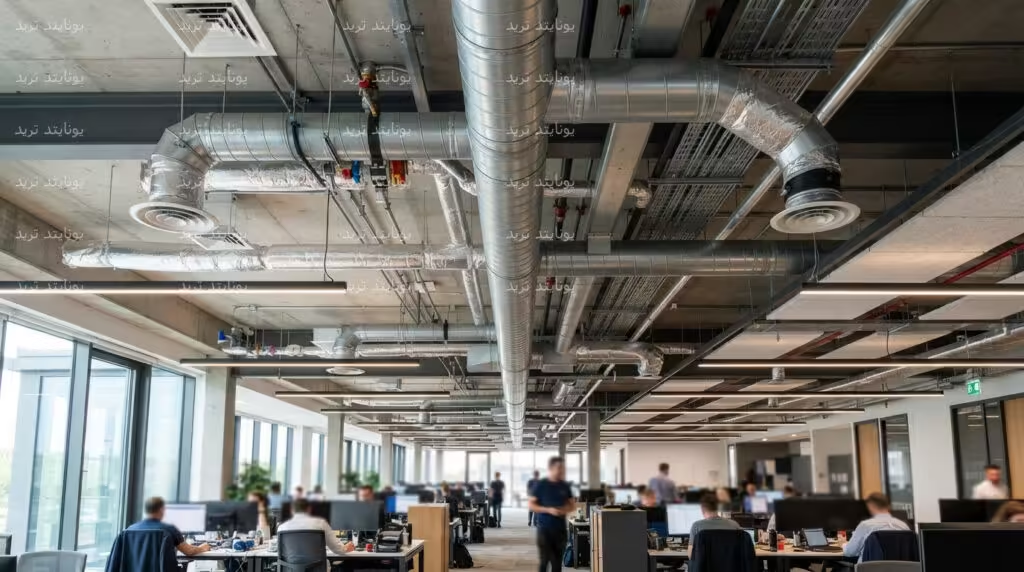
represents a stage Establishing pipes Air conditioning Before starting interior finishing work, it is the basic pillar to ensure the efficiency of cooling and the sustainability of the system inside modern buildings. The careful engineering implementation of this stage results in aesthetically concealing the extensions, protects the pipes from damage, and reduces the possibility of Freon gas or water leakage in the future. Professional technicians understand that the accuracy of these steps is the crucial difference between a stable cooling system and frequent breakdowns that require breaking down walls and rework.
The importance of advance engineering planning for extensions
It is considered practical Establishing pipes Air conditioning Before finishing the walls, it is an engineering necessity to avoid the high costs resulting from structural modifications later. Proper installation ensures even distribution of copper piping and drainage paths, preventing sharp bends that may impede the movement of the refrigerant.
❓ Technical criteria for choosing copper pipes
Copper is the most efficient material for transporting Freon gas, thanks to its high ability to withstand operating pressures and resist corrosion over time. The diameters of the pipes must be chosen very precisely based on the capacity of the air conditioner. For example, a 1.5 HP air conditioner requires the use of 1/4" and 3/8" piping to ensure smooth flow without resistance.
Stages of implementing thermal insulation and bonding
The step of insulating pipes using high-quality materials, with a thickness ranging from 9 to 19 mm, is a vital necessity to prevent moisture condensation. Effective insulation contributes to keeping the gas inside the pipes cool, and protects the copper from external factors that may lead to its corrosion, which increases the life of the device.
❓ Steps to ensure the safety of the paths: Determine the exact locations of the internal and external units before starting to break the paths. Install plastic drainage pipes with an accurate geometric slope of no less than 1% to ensure rapid drainage. Use strong fixing materials for the pipes inside the walls to prevent any future vibrations. Final inspection of the connections and ensure the quality of the welds before closing any concrete openings. Pressure tests to ensure that there are no leaks. Experts recommend performing a pressure test for the pipes using nitrogen gas before completely closing the walls to ensure the safety of the system. This test helps detect any pinholes or weak connection points, preventing Freon leakage and avoiding reduced cooling efficiency after final installation. Technical ItemDetails and SpecificationsPipe MaterialHigh quality copper for compressionInsulation thickness9 – 19 mm depending on locationLeakage testNitrogen pressure before sealingDrainage tendency1% to ensure water flow📊 Illustrative diagram 1 Air conditioning duct layout 2 Copper piping laying 3 Thermal insulation application 4 Nitrogen pressure testing 5 Proper duct closure and finishing This diagram shows the Indian sequence adopted to ensure the quality of installation of air conditioning ducts; Nitrogen represents the first line of defense to discover any technical defect before completing the final wall finishing operations. Frequently asked questions: Why should air conditioning pipes be insulated?
The pipes are insulated to prevent the formation of water droplets resulting from condensation and to protect Freon gas from losing its coolness, which ensures higher efficiency of the device and protection of copper.
It requires an operation Professional air conditioning installation Careful selection of the locations of the indoor and outdoor units to ensure ideal air distribution and effective water drainage. The success of the system also depends entirely on the skill of the technician in soldering the copper connections and thermally insulating them with high precision to prevent any condensation that may affect the lifespan of the device.
Experts realize that the integrity of the foundation is not complete without following a systematic plan based on... Regular air conditioning maintenance And precision for mechanical and electrical parts, which maintains the level of air flow and ensures stable refrigerant pressure within the closed circuits. This continuous inspection contributes to the early detection of any defect that may stress the compressor, which increases the efficiency of energy consumption and extends the operational life of the system as a whole.
Engineers realize that the success of the system depends entirely on... Air conditioning duct extension According to well-studied copper paths that ensure the flow of Freon smoothly and without obstructions. Also, taking care of the quality of the pipes and their perfect insulation at this stage protects the system from poor future cooling and reduces the possibility of leakage in the long term.
Specialized technicians realize that success in implementing these extensions is only complete with a procedure Professional air conditioning installation The air flow angles are adjusted and the internal and external units are installed with extreme precision. This step ensures the highest levels of energy efficiency and avoids any annoying vibrations or sounds that may result from loose installation.
Experts realize that the safety of the wiring network is completed by developing a periodic plan that includes: Air conditioning maintenance The building is inspected regularly to ensure that the Freon pressure is stable and that the internal cooling paths are clean. This preventive follow-up contributes to the early detection of any blockage in the drain lines or a decline in the efficiency of the compressor, which prevents sudden malfunctions and extends the lifespan of the air conditioning units.
Experts realize that cooling efficiency does not depend only on the soundness of the initial installation, but also depends fundamentally on adherence to programs Air conditioning maintenance Regular cleaning of filters and checking gas levels and mechanical components. This preventive measure helps maintain peak operating performance and extends the long-term life of the devices.
❓ What is the ideal time to install air conditioning ducts?
It is recommended to begin foundation immediately after the completion of construction work and before starting plastering or painting work, to ensure that the extensions are hidden professionally.
Professional technicians understand that step Air conditioning installation It requires extreme care in installing the internal and external units and adjusting the water drainage paths with extreme precision. These measures ensure the highest airflow rates and avoid vibrations or noise resulting from loose installation, which directly affects the temperature stability and air quality of the space.
❓ How can we ensure the quality of pipe welds?
The quality of the welds is confirmed through a nitrogen pressure test, where the pipes are kept under high pressure for a period of time to monitor any drop in the meter reading.
❓ Does the length of the pipes affect the cooling efficiency?
Yes, very long or short distances inadvertently affect gas pressure; Therefore, you must adhere to the length of pipes recommended by the device manufacturer.
❓ When should old air conditioning pipes be replaced?
They must be replaced when severe oxidation or holes in the copper are observed, or when the type of refrigerant is changed to one that is not compatible with the current pipes.
Adherence to these technical standards during... Installing air conditioning ducts It ensures sustainable cooling and protects you from unexpected periodic maintenance. Contact specialized technicians to ensure that these steps are implemented in accordance with approved engineering principles.
















TQTAG76 Community dialogue
0 comments