
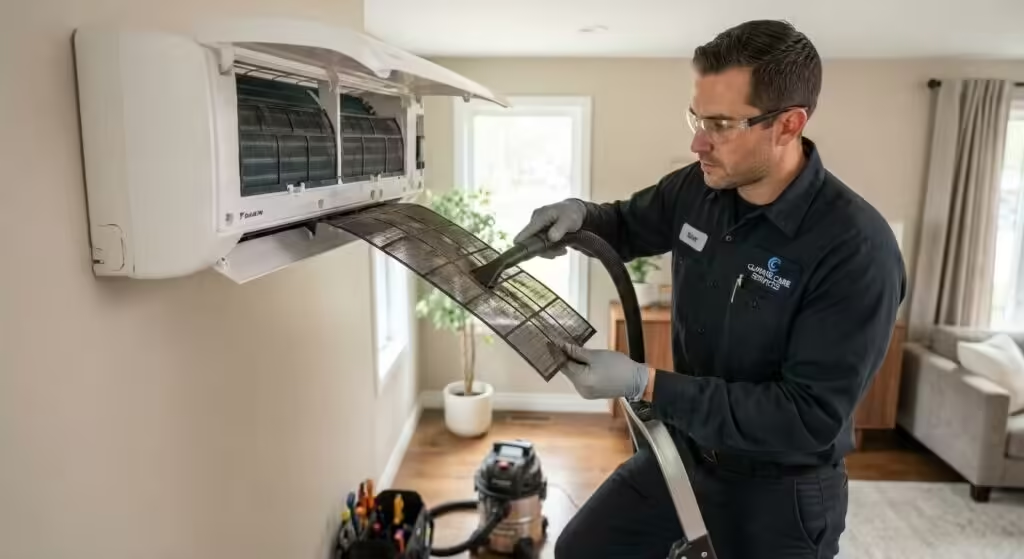
Strategies for intelligent optimization of air flow inside rooms
Cooling efficiency does not stop at the device itself, but rather depends vitally on how the air is distributed within closed spaces. Clogged air outlets with furniture or curtains put additional pressure on the air conditioning compressor, shortening its lifespan and increasing your electricity bill. To make the most of Air conditioning maintenance: 7 steps, you must focus on the air dynamics inside the house.
Practical steps to adjust heat distribution
- Move any large pieces of furniture away from the air conditioning vents to allow unhindered air circulation.
- Use ceiling fans in reverse circulation mode to help distribute cooled air evenly in the corners of the room.
- Ensure that all external openings, such as windows and doors, are closed to prevent cold air leakage and loss of thermal pressure.
- Cleaning the ventilation openings from accumulated dust that may change the direction of air flow and cause it to concentrate in unwanted areas.
Cooling system performance comparison table based on maintenance frequency
The following table shows the direct impact of adhering to the regular maintenance schedule on the vital performance indicators of the air conditioning device, where we note the significant differences in energy consumption and the life of components.
| Maintenance status | Energy efficiency | Compressor lifespan | Noise level |
|---|---|---|---|
| Regular periodic maintenance | Excellent (save 30%) | 10-12 years | Very low |
| Breakdown maintenance only | Weak (20% increase) | 5-7 years | Loud and annoying |
| Completely maintenance-free | Very bad | Less than 4 years | Volatile and intense |
Environmental factors and their impact on the life cycle of the external condenser
The external unit of the air conditioner is exposed to harsh climatic conditions, especially in areas where sandstorms or high humidity are frequent. Dust buildup between the condenser fins prevents efficient heat exchange, resulting in the device overheating and automatic shutdown.
Tips for protecting the outdoor unit
Experts advise creating a simple wooden or metal canopy over the outdoor unit to protect it from direct sunlight, taking into account leaving a sufficient distance of not less than one meter to ensure air circulation. The condenser fins should also be washed with a low-pressure water spray once a month in dusty conditions to ensure that the air paths remain open. Completely avoid using strong chemicals or acidic cleaners as they cause corrosion of the aluminum and copper in the heat exchanger. If you notice grinding sounds or abnormal vibration in the external fan, this often indicates damage to the bearing shaft or the accumulation of dirt that impedes the rotation of the blades, and here you must intervene quickly before the engine completely burns out.
Hidden malfunction indicators that users ignore
There are small details that may seem insignificant, but they raise the alarm that there is an imminent technical malfunction. For example, the presence of water drops dripping from the indoor unit often means that the drain pipe is clogged due to algae or dust. Ignoring this will cause damage to the walls and the formation of mold, in addition to the device stopping cooling to activate the protection sensors. Also, the unpleasant smell upon startup is a clear indication of the presence of bacteria stuck in the cooling coils, which requires the use of specialized sterilizers and not just surface cleaning.
Air Conditioning Maintenance: 7 Basic Steps is the perfect way to ensure cool, fresh air during the hot summer months without consuming excess energy. Following a regular air conditioner care system not only contributes to improving cooling efficiency, but also protects the internal components from premature damage and saves the costs of major repairs. In this article, we will review a practical guide that gives you full control over the performance of your home device in a professional and simplified manner.
Quick answer
Air conditioning maintenance: 7 steps to increase efficiency It is a periodic process that includes cleaning the filters, checking the external unit, checking the refrigerant gas levels, and checking the electrical connections. These measures ensure clean airflow and stable cooling power while significantly reducing your monthly electricity bill.
The importance of cleaning air filters regularly
Filters represent the first line of defense for the efficiency of the air conditioner, as they prevent dirt and dust from accumulating on the sensitive cooling coils. When filters become clogged, the engine has great difficulty drawing in air, resulting in decreased cooling and unjustified increased power consumption.
Correct cleaning methods for filters
Filters should be gently removed and washed under running water using pH neutral soap if they are very dirty. After washing, it is necessary to leave the filters to dry completely in the shade before reinstalling them; Because residual moisture may cause mold growth inside the unit.

Check and clean the external unit of the air conditioner
The outdoor unit needs sufficient space for ventilation and to efficiently dispose of the heat generated by the cooling process. The accumulation of leaves or dust around this unit hinders heat exchange, forcing the compressor to work longer and harder.
- Remove obstacles surrounding the unit at a distance of no less than 50 centimetres.
- Clean the condenser fins using a soft brush or light air pressure.
- Ensure that there are no oil leaks around the connection pipes.
Check the refrigerant level
The refrigerant gas (Freon) is the mediator responsible for transferring heat from inside the room to the outside, and its deficiency means a direct weakness in performance. If you notice that the air is coming out at a moderate temperature even though the device has been running for a long time, there may be a leak that needs to be checked by a specialist.
A comparison table between regular maintenance and neglect of the device
| Comparison standard | The effect of regular maintenance | The effect of neglecting maintenance |
|---|---|---|
| Electricity consumption | Low and stable | Very high |
| Air quality | Pure and odor-free | Dusty and laden with dust |
| Device age | Long and sustainable | Short and prone to malfunctions |
| Cooling power | High and steady | Weak and insufficient |
Check electrical connections and internal components
Electrical parts require careful inspection to ensure there are no loose wires or burn marks due to overload. Preventive maintenance includes installing connections and checking the capacitor, which is mainly responsible for starting the engine. If this part is weak, the air conditioner will suddenly stop working.
Dealing with water drainage
Algae and dust buildup in the drain hose often causes water to leak into the room instead of out. You can clean the drain path using a special vacuum cleaner or by pouring a small amount of diluted vinegar to eliminate any organic blockages.
Adjust remote control settings
Intelligent use of the controller increases the life of the air conditioner and significantly reduces the pressure on the compressor. We recommend setting the temperature to 24°C, which is the ideal temperature that provides thermal comfort without stressing the mechanical components of the device.
Frequently asked questions
How often should air conditioning maintenance be performed: 7 steps annually?
It is recommended to perform comprehensive maintenance twice a year, once before the beginning of the summer and once in the middle of it, to ensure the highest performance of the device.
Can I do air conditioning maintenance myself?
You can perform simple cleaning steps such as filters, but gas and electrical inspection requires a specialized technician to avoid electrical hazards or gas leakage.
What is the main reason why the air conditioner suddenly stops cooling?
The cause is often due to a damaged electrolytic condenser or severely clogged filters that prevent the air from flowing and cooling the evaporator properly.
How do I know that the air conditioner needs to charge Freon?
When you notice frozen copper pipes or non-cool air coming out while the device is constantly running, this is definitive evidence of a lack of refrigerant gas.
Does maintenance increase the life of the air conditioner?
Of course, regular care reduces the friction of mechanical parts and prevents dirt buildup, which adds years to the life of the device.
Final evaluation
| Standard | Rating |
|---|---|
| Easy self-cleaning | 4.5/5 |
| Save energy costs | 5/5 |
| Protect the life of the device | 5/5 |
| Value versus effort | 4.8/5 |
Overall rating: 4.8/5. Adhering to the regular maintenance schedule guarantees you a comfortable and peaceful summer. Start cleaning your device's filters today and you will notice the difference in air quality immediately.
















TQTAG75 Community dialogue
0 comments