
Types of copper pipes used in refrigeration and air conditioning systems
There are many pipe options available in the market, and choosing the appropriate type is an essential step to ensure the success of installing copper pipes and their ability to withstand high gas pressures and varying temperatures in the long term.
| Pipe type | Wall thickness and tolerances | Most prominent uses | Flexibility and ease of formation |
|---|---|---|---|
| Type K (green) | Very thick wall to withstand the highest pressures | Commercial facilities and underground lines | Solid and requires specialized bending equipment |
| Type L(Blue) | Medium thickness and standard operating pressure | Home air conditioners and internal plumbing installations | Balanced flexibility and easy to hand shape |
| Type M (red) | Relatively thin wall and low pressure | Home heating and water drainage systems | Very flexible, but not suitable for Freon gas |
Essential tools for performing a professional extension
Getting the job done efficiently requires the use of a range of precise equipment that maintains the integrity of the metal and prevents damage during shaping and joining:
- Rotary tube cutter to ensure even cuts at right angles without leaving sharp burrs.
- Internal cleaning and removal tool for emptying sludge and facilitating the flow of coolant.
- Encryption kit and cone flange are made to tighten the nuts tightly and prevent leakage.
- External and internal bending springs to avoid bending the tube when making sharp bends.
- Double pressure gauge and charging hoses to check the stability of the system after welding.
Regular maintenance guidelines for copper network
To maintain the quality of the lines, the external insulation layer should be inspected annually to ensure that it is not corroded by sunlight, and the integrity of the wall mounting points should be checked to reduce vibrations resulting from the operation of the compressor, in addition to monitoring any change in the color of the copper that may indicate chemical reactions resulting from the surrounding humidity.
The process of installing copper pipes is the cornerstone of any effective cooling and air conditioning system, as the performance of the device depends directly on the quality of the connections and the integrity of the copper tracks. When installed according to engineering principles, you ensure optimal refrigerant flow and prevent any future leaks that may affect the life of the device. This article aims to provide a precise, practical guide outlining the best practices followed by professional technicians, helping you understand the correct steps to ensure efficient cooling in your home or office.
Quick answer
Installing copper pipes is the process of connecting refrigerant pipes between the indoor and outdoor units of the air conditioner using precise tools for welding and thermal insulation. This process ensures that the system is sealed against Freon leaks, which extends the life of the compressor and significantly saves energy consumption.
The importance of choosing copper material and its specifications
Choosing the appropriate quality of copper is the first step towards a cooling system free of chronic malfunctions, as copper quality degrees and their effect on pressure vary. You must always use high-quality copper that is flexible enough to bend without cracking, and has a high ability to withstand varying degrees of pressure and temperature within the cooling circuit.
Technical standards for air conditioning copper
The gold standard in installing copper pipes is the use of Air Conditioning Grade pipes, which are characterized by their high internal cleanliness from oxidation. The use of poor quality or substandard pipes often leads to microscopic holes that cause Freon to gradually leak out, forcing the customer to recharge frequently and unjustifiably.
Pipe diameters and their effect
Determining the appropriate diameter of the pipes depends entirely on the device’s capacity (in horsepower or BTU), as the diameter affects the gas flow speed and operating pressure. If the pipe is too narrow, the compressor pressure rises excessively, while too wide a diameter leads to a decrease in the refrigerant velocity, which significantly reduces the heat exchange efficiency.
Essential and indispensable installation tools
A professional installation cannot be completed without a specialized set of tools, as relying on primitive tools leads to disastrous results. Here is a list of tools every professional technician needs on the job site to ensure accurate execution:
- Pipe Cutter: To cut copper in a circular and precise manner without distorting the ends.
- Flaring Tool: To create an expansion at the end of the pipe that allows the nuts to be tightened tightly and prevent leakage.
- Pipe Bender: To prevent the pipe from bending sharply, leading to blockage of the path.
- Water balance: to ensure that the pipes are inclined at the correct angle to drain water.
- Vacuum Pump: To remove moisture and air from the circuit before opening the gas valves.
Steps for the correct establishment and extension of pipes
The steps for installing copper pipes begin with determining the safest and shortest path, taking into account reducing the number of bends as much as possible. The straighter the path, the more efficient the refrigerant flow, and the less effort the compressor exerts, which prolongs its life.
requires Air conditioning installation With high precision, choose the appropriate pipes and adjust the extensions between the internal and external units to avoid leakage of Freon. Correct installation of copper piping also ensures efficient compressor performance and long life of the entire device.
Tip preparation and welding
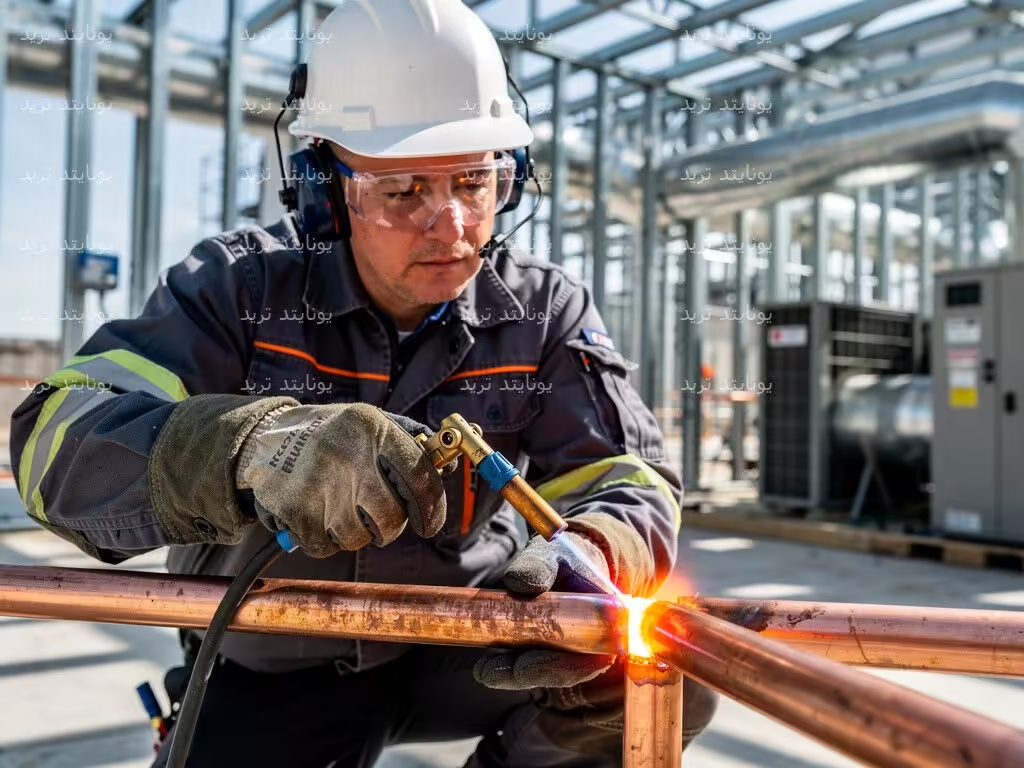
The silver welding process is the most sensitive part of installing copper pipes, as it requires high skill to ensure that there are no pores in the welding area. The ends must be cleaned well before welding, using a soft wire brush, then using an oxy-acetylene torch with precise temperature control to ensure complete penetration of the welding material into the joint.
It is considered a stage Installing air conditioning ducts In the structural structure, it is a pivotal step that precedes the final installation process, as the carefully buried extensions ensure that the copper network is protected from damage and the Freon paths are distributed with the highest possible flow efficiency. Proper planning of these paths also contributes to avoiding sharp bends that may hinder the movement of the cooling medium later.
The pipe network requires regular periodic inspection to protect it from damage and blockages Comprehensive air conditioning maintenance It helps in early detection of any Freon gas leakage and ensuring the efficiency of the entire cooling cycle. Cleaning the connections and securing the insulators also contribute to extending the life of the system and avoiding sudden malfunctions.
Requires implementation of Professional air conditioning installation Observe the strictest technical standards and install the internal and external units professionally to avoid vibrations and refrigerant gas leakage. Following proper engineering installation steps ensures airflow at the highest operating efficiency and reduces electricity consumption to the greatest extent possible.
Completing the installation process efficiently requires adherence to precise technical rules, which start from Air conditioning duct extension According to studied diameters and apply thermal insulation to protect the track from condensation. Conducting a pressure test of the copper network with nitrogen is an essential step before operating the system, to ensure that the lines are completely free of any potential leaks.
The first construction phase requires the implementation of works Installing air conditioning ducts With extreme precision to ensure safe and obstacle-free cooling paths, the pipe networks are buried and extended inside the walls before the final finishing stage. This preventive measure protects the copper system from future mechanical damage and facilitates the connection process with the external and internal units with high efficiency.
Maintaining the efficiency of your cooling lines is not just about quality installation, it requires action Regular air conditioning maintenance For early detection of any Freon gas leaks or corrosion in copper connections. This continuous check ensures that the compressor is protected from damage and energy consumption is minimized.
These connections require periodic attention to ensure the efficiency of the entire cooling cycle and to prevent any possible leakage of gas compounds through the connections over time. Operations are considered Air conditioning maintenance Regular inspection is the basis for checking the integrity of the copper lines and ensuring that there are no blockages or corrosion that affect the performance of the compressor.
It requires an operation Air conditioning installation High precision in adjusting connections and choosing appropriate pipe paths to ensure high cooling efficiency and prevent any possible leakage of Freon. Correct installation of the indoor and outdoor units also contributes to reducing noise and extending the life of the entire device.
Air conditioning networks require extreme precision in the initial preparation stage to ensure the flow of the refrigerant with high efficiency and prevent any future leaks. Therefore, it is implemented Establishing copper pipes According to sound engineering standards, it is a basic foundation that protects the system from pressure drops and ensures the stability of the performance of air conditioning devices for many years.
Requires completion of a step High efficiency air conditioning installation Extreme precision in connecting the piping network, as the proper installation of the piping is directly reflected in the performance of the compressor and the quality of cooling in the room. Adherence to the correct engineering standards during this stage prevents any leakage of Freon gas and ensures the stability of the device’s operation for many years.
Thermal insulation and its importance
Good thermal insulation is what differentiates between professional installation and amateur installation, as each copper pipe must be covered with a piece of insulation (Armaflex) of appropriate thickness. This insulation prevents the formation of water condensation on the pipes, which may cause damage to walls or false ceilings, and also keeps the gas transported from the outdoor unit to the indoor unit cool.
Comparison table: common mistakes vs correct practices
| item | Incorrect practice | Correct practice |
|---|---|---|
| Cutting pipes | Use a hand saw | Use a circular copper cutter |
| Bend pipes | Bend directly by hand | Use a bending tool (zipper or penter) |
| Air discharge | Discharging the air through the valve | Use a vacuum pump |
| Welding | Excessive welding and high temperature | Silver welding using studied heat pressure |
| Insulation | Leave parts exposed | Complete insulation with the joints closed |
Dealing with leaks and pressure testing
After completing the installation of copper pipes, it is the pressure test to ensure that there are no subtle, invisible leaks. Do not just turn on the device immediately, but nitrogen gas must be pumped into the circuit at high pressure for several hours and the meters carefully monitored, because any decrease, even a slight one, means there is a defect that must be treated before charging the Freon.
Frequently asked questions
Why should vacuum be used after installing copper pipes?
Vacuum is used to extract air and moisture from inside the pipes, because the presence of moisture reacts with oil and Freon to form acids that damage the compressor coils and lead to blockage of the cooling circuit.
Can old copper pipes be reused?
This is not preferable at all, as old pipes have often been exposed to oxidation from the inside or have accumulated charred oil residues, which may lead to damage to the new compressor when used with them.
How long does copper pipe last?
If installed properly and well insulated, copper pipes can last for more than 15 to 20 years without needing to be replaced or undergo major maintenance.
Does the long distance between the two units affect cooling?
Yes, as the length of the pipes exceeds the limit permitted by the manufacturer, the resistance to the flow of Freon increases, which requires supplying the device with an additional Freon charge and adjusting the technical parameters to avoid loss of cooling capacity.
How do I know if copper pipes have been bent?
This can be seen by hearing an abnormal buzzing sound from the compressor, or noticing very weak cooling even though the device is working, as the twisting hinders the movement of gas within the circuit.
Conclusion
Mastering the process of installing copper ducts is not just a passing technical task, but rather a direct investment in the efficiency and comfort of your HVAC system. Always make sure to rely on professional technicians who follow the steps of vacuum and proper insulation, because proper foundation is the real guarantee of a comfortable environment and a cool home on the hottest days of summer.
















TQTAG76 Community dialogue
0 comments