
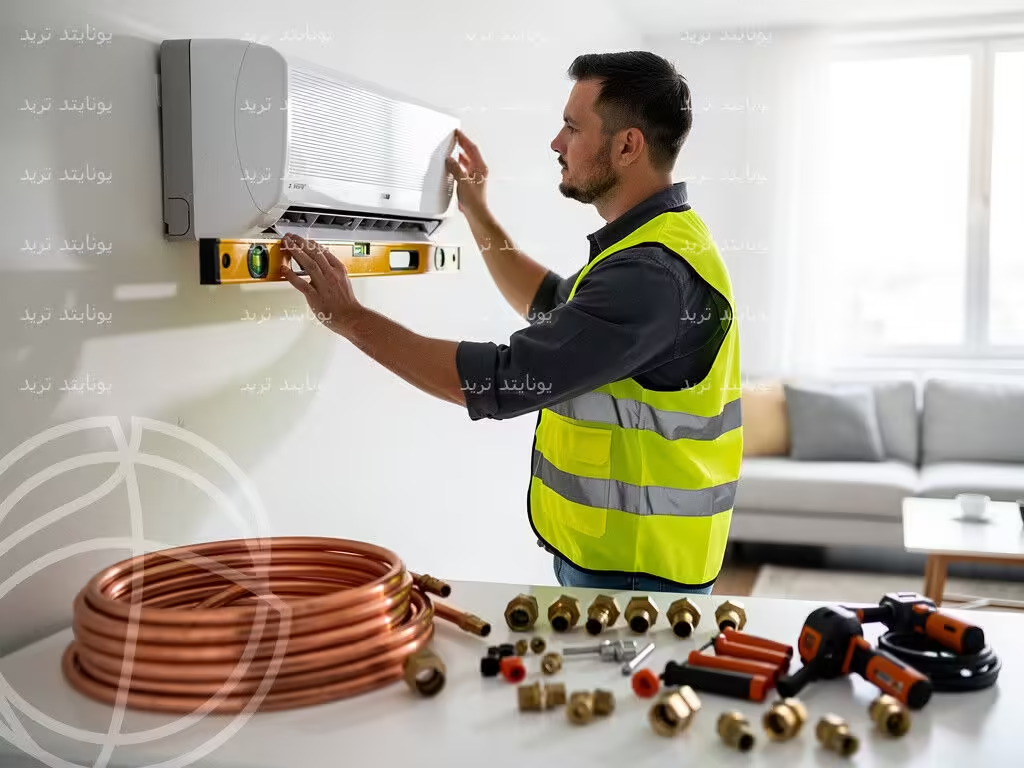
He promises Air conditioning installation Properly engineered air is the cornerstone for ensuring clean air flow and achieving economical consumption of electrical energy inside buildings. Adherence to sound technical standards during the installation process helps prevent refrigerant leaks and protect the compressor from premature damage, which we will review in detail in this practical guide to protect your home investment and provide a comfortable and stable climate throughout the year.
Quick answer
Air conditioning installation Air conditioning is a precise technical process that includes installing the internal and external units and connecting them with tight copper lines, with the necessity of emptying the circuit of moisture and air using a vacuum pump before opening the refrigerant gas. Correct installation maintains the efficiency of the device, reduces electricity consumption by up to 30%, and ensures stable cooling for many years.
What is the importance of inspecting the place before installing home air conditioning?
Screening the designated area ensures balanced air distribution without creating annoying cold drafts directly on the occupants of the room. Selection of the space requires careful consideration of the strength of the walls, as the wall must bear the weight of the indoor unit and its constant vibrations to prevent noise and subsequent structural cracks.
In addition, you should avoid installing the units near high heat sources such as ovens or under direct sunlight falling through large windows. Hot spots confuse the device's built-in temperature sensors, forcing the motor to run continuously and increasing the rate of electrical current consumption.
It should be noted the importance of leaving ventilation distances of no less than 15 centimeters from the top of the unit and the ceiling of the room, and 10 centimeters from the sides. This vacuum allows sufficient amounts of air to enter the cooling coils, preventing air intake from being stifled and reducing the capacity of the internal heat exchanger.
Stages of mechanical installation of indoor and outdoor units
Mechanical fastening is the actual procedure of attaching metal members and supports to interior building walls, roof floors or facades. This procedure requires sturdy fixing devices that ensure the stability of the device under various weather conditions, which we explain in the following successive steps.
Steps to install the internal load-bearing plate
The technician begins by locating the metal plate using a water level to set it completely level. The uncalculated tilt leads to the backflow of waste water inward and damage the furnishings, so mounting holes are drilled in the concrete and wall studs are placed that can withstand weights exceeding 40 kilograms.
Further, the 65 to 70 mm diameter pipe passage is drilled with a slight slope of half an inch towards the outside. This slope helps facilitate the movement of condensation water flow by the force of natural gravity, which prevents water stagnation, bacterial growth, or the release of unpleasant odors inside the room.
Standards for placing and installing the outdoor unit
The outdoor unit rests on galvanized, rust-resistant iron brackets, or on sturdy rubber feet if placed on floors or flat surfaces. Rubber pads absorb 90% of mechanical vibrations generated by compressor rotation, preventing annoying sound vibrations from being transmitted through the structural frame.
As a result, care must be taken to leave a distance of at least 30 cm behind the external condenser to ensure smooth cooling air intake. Hot air outlets should also be kept at least two meters away from opposite walls to avoid heat reflux and high internal refrigerant pressure.
Technical comparison table for standard installation requirements
| Technical inspection item | Proper application | Incorrect application and consequences |
|---|---|---|
| Vacuum air and moisture | Use vacuum pump up to 500 microns | Expelling the gas manually causes damage to the oil and blockage of the circuit |
| The slope of the drainage line | Slope at a rate of 1 cm per meter towards the outside | The line is flat, causing water to leak into the room |
| Connecting copper pipes | Use the appropriate encoder and tightening torque | Excessive or weak tightening, resulting in refrigerant leakage |
| Draw distance outside | Leave 30 to 50 cm behind the condenser unit | Sticking the unit to the wall, which raises the compressor pressure and burns it out |
| Electrical connection | Allocate a separate breaker and an independent grounding wire | Plug into shared sockets, causing electrical fires |
Precise procedures for extending and isolating the cooling network
Refrigerant piping is the vital path for transporting Freon liquid and gas between components of the closed refrigeration cycle. This process requires careful handling of the flexible copper metal to ensure that bottlenecks or bends do not occur that narrow the flow channel, by following specialized professional instructions.
- Bend copper pipes using mechanical hand benders and avoid bending by hands to prevent the inner track from snapping.
- The suction and liquid lines are insulated with closed-cell rubber foam completely separately to prevent unwanted heat exchange.
- Cover copper pipes and insulation with a durable vinyl protection tape to protect them from ultraviolet rays and external weather factors.
- Secure pipes to external walls with padded mounting brackets every 1 meter at most to reduce swaying and bending.
For example, when encrypting or expanding copper terminals to tighten nuts, the edges must be completely cleaned of metal tarnish. Any copper particles falling into the circuit threatens the integrity of the thermal expansion valve and damages the moving mechanical parts inside the compressor motor.
Why is emptying the vacuum pump circuit a stage that cannot be ignored?
Unloading the circuit is the process of withdrawing all the air and moisture suspended within the piping network before opening the gas valves. Moisture inside copper lines creates harmful acids that react with synthetic lubricating oil and cause corrosion of electric motor windings.
The operational efficiency of the system requires special attention at some stage Installing air conditioning ducts Copper and choose their diameters precisely according to the requirements of the cooling unit. This procedure also requires insulating the intake and exhaust lines with high-quality materials to avoid thermal condensation and ensure the smooth flow of the Freon cycle without any wastage of energy.
Maintaining the efficiency of these systems requires strict adherence to a routine schedule that includes a procedure Regular air conditioning maintenance Clean filters and check gas pressure regularly. These preventive steps contribute to avoiding sudden breakdowns during the peak of summer and extending the life of the device at the lowest possible cost.
The efficiency of the refrigeration cycle depends fundamentally on the accuracy Copper extension pipes And connect it tightly to ensure that Freon gas does not leak, as installing the cooling network and securing its strong connections is the main artery for sustaining the air conditioner’s performance. Adherence to technical standards when dealing with these paths prevents any imbalance in the system pressure, which enhances the lifespan of the device and achieves the ideal cooling required.
The importance of air conditioning does not stop at the installation stage only, but extends to a comprehensive preventive plan that ensures the sustainability of performance and cooling efficiency in the long term. Adopting a periodic table forAir conditioning maintenance It is an ideal investment to preserve vital components from sudden wear and reduce the possibility of costly breakdowns.
The first stage of installation requires attention to the step Establishing copper pipes With extreme precision, taking into account the selection of appropriate diameters and thickness of thermal insulation to avoid moisture condensation. Controlled expansion and tight welding through well-thought-out paths also ensure smooth flow of Freon gas and raise the cooling efficiency to its highest levels.
Maintaining cooling efficiency requires constant attention to procedure Regular air conditioning maintenance Comprehensive guarantees the safety of mechanical and electrical parts. This includes cleaning the filters and checking the refrigerant pressure to avoid sudden malfunctions and extend the life of the device with the lowest possible electricity consumption.
This ideal performance is only complete with constant diligence Regular air conditioning maintenance Ensure checking the Freon level and cleaning the filters and evaporator regularly. These preventive steps contribute to extending the life of the device and maintaining high cooling efficiency throughout the summer without sudden malfunctions.
On the other hand, the presence of air inside the cycle raises the operating pressure to dangerous levels that reduce the actual cooling efficiency. Analog or digital pressure meters are connected to the vacuum pump and operated for a period of not less than half an hour until a reading of less than 500 microns of mercury is reached to ensure the circuit is completely empty.
This process requires extreme precision starting from one step Establishing copper pipes Designed for transporting coolant, appropriate diameters must be chosen and thermally insulated with the highest efficiency to avoid loss of cooling energy. Proper extension of paths and avoiding sharp bends also contribute to facilitating the movement of Freon and ensuring safe drainage of condensed water without any future blockages.
Conditions for electrical connections to ensure the safety of the air conditioner
Independent electrical connections are a safety valve to prevent fires caused by high loads of cooling devices at peak times. An automatic circuit breaker of appropriate capacity must be installed in the main panel, while refraining from operating the air conditioner on the same paths as other household appliances.
- Use approved copper cables with a diameter of no less than 4 mm for devices with a capacity of two tons to avoid overheating of the wires.
- Connect the grounding line to the body of the two units to dissipate static charges and protect individuals from the risk of electrocution.
- Fix the connection rosette tightly inside the insulated box to protect it from rainwater or moisture.
- Check that the electrical voltage difference matches the technical data shown on the device’s data plate before starting operation.
In other words, weak voltage supplied to the device doubles the electrical current draw, causing the operating coils to burn out. Therefore, technicians advise installing protection units against voltage fluctuation in areas that suffer from public network instability.
Cooling efficiency check and leakage test after operation
The initial leak test is done by injecting dry nitrogen gas under a controlled pressure to monitor the stability of the indicator on the meter for a few hours. This inspection helps detect any tightening defects in the assembly nuts or invisible holes before the costly refrigerant is lost to the air.
Moreover, the temperature difference between the intake air and the exhaust air of the indoor unit is measured after running the air conditioner for a continuous quarter of an hour. This difference should range from 8 to 12 degrees Celsius under standard conditions as evidence of the success of the installation process and the suitability of the gas charge.
Frequently asked questions
What is the appropriate height to install the indoor unit of the air conditioner?
The ideal height ranges between 2.1 to 2.4 meters above the room floor level, while maintaining a distance of no less than 15 centimeters below the ceiling. This height ensures efficient air circulation throughout the space and that individuals are not exposed to direct drafts.
How do I know that the air conditioning installation process was completed successfully?
Success is ensured when the device operates quietly without vibrations, and the water drains through the external hose continuously, with a temperature difference of more than 8 degrees between air intake and expulsion within 15 minutes of operation.
Can air conditioning be installed without using a vacuum pump?
No, dispensing with the vacuum pump is a serious technical error that shortens the life of the device. Degassing leaves moisture and oxygen residue inside the piping that causes oil oxidation, expansion valve blockage and reduced cooling efficiency.
What is the minimum and maximum length allowed for copper pipes?
The minimum length recommended by most manufacturers is 3 m to absorb compressor pulsations, while the maximum length is preferably not more than 15 m for regular devices to avoid pressure drops and the need to add supplementary oil and refrigerant charges.
When should a certified technician be called when a problem arises during installation?
The certified technician must be called immediately if a freeze is observed on the thin pipeline, an unusual buzzing is issued from the compressor, or a continuous water leak occurs inside the room, to prevent the malfunction from worsening and the loss of the manufacturing warranty.
Final tips to protect your investment
Mastering the steps Air conditioning installation Your home, by employing qualified work teams, will save you from expensive maintenance expenses and escalating energy bills. Always ensure that engineering standards are applied and that air discharge and pipe insulation are checked to ensure healthy and sustainable cooling for your home.
















TQTAG76 Community dialogue
0 comments