
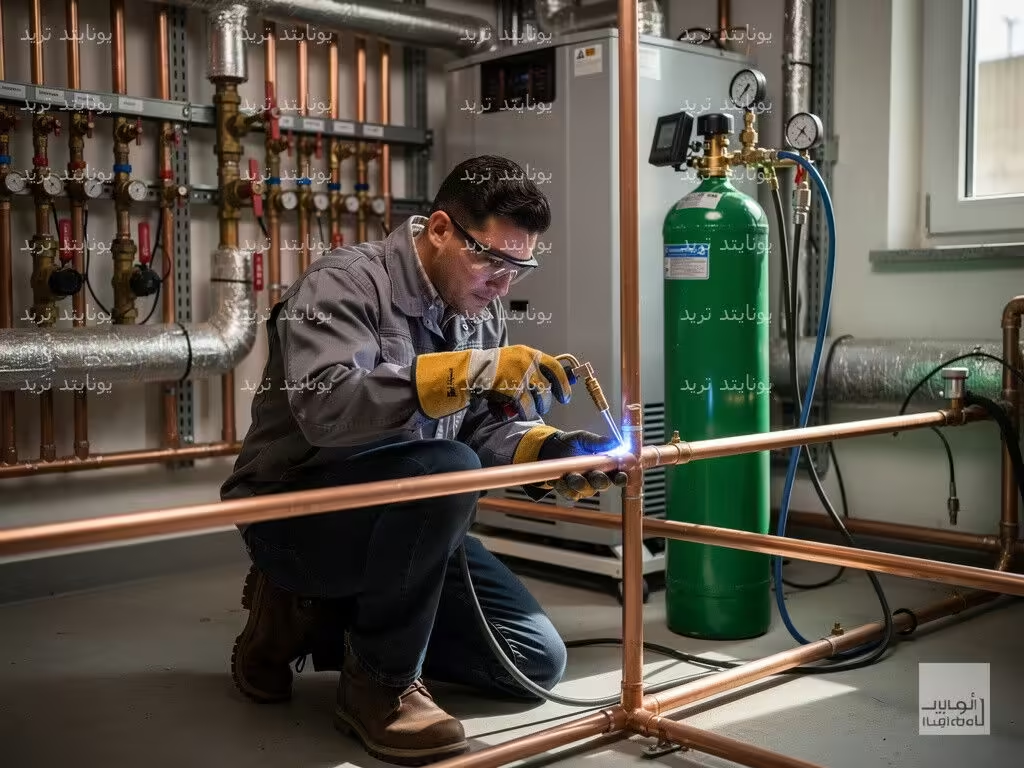
Classifications of copper pipes and their areas of use
The mechanical properties and wall thickness of copper pipes vary according to the operational purpose and the nature of the fluids passing through them. Understanding these classifications helps technicians make the correct engineering decision to ensure that the system can withstand the expected pressures and temperatures within the system.
| Tube type | Wall thickness | Most prominent applications | Pressure tolerance level |
|---|---|---|---|
| Type K | Very thick | Underground burial and main feeding networks | Too high |
| L type | Average thickness | Internal installations for drinking water and heating systems | Medium to high |
| Type M | delicate | Low pressure and drain home systems | low |
| Type ACR | Designed for cooling | Liquid and gas lines for commercial air conditioning and refrigeration | Highly resistant to internal drought |
Preparation tools and equipment before starting delivery
Preparing pipes before incorporating them into the network requires a specialized set of mechanical equipment that maintains cross-sectional roundness and prevents structural distortions that might impede fluid flow.
- Rotary pipe cutter to ensure perfectly even vertical cuts without flattening the ends.
- Metal burrs and burrs to smooth the inner raceway and avoid localized turbulence corrosion.
- Mechanical and hydraulic pipe benders to perform bends at precise angles without causing snapping in the copper walls.
- Expansion and flange making kits for preparing line ends for mechanical connection or overlay welding.
Preventive measures to protect the network from hydraulic shocks
Pipes are exposed to the phenomenon of water hammering when valves are suddenly closed, which requires installing copper pipes in a way that absorbs these shocks by incorporating air chambers or specialized mechanical dampers at critical points.
- Install water hammer arrestors near quick-close valves such as automatic mixers and washing machines.
- Use flexible connections at connection points with pumps to isolate mechanical vibrations and prevent their transmission through the expansion path.
- Securing sharp turns with strong supports that absorb reactions resulting from a sudden change in the direction of flow.
Installing copper pipes represents the basic foundation for ensuring the efficiency of modern cooling and plumbing systems by providing a safe path for transporting liquids and gases under varying operating pressures. This systematic guide presents all the field practices that ensure the implementation of a durable, leak-free network, with an emphasis on the forming tools, connection methods, and quality checks necessary to ensure the long life of the entire system.
Quick answer
Copper piping installation is a technical procedure that relies on cutting, shaping and connecting pipes using silver welding or mechanical connections to create an escape-proof path. This procedure is characterized by superior durability and the ability to withstand high pressures and temperatures when implemented with diameters and thicknesses that conform to standard specifications. Proper application ensures smooth flow of coolant or water without loss of pressure.
Selection of diameters and thicknesses of copper pipes
The choice of diameter and thickness depends on the nature of the fluid, flow rate and design pressure of the system. As a result, precise selection ensures stability of the hydraulic or thermodynamic cycle and reduces noise levels resulting from the flow velocity within the network.
Standard classifications for copper pipes
Copper pipes: They are metal pipes manufactured with purity levels exceeding 99% and are classified globally into three main types: K, L, and M. Type K is the thickest and is used in heavy-duty applications and underground burial lines to withstand external loads. In contrast, Type L represents the standard choice for air conditioning, refrigeration, and indoor plumbing systems, while Type M is limited to uses with low pressures due to its small wall thickness.
The importance of matching diameter to flow rate
Choosing a smaller diameter than required results in higher flow velocity, causing erosion of the inner walls over time. In addition, an excessively wide diameter causes a decrease in the speed of the lubricating oil return in the refrigeration circuits, which threatens the breakdown of the mechanical compressor. Therefore, pressure drop tables approved by manufacturers must be strictly adhered to.
Basic tools for processing and cutting pipes
Pipe conditioning requires the use of specialized equipment that maintains a circular cross-section and prevents kinks and metal distortions. These tools ensure flat edges that allow perfect overlap between welded or pressed pieces.
- Rotary pipe cutter to ensure perfectly even vertical cuts at a 90 degree angle.
- Removal knife to remove internal sharp edges and prevent fluid flow disturbance.
- Mechanical reaming and flanging tools to create tight connection ends for threaded connections.
- Spring and hydraulic benders to bend pipes without creating an internal dent that reduces the diameter.
Steps to install copper pipes by steel welding
The process of installing copper pipes by welding requires high temperatures to ensure the melting of the silver alloy and its capillary penetration into the interference area. Moreover, this method provides the highest degree of mechanical durability to resist continuous vibrations during operation.
- Clean the outer end of the pipe and the inner cavity of the fitting using steel wool to remove layers of oxidation and impurities.
- Pump dry nitrogen gas at low pressure into the pipe to prevent the formation of black oxide scales during exposure to flame.
- Heat the interference area evenly using an oxy-acetylene torch until the copper reaches a light cherry color.
- Passing the soldering iron around the edge of the joint to melt the metal with the heat and automatically fill the interstitial space.
- Leave the joint to cool naturally in the atmospheric air without cooling it suddenly with water to avoid weakening the crystalline structure of the metal.
Comparison of methods for connecting copper pipes
Copper pipe joining methods vary according to the work environment, availability of equipment, and speed of implementation required. The following table shows the fundamental differences between the three most popular technologies used in modern facilities:
| Delivery method | Basic nature of use | Pressure tolerance level | Implementation and security requirements |
|---|---|---|---|
| Brazing | Industrial air conditioning and refrigeration circuits | Very high, exceeding 500 PSI | Requires open flame, nitrogen gas and fire precautions |
| Mechanical Fastening (Flare/Compression) | Residential unit connections and plumbing | Medium to high | Requires precision torque wrenches and does not require flame |
| Hydraulic Press (Press-Fit) | Water lines and modern gas networks | High according to episode rating | Customized crimping tool and super fast speed without heat |
Installation standards and support network paths
Copper pipes are affected by the phenomena of thermal expansion and contraction resulting from changing temperatures of the fluids transported inside them. Accordingly, flexible fixings must be established that prevent lines from twisting or transmitting mechanical vibrations to walls and structural structures.
Requires work to be carried out Air conditioning installation Highly efficient selection of appropriate diameters and thicknesses of copper pipes to withstand variable refrigerant pressures. This engineering compatibility ensures that future leaks are prevented and that heat exchange efficiency within the unit is maximized.
It is considered practical Establishing pipes Copper is the crucial stage that precedes the final extensions, as the success of the entire system depends on the accuracy of choosing the appropriate diameter and the installation method that prevents future vibrations. Good engineering planning of extension paths ensures efficient fluid flow and reduces the risk of leakage or structural damage within the walls.
Accurate selection and thickness of copper pipes is a pivotal step prior to the process Air conditioning installation With high efficiency and stable performance. This proper identification ensures that the refrigerant flows without loss of pressure or risk of leakage during continuous operation.
Maintaining the efficiency of cooling circuits and the integrity of their copper wiring requires action Regular air conditioning maintenance For early detection of any refrigerant leakage and treatment of mechanical vibrations. These preventive measures ensure stable operational pressures and extend the lifespan of all system components.
After completing the connection and installation of the copper network, the importance of applying... Insulating air conditioning pipes To protect cooling lines from heat loss and surface condensation. The use of high-quality insulation materials ensures stable temperatures of the cooling medium, which increases the operational efficiency of the system and protects the building from damage caused by moisture leakage.
Its effective installation requires careful consideration of several conditions, the application of which must be adhered to Technical standards When locating units to ensure skillful airflow. Extending standard cooling paths and avoiding common errors in the distribution network also contributes to raising the efficiency of the system and testing its performance in an integrated manner, which is directly reflected in increasing the life span of the device.
The quality of fittings and the selection of appropriate pipes play a pivotal role in the success of operations Air conditioning maintenance Air supply with high efficiency, as this ensures avoiding refrigerant gas leaks and protecting the compressor from premature damage. Periodic inspection of these copper connections helps maintain stable operating pressures and extends the life of the entire system.
It is considered a stage Establishing pipes Water and drainage are the cornerstone of any integrated plumbing system, as they require extreme precision in distributing paths and choosing appropriate diameters to ensure ideal water flow. Good planning of this hidden network inside the walls and floors prevents any future leaks and extends the lifespan of all copper and thermal connections.
Cooling networks require periodic follow-up to ensure the integrity of the connections and that there are no leaks in the cooling medium, where the work is based Air conditioning maintenance Air on checks the efficiency of copper pipes and adjusts pressure levels regularly. This preventive measure contributes to maintaining the compressor's lifespan and increasing the energy efficiency of the system as a whole.
It requires an operation Installing air conditioning ducts With great precision, taking into account direct paths and avoiding sharp bends that may impede the flow of the cooling medium. Correct installation also requires choosing pipe diameters appropriate to the device’s capacity and thermally insulating them to protect them from condensation and heat loss.
Technical distances between suspension points
The distance between the mounting brackets should not exceed one meter for small diameters, and gradually increase to two meters for large diameters to reduce sagging. Moreover, direct fixing of copper with different metals such as galvanized iron is prohibited to avoid destructive galvanic corrosion of the metal, as insulating rubber pads are used inside the metal fasteners.
Requires work to be carried out Air conditioning installation Highly match the specifications of copper pipes with the pressure requirements of the refrigerant medium to ensure efficient heat exchange. This engineering fit helps avoid gas leaks and maintains the lifespan of the compressor and all circuit components.
Implementation of expansion joints
Long, straight tracks require the construction of expansion loops or U-shaped bends to absorb stresses resulting from thermal change. For example, this geometry ensures that the pipe moves freely within a specified path without stressing welding points or peripheral connections.
Pressure testing and leak checking procedures
Pressure testing is the crucial step before covering tracks or commissioning the system to ensure the integrity of all attachment and mounting points. Inert gases are relied upon to gradually raise the pressure and monitor any abnormal drop in indicators.
The test begins by filling the network with dry nitrogen gas until the pressure reaches 1.5 times the design operating pressure for a minimum of 24 hours. Meanwhile, the connections are inspected via the approved detection foam, in parallel with the monitoring of the calibrated pressure gauge after its readings are adjusted based on the ambient atmospheric temperatures.
Frequently asked questions
What is the best way to avoid oxidation of copper during welding?
The process of passing dry nitrogen gas at low pressure into the tube during heating is the only technical solution to prevent the formation of black copper oxide. This step ensures that the inner surface remains clean and protected from deposit build-up inside valves and sensitive components.
Can copper pipes be installed directly inside concrete?
It is prohibited to bury copper directly inside wet concrete without using insulating plastic protection tubes that protect it from interaction with alkaline chemical compounds of cement. In addition, the plastic sleeve allows enough room for the pipe to expand freely without mechanical resistance.
What is the difference between soft welding and hard welding in pipes?
Soft solder is based on tin alloys that melt at temperatures below 450°C and is suitable for drinking water only. In contrast, annealing requires silver alloys and temperatures exceeding 600°C to produce connections that can withstand high cooling pressures.
How is the distance between pipe mounting brackets determined?
The distance is determined based on the outer diameter of the pipe, its thickness, and the type of fluid carried inside it, and generally ranges from one to two metres. This geometric distribution ensures that copper lines are not bent and reduces stress on the connection points.
What are the causes of leakage in piston and fastening connections?
Leaks are often caused by not removing the inner seal, using excessive tightening torque that tears the copper flange, or damage to the rubber sealing rings. It should be noted that cleaning the surface and adjusting the torque ensures a complete and long-lasting seal.
Meticulous installation of copper piping requires following engineering procedures from cutting through final testing to ensure the highest levels of safety and operational efficiency. Always ensure isolation and pressure control standards are applied to protect your investments and achieve excellent sustainability for your entire network.
















TQTAG76 Community dialogue
0 comments