
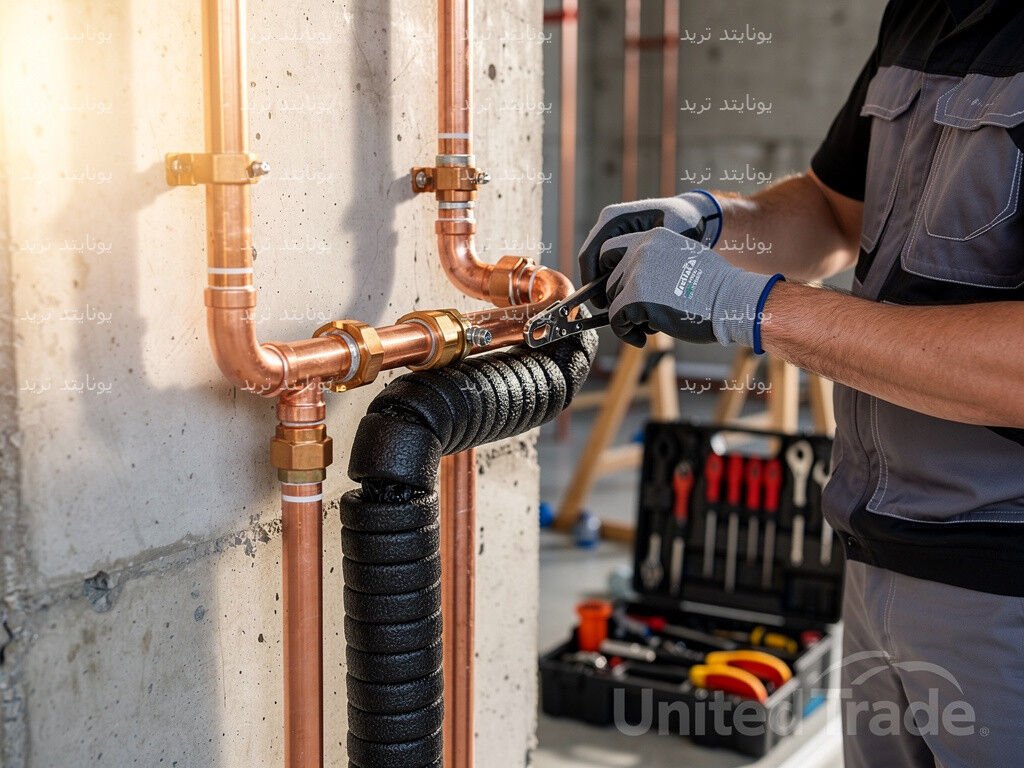
Standard criteria for selecting copper pipe diameters
requires Establishing pipes HVAC requires a precise understanding of the compatibility between the cooling capacity of the unit and the diameters of the pipes used to flow the refrigerant. The use of an inappropriate diameter leads to oil accumulation in the compressor or a sharp drop in gas pressure, which reduces the life of the entire system.
| Air conditioning capacity in tons | Suction line diameter (gas) | Diameter of expulsion line (liquid) | Maximum recommended route |
|---|---|---|---|
| 1.5 tons (18 thousand units) | 1/2 inch | 1/4 inch | 15 metres |
| 2.0 tons (24 thousand units) | 5/8 inch | 1/4 or 3/8 inch | 20 metres |
| 3.0 tons (36 thousand units) | 3/4 inch | 3/8 inch | 25 metres |
| 5.0 tons (60 thousand units) | 7/8 inch | 1/2 inch | 30 metres |
Instructions for multi-storey extension and oil traps
When the vertical distance between the lower indoor unit and the upper outdoor unit increases, the problem of the difficulty of returning the lubricating oil to the compressor due to gravity arises. It requires Establishing pipes Conditioning in this case applies mechanical solutions that maintain the oil balance within the closed circuit.
- Create a U-shaped oil trap at the outlet of the indoor unit for every vertical height exceeding five metres.
- Repeat the vertical oil traps every additional seven meters to ensure that the oil mist is gradually pushed out with the rising gas stream.
- Fixing the pipes with vibration-isolating supports to prevent noise from being transmitted through the concrete structure of the building to the living rooms.
- Avoid sharp ninety-degree bends, and replace them with forty-five-degree elbows to reduce flow resistance.
Preparing water drainage lines accompanying the cooling network
The sound technical work is completed by integrating condensation paths with cooling lines in a way that prevents moisture leakage into the wall partitions. The drainage path is no less important than copper extensions, as any defect in it causes severe structural damage to decorations and paints.
- Use insulated UPVC plastic pipes with a diameter of no less than three-quarters of an inch to ensure rapid flow of dew drops.
- Apply a natural hydraulic slope of at least one centimeter per linear meter towards the central drain point.
- Installing an air vent at the highest point in the drain line to avoid the phenomenon of air retention that impedes water movement.
- Thermal insulation of drainage pipes with a layer of foam inside warm places to protect them from external condensation on the pipe wall.
represents Establishing pipes Air conditioning is the basic foundation for ensuring that the cooling system operates efficiently that lasts for many years without experiencing sudden mechanical failures. This article aims to clarify the proper application steps for preparing the cooling paths, choosing the appropriate diameters, and protecting the walls from water and gas leaks. Here you will discover strict engineering standards that save you future maintenance costs and give you a comfortable indoor environment.
Quick answer: How are extensions installed professionally?
Establishing air conditioning ducts is the process of preparing and passing thermally insulated refrigerant intake and exhaust lines with control cables and drainage pipes inside the walls or ceilings before the final finishing work. The quality of this system depends on the use of pure copper, free of hidden welds, while adjusting the engineering trends to prevent the accumulation of moisture inside the building. Proficient implementation ensures that the air compressor's efficiency is maintained and energy consumption is reduced by up to 25%.
The importance of architectural planning for cooling paths
Early planning clearly defines the locations of indoor and outdoor units to avoid conflict with electrical installations and water networks. Therefore, prior coordination helps reduce path lengths and avoid sharp bends that impede the flow of the refrigerant.
Moreover, the precise distribution of the devices prevents annoying direct drafts inside residential rooms. As a result, the user obtains uniform cooling covering the entire area with minimal engine operating effort.
Standard specifications for approved copper pipes
Thick-walled copper tubes prevent gas escape under the high pressures generated by modern gas refrigerants such as R410A refrigerant. It should be noted that genuine copper is characterized by superior flexibility, which reduces the possibility of cracking during field bending operations.
In addition, you must ensure that the inner surfaces of the pipes are free of impurities, industrial oils and moisture. In other words, the cleanliness of the copper lines ensures stability of the refrigeration cycle and protects the thermal expansion valve from sudden blockage.
Steps to implement the installation of air conditioning ducts in practice
The field preparation stage requires adherence to a strict engineering sequence that ensures the accuracy of the levels and the integrity of the building’s structural structure. Field procedures can be summarized in the following systematic order:
- Determine the locations of indoor units with an accurate horizontal level using a water or laser level level.
- Breaking the vertical and horizontal paths in the walls to a deliberate depth that does not affect the rebar or concrete columns.
- The intake and exhaust lines are thermally insulated separately using fire-resistant elastomer foam.
- Install electrical signal cables with triple insulation corresponding to the prescribed air conditioning loads.
- Secure the pipes inside solid plastic protection hoses to prevent damage during the plastering and painting stages.
Thermal insulation and condensation water drainage
Effective thermal insulation prevents warm air from reaching cold pipe surfaces, which stops the phenomenon of condensation that is harmful to paints and decorations. Therefore, closed-cell foam insulation with a thickness of no less than 13 mm must be used for all extended lines.
In contrast, the water drainage line requires a geometric slope of at least 1% towards the main drainage points of the building. For example, neglecting this tendency can lead to stale water backing up into the indoor unit and damaging the surrounding furniture.
These engineering calculations are completed by adhering to the technical requirements followed during Air conditioning installation To ensure the efficiency and safety of the refrigeration cycle. This includes installing the indoor and outdoor units with precise balances and vacuuming the entire circuit to prevent the ingress of moisture and harmful impurities.
Comparison of common refrigerant pipe types
Choosing the appropriate material plays a decisive role in determining the lifespan of the cooling network and its ability to withstand operational stresses. The following table shows an accurate comparison between the most prominent options used in residential and commercial projects:
This is not limited to the installation stage only, but extends to adherence to steps Regular air conditioning maintenance Ensures the integrity of the refrigerant lines and the flow of Freon gas at engineered rates. Regular inspection of piping and pressure levels helps detect any blockages early, protecting the compressor from damage and prolonging cooling efficiency for many years.
requires Air conditioning duct extension Apply correct engineering methods to ensure cooling efficiency and protect the mechanical compressor from premature failure. This includes strict adherence to standard diameters and avoiding sharp bends that impede the flow of refrigerant within the network.
The executive stage requires mastery of processes Installation of copper pipes According to the latest field technologies and strict pressure tests to verify the integrity of the welds and the absence of any gas leakage. This includes the use of inert nitrogen gas during connection and the application of standard pressure for a specified period to ensure long-term circuit efficiency.
Maintaining the efficiency of these connections is not limited to the establishment stage only, but is closely linked to the necessity of conducting Regular air conditioning maintenance For early detection of any leakage in Freon lines and treatment of circulation blockages. Continuous technical follow-up ensures stable pressure rates and smooth refrigerant flow, which protects the compressor from sudden damage and extends the life of the entire system.
The subsequent phase of network extension requires the implementation of steps Air conditioning installation According to the approved technical protocols to ensure the stability of the cooling cycle. This includes installing the internal and external units accurately, tightening the mechanical connection, and evacuating air from the circuit to avoid any leakage that may harm the system’s efficiency.
To avoid these technical problems and decreased cooling efficiency, it is of utmost importance to adhere to a periodic schedule of steps Air conditioning maintenance Air and check gas levels carefully. This preventive measure helps in early detection of any blockage in the pipes or leakage in the system before it causes the compressor to burn out.
These engineering calculations are directly integrated with phase Implementation of air conditioning installation Air is in accordance with technical requirements, as the correct installation of pipes and units ensures that no refrigerant gas leakage occurs. Proficiently controlling the inclinations of the extensions and isolating them also contributes to avoiding water drainage problems and maintaining the compressor’s operational efficiency for the longest possible period.
| Tube type | Pressure tolerance level | Corrosion and moisture resistance | Average life span | Recommended use |
|---|---|---|---|---|
| Genuine South African brass | Very high, exceeding 650 psi | Excellent against oxidation | Over 25 years | Major projects and central systems |
| Certified Korean Brass | High up to 550 lbs/in | Very high in dry environments | From 15 to 20 years | Split housing units |
| Light commercial copper | Average not to exceed 350 psi | Medium and prone to holes | Under 8 years | Temporary installations are not desirable |
Pressure tests and leak detection before closing
Dry nitrogen pressure testing is the only approved engineering method for detecting micropores before concrete is poured or concreting is completed. Therefore, the network is charged with nitrogen gas at a pressure equivalent to 350 psi for 24 continuous hours.
Moreover, a constant pressure gauge reading indicates that the connections are intact and completely free of any cracks or leaks. As a result, the technician ensures that costly Freon gas is not wasted later and provides complete protection for the real estate investment.
Common structural errors during extension
Some incorrect practices by untrained workers cause complete damage to the cooling networks and make it difficult to maintain them later. It is necessary to pay attention to the following points to avoid these fatal defects:
- Bending copper pipes manually without using specialized mechanical benders, which causes choking of the coolant flow.
- Collecting the suction and expulsion lines inside one insulating shell, which creates a reverse heat exchange that weakens cooling.
- Leaving the ends of pipes open without tight covers during construction leads to the entry of dust and debris.
- Ignoring the installation of engineered oil traps in the vertical lines will deprive the air compressor of continuous lubrication.
Frequently asked questions
What is the best time to complete the installation of air conditioning ducts in the building?
The best timing is the construction foundation stage after the completion of the bone construction work and before starting the plastering and floor laying works. This timing allows paths to be freely excavated, pipes installed and drain lines extended without marring the fine finishes.
How are cooling pipes protected from clogging during finishing?
Protection is achieved by soldering the ends of the pipes tightly or closing them with copper plugs and air-tight pressure valves. It should be noted that these plugs prevent rainwater or gypsum powder and cement from leaking into the prepared lines.
Do pipe diameters vary depending on the capacity of the air conditioner?
Yes, the diameters are completely different; 1.5 HP air conditioners require quarter-inch and half-inch lines, while 3 HP air conditioners require diameters of three-eighths and five-eighths of an inch. Therefore, you must review the approved technical manual for each device before burying the pipes.
What are the dangers of hidden welds inside walls?
Buried welds pose a major risk as they are a major weak point that may explode with constant gas pressures and operating vibrations. When a buried leak occurs, it is difficult to access the fault location, forcing the owner to break down walls and incur huge expenses to fix the defect.
Why is the intake line isolated separately from the ejection line?
Separate insulation prevents negative heat transfer between the hot gas going to the condenser and the cold refrigerant gas returning to the evaporator. As a result, the refrigeration cycle maintains its thermal balance and the highest rate of electrical energy efficiency is achieved without wastage.
Is it possible to install air conditioning ducts through fallen ceilings?
Yes, dropped or false ceilings are an ideal path for air conditioning ducts to pass safely and without the need to break up concrete walls. In addition, this option allows quick and flexible access for maintenance teams without harming the architectural appearance of the place.
Your next steps to ensure an ideal cooling system
Proper installation of cooling networks represents an engineering investment that ensures energy efficiency and quiet operation throughout the life cycle of the building. Therefore, always be sure to assign qualified technicians and carefully follow pressure and insulation measurements before completing the final construction stages.
















Community dialogue
0 comments