
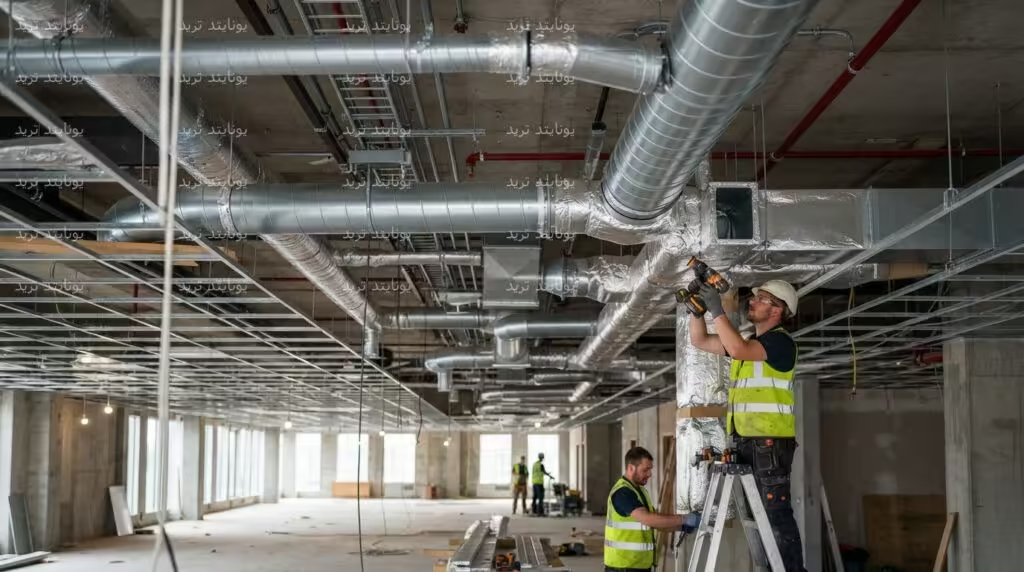
is a process Air conditioning duct extension The most sensitive step in establishing cooling systems, as the life and efficiency of the device directly depend on the quality of these extensions. Proper planning of paths and choosing appropriate copper diameters ensures ideal flow of Freon gas without any technical obstacles. By following the correct technical principles, you can avoid problems of water leakage or poor cooling that may arise later as a result of incorrect installation.
Principles of choosing appropriate diameters for copper pipes
The diameter of the copper piping is determined based on the capacity of the air conditioner in British Thermal Unit (BTU), to ensure a balanced gas pressure within the cycle. Choosing a diameter that is not compatible with the capacity of the device will result in compressor fatigue or significant impairment of cooling performance.
❓ Size standards according to the device's capacity
Common household appliances rely on specific sizes to ensure stable performance. Here are the details of the technically recommended diameters:
- 1.5 HP Air Conditioner: Requires 1/4 inch for liquid line and 3/8 inch for gas line.
- 2.25 HP Air Conditioner: Requires 1/4" for liquid line and 1/2" for gas line.
- 5 HP Air Conditioner: Requires 1/2 inch for liquid line and 3/4 inch for gas line.
Adherence to these measurements prevents unnecessary resistance to the gas flow, which maintains compressor efficiency for as long as possible.
The importance of high-density thermal insulation
Effective thermal insulation is the first line of defense against condensation and damage to the walls surrounding air conditioning ducts. The use of high-density rubber insulation materials, such as Armaflex, prevents cold loss and maintains the gas temperature within the track.
Poor or incomplete insulation causes atmospheric moisture to turn into liquid water and settle on the pipes. This continuous condensation may lead to water spots on ceilings or walls, requiring costly maintenance later to address structural damage.
| item | Technical details |
|---|---|
| Insulation type | High density elastic (such as Armaflex) |
| the goal | Prevent condensation and loss of coolness |
| Result | Protect walls and extend compressor life |
| Timing | This is done before covering the pipes inside the walls |
Professional foundation steps before finishing
It is always recommended to implement Air conditioning duct extension At an early stage of the interior finishing work to completely hide it inside the walls. Pre-planning the paths prevents sharp bends or bends that may cause blockage or narrowing of the copper duct.
After completing the extension and before closing the tracks completely, a... Nitrogen pressure test To ensure that the connections are free of any leaks. This preventive measure is very necessary, as discovering any leakage after finishing the finish entails heavy additional costs for re-breaking and repair.
These steps demonstrate the importance of logical sequencing to ensure installation integrity, with nitrogen testing representing a critical criterion for reliability.
The next stage requires initiation Air conditioning installation The air is in accordance with precise engineering standards that securely secure the internal and external units to prevent vibrations and noise. Tight connection between extensions and devices ensures that the air is completely exhausted and pressure tested before actual operation, which increases cooling efficiency and reduces energy consumption.
Avoid technical errors to ensure efficient cooling
There are many mistakes made by non-professionals when dealing with air conditioning extensions, which negatively affect the performance of the device. Sharp bending of pipes is considered one of the most prominent errors. It chokes the Freon path and reduces its flow speed, which reduces the overall cooling capacity.
Implementing this stage requires extreme precision, starting from one stage Establishing cooling pipes Inside walls and ceilings, to ensure their protection from damage and subsequent mechanical stresses. Identifying safe extension paths and insulating the pipes with high-quality materials prevents any potential leakage or loss of cooling efficiency, ensuring stable and long-term performance of the system.
Avoiding problems with gas leaks or poor cooling requires careful adherence to a schedule Air conditioning maintenance Regularly, ensures that units are checked and filters are cleaned regularly. Early attention to this preventive maintenance protects the compressor from sudden damage and keeps the device performing at maximum efficiency throughout its years of operation.
Requires work to be carried out Establishing copper pipes Extreme accuracy in determining burial paths and ensuring tight thermal insulation to avoid condensation and air leakage. Care should also be taken to avoid sharp bends and use appropriate mounting accessories to protect the cooling lines from mechanical damage in the long term.
Once the establishment phase is completed, it becomes necessary to adhere to a regular schedule of... Air conditioning maintenance It is imperative to maintain the outstanding performance of the device and avoid sudden malfunctions. Comprehensive inspection of the internal and external units and cleaning of filters contribute to enhancing cooling efficiency and reducing energy consumption, ensuring that the device continues to operate at the highest levels of quality for the longest possible period.
Once the establishment and operation phase is completed, you become... Air conditioning maintenance Periodically it is an indispensable necessity to maintain the ideal performance of the device. These preventive practices contribute to detecting minor faults and treating them before they escalate, which extends the life of the system and ensures sustainable cooling efficiency.
Once the extensions are completed, there comes a stage Air conditioning installation Air is in accordance with engineering standards to ensure that the indoor and outdoor units are installed in places that allow good ventilation and easy maintenance. Tight connection between pipes and units also requires careful vacuum testing and insulation of connections, to avoid any leakage that may impair the overall cooling capacity.
It requires a stage Installing air conditioning ducts High accuracy in thermal insulation of copper pipes to prevent condensation or cold leakage into the walls. The selection of intelligently hidden paths also stands out as a crucial factor in maintaining the aesthetic appearance of the place, while ensuring easy access to them in the future for periodic maintenance purposes.
Once the initial preparations are completed, the stage begins Air conditioning installation According to engineering standards that ensure tight installation of the internal and external units. This process requires careful balancing to prevent vibrations and ensure smooth water drainage, thus achieving the highest possible cooling efficiency for the space.
Moreover, unprofessional welding or neglecting the Vacuum process are factors causing frequent failures. The air trapped inside the pipes reacts with the oil and gas, leading to deposits accumulating inside the compressor and gradually corroding the internal components.
Frequently asked questions
❓ Why should air conditioning ducts be insulated with high-density materials?
High-density insulation prevents moisture condensation on the surface of the pipes, protecting the walls from damage and maintaining efficient cooling within the system.
❓ What is the best time to start extending air conditioning ducts?
It is preferable to carry out extensions at the stage of establishing plumbing and electricity and before finishing work, to ensure that the pipes are hidden inside the walls in an aesthetic and safe way.
❓ Can the diameter of pipes be reduced to save costs?
This is never recommended; Because reducing the diameter of the pipes beyond the size recommended by the manufacturer increases the pressure of the device and leads to compressor burnout and poor performance.
❓ What happens if copper pipes are bent sharply?
Severe bending causes congestion in the Freon path, reducing cooling efficiency and leading to mechanical failure of the compressor over time.
❓ Is nitrogen pressure testing necessary before finishing?
Yes, it is a vital procedure to ensure that the connections are free of any minute leaks before closing the walls, to avoid repeating the work at high costs later.
Final evaluation
| Standard | Rating |
|---|---|
| Quality of diameters used | 5/5 |
| Effective thermal insulation | 5/5 |
| Pressure test accuracy | 4.5/5 |
| Value versus sustainability of performance | 5/5 |
In conclusion, investing remains a process Air conditioning duct extension Professionalism is the real guarantee of sustainable cooling and avoiding sudden malfunctions. Always make sure to deal with specialized technicians who follow precise engineering standards to protect your home and your investment in air conditioning equipment.
















TQTAG76 Community dialogue
0 comments