
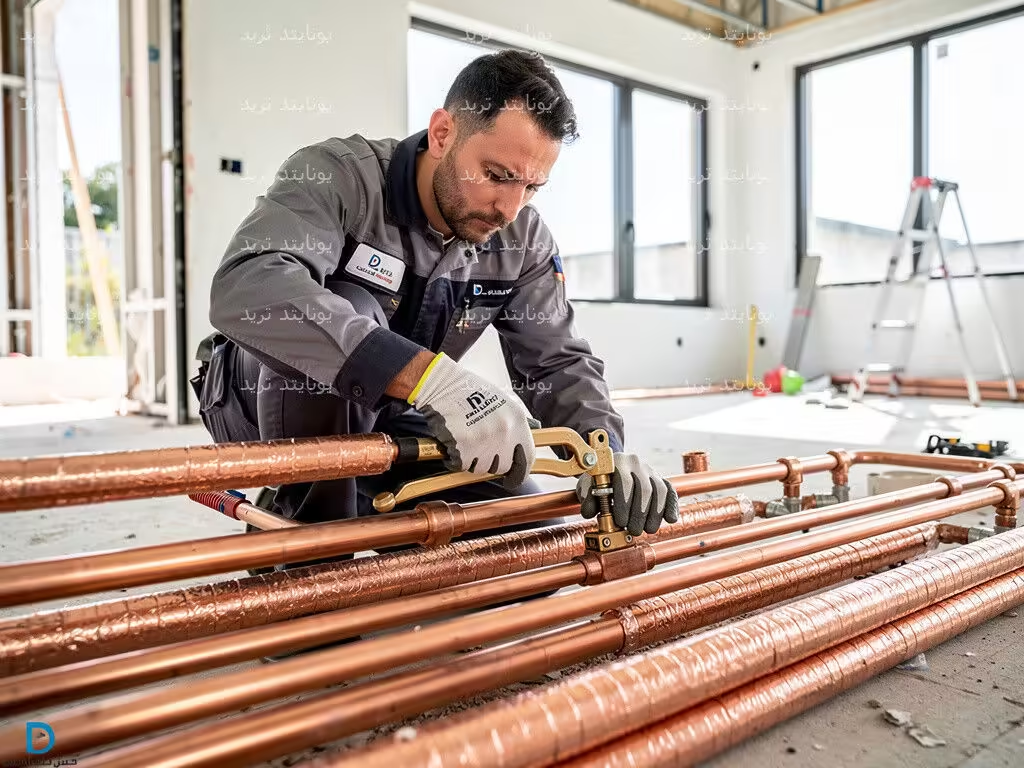
Precisely laying air conditioning ducts is the key to ensuring efficient refrigerant flow, which protects the air compressor from premature damage and reduces electricity consumption inside residential and commercial buildings. This article provides you with a comprehensive engineering guide explaining the best practices used to avoid pressure drops and bottlenecks in gas lines. In addition, you will learn how to choose the appropriate diameters and thicknesses of thermal insulation suitable for hot environments.
Quick answer: What are the basic conditions for the success of the process of extending air conditioning ducts?
Extension of air conditioning ducts is the mechanical path responsible for transporting the refrigerant between the indoor and outdoor units in a tightly sealed system that conforms to the manufacturer’s recommended diameters. This procedure requires the use of original, blemish-free copper tubes, with each line separately thermally insulated using elastomer. Furthermore, straight paths must be maintained to reduce sharp bends and prevent oil build-up within the cooling circuit.
The importance of adhering to technical standards while extending air conditioning pipes
The structured geometry protects the cooling network from the problems of low mechanical torque in electric motors. Therefore, tight fitting of the pipes reduces vibrations caused by the movement of the high-pressure refrigerant. For example, installing rubber-lined metal clips every meter and a half ensures that acoustic shock is absorbed within the walls and false ceilings.
Carefully thought out paths help technicians detect any gas leaks early and facilitate future maintenance without cracking the walls. In contrast, random expansion causes congestion in the intake line, causing non-evaporated refrigerant to reflux into the compressor and damage the internal valves. Therefore, choosing the shortest and most streamlined path is a crucial factor in extending the lifespan of the entire device.
Types of copper used in refrigeration and air conditioning networks
Copper pipes used in the refrigeration sector vary according to wall thickness and their ability to withstand the high operating pressures of modern R410A or R32 Freon. It should be noted that choosing the wrong type may cause the lines to burst or gas to gradually leak through the fine pores.
K type copper tubes
Type K pipes have extremely thick walls that make them the first choice for underground burials and in large industrial facilities. As a result, these pipes withstand high mechanical stresses and resist chemical corrosion caused by soil moisture and salts.
L type copper tubes
L-type ducting is the most widely used standard in residential and medium-sized commercial air conditioning projects. Furthermore, these tubes provide an excellent balance between flexibility during bending and durability to withstand high gas pressures.
M type copper tubes
Type M pipes have thinner walls than previous types, so their use in modern Freon gas installations is strictly prohibited. In other words, the uses of this type are limited to water supply and low-pressure fluid drainage only.
| Copper tube type | Wall thickness | Pressure tolerance level | Ideal area of use |
|---|---|---|---|
| Type K | Very thick | Extremely high (withstands above 700 PSI) | Direct burial in soil and industrial projects |
| Type L | Average thickness | High (compatible with Freon R410A) | Residential buildings, split and concealed air conditioners |
| Type M | delicate | low | Condensate drain lines and light water networks |
The executive stages of completing the extension of air conditioning pipes professionally
Proper implementation requires following precise sequential steps that begin with engineering planning and end with quality testing and sealing. This arrangement ensures that the copper is protected from the ingress of dust and atmospheric moisture during the various stages of construction.
- Determine the paths and install the mechanical stands with equal dimensions to avoid bending of the pipes under the influence of their own weight.
- Cut the pipes using a dedicated rotary cutter, cleaning the inner edges with a sander to prevent clogging of the expansion valves.
- Insert sponge thermal insulation around each copper pipe independently before making connections.
- Use an external bending spring or hydraulic bending tool to form curves at smooth angles exceeding a 90 degree radius.
- Connecting the ends using mechanical flap technology or silver welding, while pumping inert nitrogen gas into the pipe to prevent the formation of black oxide.
The most common mistakes when laying cooling lines
Some unprofessional practices while extending copper networks lead to serious malfunctions in the cooling system after a short period of operation. For example, some people neglect to install an oil trap in vertical lines whose height exceeds 3 meters, which prevents the return of lubricating oil to the compressor and leads to its combustion.
Successful completion of the work requires following professional principles during Air conditioning installationStarting from installing the internal and external units in well-ventilated places, all the way to tightening the mechanical connection to avoid any possible leakage. This engineering commitment ensures maximum cooling efficiency and balanced air distribution throughout the space.
The first construction phase requires careful consideration of requirements Installing air conditioning ducts Buried to ensure the integrity of the insulation and avoid any future blockages. The proper selection of extension paths and copper pipe diameters contributes to facilitating the flow of Freon and stabilizing cooling efficiency for many years.
It requires an operation Air conditioning installation Follow precise technical standards to adjust installation levels and connect internal and external units tightly to prevent any leakage. Adherence to these steps will help distribute homogeneous air and increase operational cooling efficiency to the maximum possible extent.
In addition, play operations Regular air conditioning maintenance It plays a pivotal role in maintaining stable internal pressure and cleaning filters and condensers from harmful deposits. This preventive measure ensures continuous cooling efficiency and prevents sudden malfunctions that may result from stress on the internal components of the system.
Implementing this system requires following precise rules Installing air conditioning ducts To create safe and engineeredly isolated paths that prevent Freon leakage and ensure the highest possible cooling efficiency. Pre-planning the copper network and water drainage during the finishing stages also allows to avoid random breakage and effectively reduce future maintenance costs.
Maintaining this ideal performance requires implementing an integrated plan that includes: Regular air conditioning maintenance It relies on periodic inspection of all mechanical and electrical parts. This proactive measure helps detect warning signs early and avoid common mistakes, ensuring increased cooling efficiency and extending the lifespan of the entire system.
This ideal performance is closely linked to delivering Regular air conditioning maintenance It included checking Freon levels and cleaning filters and condensers to ensure the quality of cooling. These preventive measures help detect early leaks and reduce energy losses, extending the life of the entire system.
It requires an operation Installing air conditioning ducts Careful engineering planning precedes the finishing work, to ensure smooth paths that prevent copper twists and ensure complete thermal insulation. Taking care to choose the appropriate diameters and secure the paths inside the walls and false ceilings is the decisive step in achieving ideal extensions that guarantee a long lifespan for the cooling system.
are considered procedures Air conditioning maintenance Periodicity is an essential preventive step to maintain the system’s efficiency and detect any early leaks in the cooling lines. Regular inspection of mechanical and electrical components helps avoid sudden breakdowns and ensure a longer lifespan for all parts of the unit.
Installing air conditioning ducts At an early stage of construction, careful planning of the paths within the walls and ceilings is required, to ensure that there are no sharp bends that impede the movement of Freon. Relying on high-quality materials and durable thermal insulation prevents moisture condensation and extends the lifespan of the entire system.
- Integrating the intake line and liquid line within one thermal insulator, causing a negative heat exchange that reduces cooling efficiency by 15%.
- Use multiple welding joints in short lengths, which increases the possibility of future leaks under walls.
- Leaving the ends of the copper pipes open during extension allows moisture to enter, which turns into damaging acids for the motor windings.
- Bending pipes manually without auxiliary tools, causing mechanical throttling that raises the operating pressure abnormally.
- Neglecting to apply a proper hydraulic tilt in the water drainage pipes, which causes water drops to fall into the air-conditioned rooms.
Thermal insulation standards and nitrogen pressure testing
Proficient thermal insulation is the first line of defense to prevent water vapor condensation on the external walls of pipes and protect the building’s structural structure. Therefore, polyethylene or synthetic rubber insulators with a thickness of at least 13 to 19 mm should be used in areas with high humidity. In addition, protective plastic tapes must be wrapped tightly over the insulation without compressing it to prevent reducing its effective density.
Requires implementation of Air conditioning installation Superior skill in installing internal and external units and adjusting their balances with geometric precision that prevents vibrations and condensation water leakage. The tight connection of the cooling lines and electrical circuits also contributes to achieving the highest levels of thermal performance and extending the life of the device.
Nitrogen testing is the most important stage to ensure that the track is free of any microscopic holes before turning on the Freon. On the other hand, testing the network with normal atmospheric air pressure is strictly prohibited because it contains moisture and oxygen that spoil synthetic refrigerant oil. Furthermore, the grid is pressurized with dry nitrogen gas to 400 to 500 psi for 24 hours to monitor indicator stability very precisely.
Frequently asked questions about cooling and air conditioning networks
What is the maximum permissible length of split air conditioner pipes?
The maximum permissible length for most home split air conditioners ranges between 15 to 25 meters according to the manufacturer’s instructions. It should be noted that exceeding this distance requires adding carefully calculated amounts of supplementary oil and Freon to avoid compressor fatigue.
Can air conditioning pipes be buried directly inside the walls?
Yes, it can be buried provided that the copper lines are placed inside protective plastic pipes (pVC pipes) to facilitate pulling and replacing later. This procedure protects the copper and insulation from direct chemical reaction with cement and wet building materials.
Why should the suction line and liquid line be insulated separately?
Insulating each line individually ensures that heat exchange is prevented between the warm fluid line and the cold gas line returning to the engine. As a result, the refrigeration cycle maintains its full thermodynamic efficiency and reduces compressor effort.
How is Freon leakage detected inside the pipe network?
Leakage is detected by compressing the mesh with nitrogen and using specialized soap foam on the connection and welding points, or by relying on sensitive electronic leakage detectors. These techniques help find the smallest gaps before pumping the final Freon charge.
What is the importance of emptying the air through the vacuum pump before operation?
The vacuum pump pulls air and moisture from inside the copper pipes and turns tiny water droplets into steam that completely exits the system. This action prevents moisture from freezing inside the expansion valve and protects the cooling oil from acid decomposition.
Your next step to ensuring stable and safe cooling
Completing the extension of air conditioning ducts with high efficiency requires the use of qualified technicians who rely on precise tools and adhere to the approved engineering specifications for each system. Do not hesitate to inspect the quality of the installations and apply a nitrogen pressure test before sealing the walls to ensure lasting comfort and continuous strong cooling.
















TQTAG76 Community dialogue
0 comments