
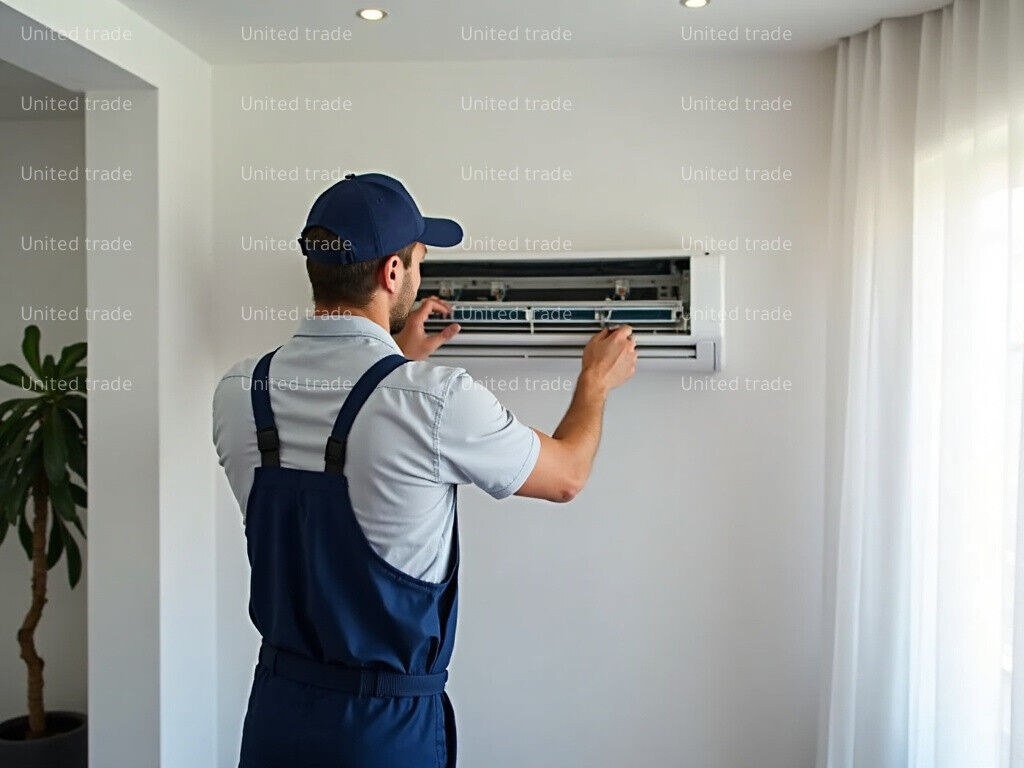
Executive summary of cost calculation and appropriate specification (immediate answer)
The choice of the most appropriate model and capacity is determined by Sharp air conditioners By matching the room area and thermal insulation volume with the seasonal performance factor; The capacity of 1.5 HP covers areas up to 12 square metres, 2.25 HP covers areas up to 18 square metres, and 3 HP covers areas up to 26 square meters under normal conditions. From an economic standpoint, the cost of purchasing Sharp devices ranges into 3 levels, starting from the standard models (non-inverter) up to the Japanese inverter plus (Plasmacluster) models. The actual energy saving rate for inverter models ranges between 42% to 48% annually, which ensures that the entire purchase price difference is recovered through the electricity bill in a period ranging from only 11 to 15 months of actual operation.
The formula for calculating the winter and summer heat load to choose the Sharp air conditioning capacity in watts
Most consumers make the mistake of purchasing air conditioners by relying exclusively on the total area in square meters without taking into account the variable heat load (Cooling Load). To avoid compressor damage or insufficient cooling, engineers apply the following standard thermal equation:
Total heat load (BTU/hr) = (room length x room width x height) x structural factor (250 for insulated rooms or 300 for exposed rooms and western facades) + 600 per permanent person + electronic and lighting equipment loads.
- Repeated floors (well insulated, double glazing): Multiply by a factor of 250; 1.5 HP (12,000 BTU) is enough for a 4x3 room with a height of 2.8 meters.
- Last floors exposed to direct sun: The construction factor is raised to 300 with the addition of 15% compensatory cooling power, automatically moving the selection from 1.5 HP to 2.25 HP (18,000 BTU) to ensure the compressor does not run at 100% all day and avoids high internal coil temperatures.
- Open reception halls and American kitchens: Requires an additional 4,000 BTUs to compensate for air leakage and cooking loads, making the 3 HP (24,000 BTU) model the operational minimum for mechanical safety.
Engineering Disassembly Catalog: Fundamental Differences Between Sharp Product Lines (Standard vs. Inverter Plus)
The architectural structure of the internal mechanical and electrical parts differs between economical Sharp models and advanced models, which explains the difference in cooling efficiency and failure rate:
- Freon control system: Standard models rely on constant copper capillary tubes for the refrigerant flow, while Inverter Plus models contain an intelligent electronic expansion valve (Pulse Modulated EEV) that controls the injection rate with an accuracy of fractions of a milligram per second depending on the room temperature and the external condenser.
- Electric motors (BLDC Motor): Inverter models are equipped with brushless DC fan motors for both the indoor and outdoor unit, providing nearly infinite speeds and an 8 dB noise reduction compared to the limited three-speed AC Induction motors in economy models.
- Chemical Protection Shield (Blue Fin Condenser): The aluminum foil in the outdoor unit of the inverter models is treated with a double blue hydrophilic coating that prevents the build-up of salts, moisture and atmospheric pollution residues, and reduces copper and aluminum oxidation rates by up to 65% in coastal and industrial areas.
Table of approved technical specifications, pricing segments and operating cycle cost (LCC)
The comparative technical table shows the design specifications, power consumption measured in amps, and indicative pricing ranges for the most prominent categories of Sharp air conditioners available in the market:
| Model and capacity | Heat capacity (BTU/h) | Nominal operating current(A) | Seasonal performance coefficient (SEER) | Price segment and warranty |
|---|---|---|---|---|
| Sharp 1.5 HP Cool (AH-A12UCE) | 12,000 BTU | 5.2 amps (fixed) | 10.5 BTU/W | Economical (5 years warranty) |
| Sharp 1.5 HP Plasma Inverter (AY-XP12UHE) | 12,280 BTU (up to 13,300) | 1.6 – 4.8 A (variable) | 15.1 BTU/W | Above average (5 years warranty) |
| Sharp 2.25 HP Plasma Inverter (AY-XP18UHE) | 17,400 BTU (up to 19,000) | 2.2 – 6.9 amps (variable) | 14.4 BTU/W | Advanced (5 year warranty) |
| Sharp 3 HP Plasma Inverter Plus (AY-XP24UHE) | 23,200 BTU (up to 25,500) | 3.1 – 9.4 amps (variable) | 13.9 BTU/W | Luxury (5 year warranty) |
Electricity consumption simulation study: When will the Sharp inverter air conditioner recover its value in pennies and watts?
To determine financial viability without marketing misinformation, we conducted a simulated energy consumption test over an entire summer season (120 days), with a daily operating rate of 10 hours, inside a 14 square meter room, and setting the temperature to 24°C:
Standard inspection results for a conventional 1.5 HP (On/Off):
- Compressor behavior: It runs at full 1,180 watts at a rate of 45 minutes per hour, and only disconnects for 15 minutes.
- Total daily consumption: 1,180 watts x 7.5 hours of actual work = 8.85 kilowatt-hours per day.
- Seasonal consumption: 8.85 x 120 days = 1,062 kilowatt-hours.
- Estimated cost: This value places the consumer in the highest electricity consumption brackets.
Test results for the Sharp 1.5 HP Inverter Plus device:
- Compressor behavior: It operates at maximum power (1,250 watts) during the first 20 minutes to reach 24 degrees Celsius, then the motor frequency decreases to settle on drawing only 420 to 480 watts to maintain thermal stability.
- Total daily consumption: (1.25 kilowatts x 0.33 hours) + (0.45 kilowatts x 9.67 hours) = 4.76 kilowatt-hours per day.
- Seasonal consumption: 4.76 x 120 days = 571.2 kilowatt-hours.
- Financial net worth: Sharp inverter air conditioning achieves direct savings of 490.8 kilowatt-hours per season, a reduction equivalent to 46.2% of the material cost, which ensures that the difference in the purchase price between the two models will be recovered within one year of operation and three months, while protecting the home’s internal network from shocks from the electrical starting current.
Plasmacluster Ion Technology Laboratory Testing Guide: Bioprotection and Ion Distribution
Unlike traditional mechanical filters that only trap large, visible dust, Plasma Cluster technology in Sharp air conditioners relies on discharging tiny electrical charges in the path of airflow exiting the indoor unit:
- Co-ion generation: The Plasma Cluster generator produces positive hydrogen ions (H+) and negative oxygen ions (O2-) surrounded by water atoms at a concentration of up to 25,000 ions/cm³ in High-Density models.
- Breakdown of active pollutants: When these ions adhere to the surfaces of fungi, mold spores, or suspended viruses, they are immediately transformed into highly oxidizing hydroxyl radicals (OH-) that pull hydrogen from the protein that makes up the microbe’s wall, completely inactivating it and ending its ability to reproduce.
- Switching to pure water: After completing the neutralization process, the molecules combine to turn into harmless water (H2O) that returns to the normal room humidity without any emission of harmful ozone gas into the chest or respiratory system.
Solar radiation stress comparison: Sharp outdoor units against Carrier at 52°C
Air conditioners are subjected to harsh tests in the height of summer, and the structure of Sharp air conditioners differs from its main competitor in the market, Carrier air conditioners, when operating the units in extremely hot areas:
| Engineering standard of operation | Sharp Air Conditioners (Japanese Engineering) | Carrier Air Conditioners (American Engineering) |
|---|---|---|
| Thermal Cut-off temperature | The compressor frequency is intelligently reduced to 48°C to protect the card without completely disconnecting the cooling | It continues to operate at maximum power up to 52°C thanks to powerful orbital refrigeration compressors |
| Noise and vibration level of the external condenser | Very low (mount the compressor on double vibration-absorbing rubber seats) | Medium to high due to the aggressive airflow of the external fan |
| Type of refrigerant and size of shipment | Eco-friendly R410A with precise gas block balancing to prevent high pressure surges (Head Pressure) | R410A with larger heat exchanger area to withstand higher gas pressures |
| Recommended environment for use | Residential rooms, offices, and places that require absolute silence and superior purification | Shops, exposed roofs, and places exposed to direct sunlight throughout the day |
Prove it Carrier air conditioners It excels in completely open and desert environments, while Sharp takes the undisputed lead in energy efficiency and complete quietness inside residential facilities and modern homes.
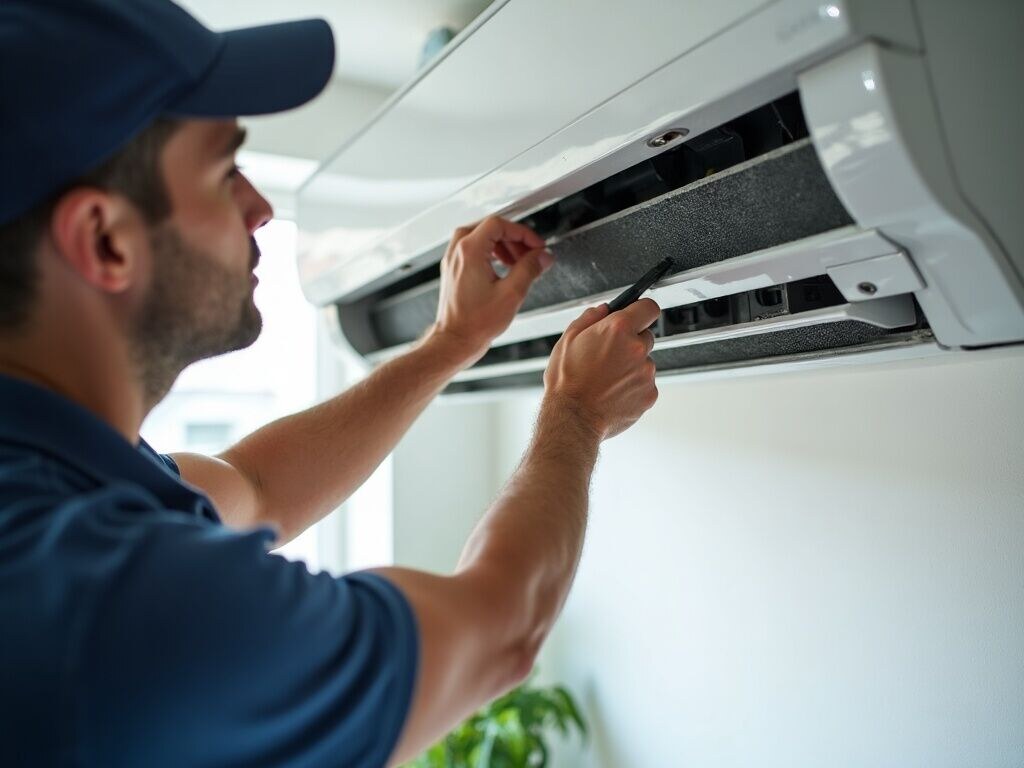
Mandatory engineering installation protocol to prevent burnout of control card and compressor
Advanced Sharp devices lose up to 35% of their operational efficiency and their compressor is subject to premature wear due to technician errors during installation; Therefore, the company has set strict standards that include:
1. Use approved copper pipes and thermal insulation
Copper pipe wall thickness must be at least 0.8 mm to withstand R410A gas pressure up to 450 PSI. Maintaining the efficiency of the refrigeration cycle requires implementation Installing air conditioning ducts With diameters that fully conform to the specification, with each Freon line (suction line and liquid line) insulated with a completely independent Armflex insulator with a thickness of no less than 9 mm to prevent water condensation and heat loss.
2. Pneumatic dehydration using a vacuum pump (Dehydration)
Air purging is strictly prohibited. R410A gas contains synthetic oils of the POE type that quickly absorb atmospheric moisture. The presence of moisture inside the pipes leads to the formation of hydrofluoric acids, which corrode the insulation of the motor windings and burn the compressor. The solution is to empty the circuit using a two-stage vacuum pump until a negative pressure of 500 microns is reached, which is provided exclusively by technicians specialized in Dismantling and installing air conditioners With certified craftsmanship.
3. Regular maintenance to prevent high amperage
Clogged internal filters and the external condenser network with dust prevent proper heat exchange, which forces the inverter control card to increase the frequency and raise the ampere consumption to dangerous levels. Provides regular contracting for services Sharp air conditioner maintenance Reviewing the pressure of the Freon charge in the sensitive thermometer, cleaning the drainage paths, and checking the integrity of the electronic sensors to avoid sudden stopping of the device at the height of summer.
Guide to troubleshooting software faults and reading digital screen codes (Error Codes)
When a Sharp air conditioner experiences a mechanical or electrical malfunction, the digital screen of the indoor unit displays an encrypted malfunction code that accurately identifies the cause of the problem:
- Malfunction code E0/F0: It indicates a malfunction in the room temperature sensor (Room Ambient Sensor) or the copper freeze sensor in the evaporator, which prevents the device from accurately sensing the cold and requires measuring the resistance of the sensor in ohms.
- Malfunction code E1: Serial Communication Failure between the internal unit card and the inverter PCB in the external unit; Usually caused by a break in the No. 3 lead or damage to the signal path.
- Malfunction code F1/F2: An error in the external condenser sensor or the compressor exhaust pipe sensor (Discharge Pipe Sensor), which is an indication of an abnormal rise in the compressor temperature resulting from a refrigerant gas leak or a clogged expansion valve.
- Malfunction code C1: A warning about the accumulation of dust on the air filters and the decrease in internal air flow. It is a software notification that obliges the user to clean the internal windows and wipe the air purity sensor.
Frequently asked questions about the operation and prices of Sharp air conditioners
What is the ideal length of the Freon pipe path between the indoor and outdoor units?
The technical minimum for piping is 3 meters to avoid transmission of compressor vibrations to the indoor unit, while the maximum for models up to 2.25 HP is 15 meters (with an additional charge of 20 grams of Freon per meter after the first 5 metres). The maximum limit for 3 HP models is 20 meters with a vertical difference not exceeding 10 metres.
Why does the Sharp inverter air conditioner not start cooling immediately after turning it on?
Sharp air conditioning cards contain a built-in 3-Minute Delay Protection circuit that delays the compressor start-up for 3 to 5 minutes after the electricity is connected to equalize the refrigerant pressures in the circuit and protect the intelligent transistors (IGBT) from high reverse currents.
Are the prices of spare parts for inverter models different from regular models?
Yes, the electronic control cards and DC compressors in inverter models are 30% to 40% more expensive than their regular counterparts, but their damage rate is lower thanks to the presence of multiple electronic protection circuits against voltage fluctuation and frequency change.
















Community dialogue
0 comments