
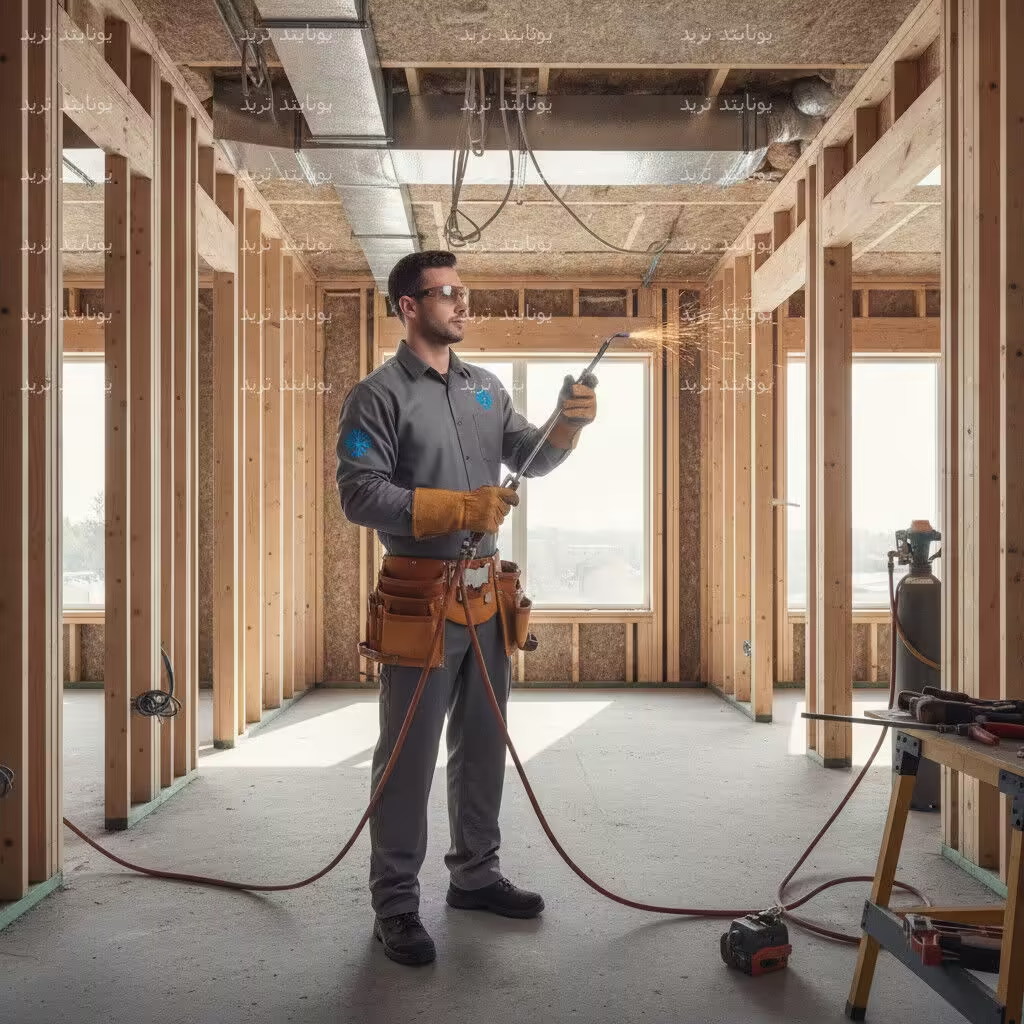
practical Installation of copper pipes It is the basic foundation for ensuring cooling efficiency and preventing Freon leakage in modern air conditioning systems. The ideal performance of the device depends on the accuracy of the selection of diameters, the quality of the welding, and the integrity of the thermal insulation applied to the copper lines. By following precise technical standards, technicians ensure sustainable operation that reduces energy consumption and protects the compressor from premature wear.
Criteria for selecting copper and its appropriate diameters
Copper tubes must be selected that meet the specifications ASTM B280 To ensure a purity of at least 99.9%, providing high resistance to corrosion. This level of purity contributes to maintaining optimal thermal conductivity within the closed cooling circuit.
❓ The effect of diameter on compressor efficiency
Determining the pipe diameter (such as 1/4 or 3/8 inch) depends directly on the cooling capacity of the air conditioner in tons. Using a diameter that is not compatible with the compressor capacity leads to motor stress, which increases electricity consumption and negatively affects the actual cooling rate.
Professional steps in implementing copper extensions
requires Installation of copper pipes Technical expertise to avoid common mistakes during forming or bending. Professional crimpers must be used to ensure that jams do not occur that reduce the flow of refrigerant.
❓ The importance of nitrogen purging during welding
It is strictly prohibited to weld copper without passing dry nitrogen into the pipes to prevent the formation of internal oxides. These oxides, if they accumulate, may cause the expansion valves to become clogged and cause the system to stop working suddenly. Furthermore, any welds inside the walls should be avoided to ensure ease of maintenance in the future.
The previous diagram shows the technical path adopted to ensure installation quality and reduce the possibility of subsequent malfunctions.
Comparison table: insulation and installation requirements
| item | Technical standard |
|---|---|
| Copper purity | 99.9% (ASTM B280) |
| Insulation thickness | 3/8 inch minimum |
| Welding disinfection | Dry nitrogen is necessary |
| Bending angles | Up to 90 degrees allowed |
The role of thermal insulation in protecting performance
Thermal insulation with a thickness of at least 3/8 inch is an essential step to prevent condensation, or what is known as sweating. This insulation protects the Freon lines from losing cold, which enhances system efficiency and prevents damage to the trim and walls surrounding the pipes.
Sustainability and environmental considerations of copper
The copper used in air conditioning systems is fully recyclable, making it an environmentally friendly option. Furthermore, copper's ability to withstand high pressures makes it an ideal material for long-term residential and commercial projects.
require Air conditioning installation process High skill in installing internal and external units and ensuring their level, to avoid annoying vibrations or water drainage problems resulting from incorrect inclination. Careful adherence to electrical wiring paths and protection of connections from weather factors also ensures the stability of the device’s operational performance in the long term.
The real success of the network begins before the final installation phase Installing air conditioning ducts Buried inside the walls or false ceilings according to carefully studied paths. This step requires determining the correct slopes and providing mechanical protection for the lines to avoid any subsequent structural damage, which ensures a smooth flow of the refrigerant compound and a longer life span for the entire system.
These engineering equipments directly integrate with requirements Air conditioning installation Effectively, it takes into account air distribution and the locations of indoor and outdoor units accurately. Installing the devices according to sound technical principles ensures that the refrigeration cycle pressures are balanced and protects the mechanical components from premature fatigue, giving the system operational efficiency that lasts for many years.
The efficiency of the system does not stop at mastering the initial stretches only, but extends to include cycles Regular air conditioning maintenance Maintains stable gas pressures and the integrity of mechanical circuits. Continuous preventive inspection detects any blockages or early wear, which improves the quality of cooling and extends the service life of the entire unit components.
Professional practices in installing copper pipes effectively contribute to enhancing the efficiency of heat exchange, which reduces electricity consumption by significant percentages of up to 30%. Strict adherence toPerformance standards The system prevents common operational malfunctions and ensures continuous refrigerant flow between units without any loss.
The importance of the system does not stop only at the installation stage, but also extends to periodic follow-up that ensures continuity of high performance. Conducting operations Air conditioning maintenance Regular operation helps detect any malfunctions early, and cleans filters and evaporators, which extends the life of the device and keeps energy consumption within normal levels.
This preliminary stage requires extreme precision, starting with advance engineering planning of the extension paths before pouring concrete or finishing work, as it includes: Installing air conditioning ducts Choose smooth paths that reduce sharp bends that may impede the flow of the refrigerant. This also requires protecting buried lines within designated ducts that protect them from construction pressures and facilitate any future maintenance with high efficiency.
The importance of proper installation goes beyond the foundation stage, as there is an urgent need to... Air conditioning maintenance Periodically to maintain continued high performance and prevent cooling efficiency from declining over time. Regular inspection of internal components and cleaning of filters directly contributes to extending the life of the device and avoiding sudden malfunctions that may result from dust accumulation or lack of refrigerant gas.
The first stage requires carrying out work Installing air conditioner piping With well-thought-out paths and precise geometric inclinations to avoid oil accumulation and ensure smooth flow of the refrigerant. This extension also requires protecting the pipes inside the building walls with insulating covers to protect them from shocks and cracks, which paves the way for a safe final installation free of any bottlenecks in the cooling network.
Frequently asked questions
❓ What are the risks of choosing thin copper pipes?
Thin pipes create the potential for cracks under the pressure of Freon, causing constant leaks that require recharging the system and additional repair costs.
These precise steps are integrated to form the most important stage in... Air conditioning installation With high efficiency, as installing the internal and external units requires an engineering balance that ensures smooth flow of the refrigerant without stress on the compressor. Adherence to installation protocols and tight electrical circuit connections protects the system from sudden malfunctions and increases its operational capacity to the maximum extent.
❓ Can I install copper pipes myself?
This is not recommended, because Installation of copper pipes It requires specialized welding equipment and experience in handling gas pressures to avoid serious risks.
❓ Why is it prohibited to make welds inside walls when installing pipes?
This is prevented because any leakage in the welding inside the wall is difficult to detect or repair without cracking, which represents a large financial burden on the owner.
❓ How do I ensure that expansion valves do not become clogged after installation?
This is done by purging the pipes with nitrogen during the welding process to prevent the formation of copper oxides that subsequently deposit and cause blockage of the valves.
❓ Does the length of the piping path affect the efficiency of air conditioning?
Yes, increasing the length of the pipe path beyond the limit permitted by the manufacturer leads to a drop in pressure and a loss in cooling efficiency, which requires an increase in the amount of Freon.
Commitment to engineering standards Installation of copper pipes It guarantees you a trouble-free cooling experience for many years. Do not hesitate to seek the help of specialized technicians to ensure that these steps are carried out accurately and professionally.
















TQTAG76 Community dialogue
0 comments