
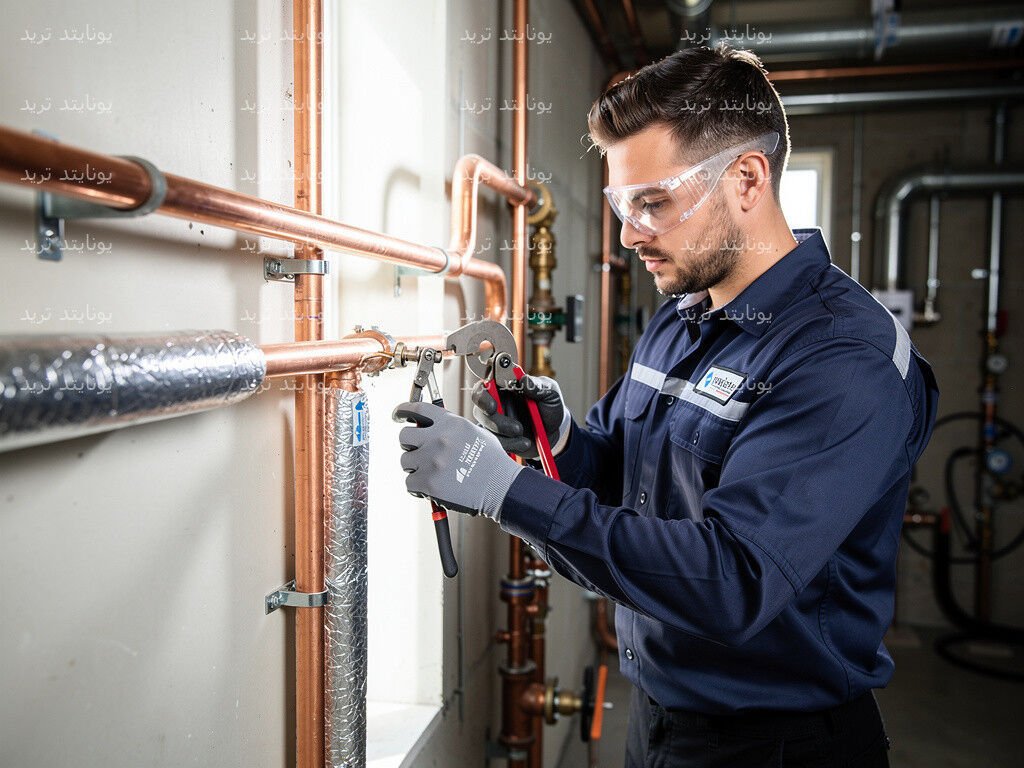
Installing copper pipes represents the basic foundation for ensuring the efficiency of modern cooling and plumbing systems for many years without malfunctions. This practical guide provides comprehensive guidance covering the stages of field work from track preparation to final pressure testing. In the following lines, you will learn about the latest technical practices and specialized tools that protect your network from the risks of leakage and ensure a smooth flow of fluids and gases.
Quick answer
Copper pipe fitting is a precise mechanical process that involves measuring, cutting and connecting metal pipes using silver welding or press-and-flare joining techniques. This process ensures the transfer of coolants and water with high thermal and mechanical efficiency and superior corrosion resistance when tight thermal insulation is applied and closely spaced supports that prevent vibration are installed.
What are the approved tools for preparing and preparing pipes?
The initial preparation phase requires the provision of quality tools that ensure the cutting of the copper surface with extreme precision without distorting the roundness of the tube. Using a circular pipe cutter will help you get straight edges at a perfect ninety degree angle.
Moreover, using a deburring tool is a mandatory step to clean the inner edges after each cut. Neglecting to clean the valves may lead to disturbances in fluid movement or subsequent blockage of sensitive expansion valves.
In addition to hand tools, mechanical copper benders provide the ability to create consistent bends without denting walls. Keeping the inside diameter constant keeps pressure and flow rates stable throughout the path.
How do you choose the type that best suits the nature of your project?
Copper used in installations is divided into several standard grades that differ in wall thickness and withstanding operational stresses. Correct selection of the size and thickness of the metal ensures that explosions resulting from sudden pressure surges are avoided.
| Standard type | Wall thickness | Main areas of use | Pressure tolerance level |
|---|---|---|---|
| Type K | The thickest | Ground burial and uphill main lines | Too high |
| L type | Average thickness | Air conditioning and internal plumbing installations | High and ideal for buildings |
| Type M | Low thickness | Low pressure domestic water networks | Medium to limited |
| ACR flexible refrigerant pipes | Processed and dried | Freon connections and refrigeration units | High and intended for gases |
It should be noted that choosing the appropriate type depends primarily on the nature of the fluid and the flow rate designed within the system. Type L provides the optimal economic and technical balance for most residential and commercial applications.
Steps for installing copper pipes using thermal and mechanical techniques
The field connection stage is carried out through a strict implementation path that prevents the leakage of gases and liquids under various operating conditions. The quality of the connection requires following a logical order that cannot be violated while working on the connections.
- Cleaning metal surfaces: Scrub the ends of pipes and fittings with a wire brush or sandpaper until they show a pure, oxidation-free copper luster.
- Fusing aid mode: Coating the outer surface with a thin layer of flexo to prevent oxidation of the metal during heating in low silver soldering.
- Apply uniform heat: Direct the oxy-acetylene flame in a circular motion around the joint to ensure even heat distribution before contacting the welding wire.
- Capillary metal drawing: bringing the silver alloy closer to the gap so that it flows on its own into the void due to continuous heat.
- Gradual cooling and cleaning: Wipe the flex residue with a damp cloth after the temperature drops to prevent corrosion of the outer surface over time.
As a result, a monolithic joint is formed whose mechanical strength exceeds that of the original pipe itself against vibrations. This method ensures continuity of internal flow without accumulations that hinder the efficiency of the cooling or water circuit.
Standards for setting tracks and installing structural supports
Horizontal and vertical track needs regular mechanical fixation that absorbs vibrations and prevents pipes from bending over the years. Excessive spacing between mounting points causes lines to sag and oil or impurities to collect in low spots.
For example, it is recommended to place a mounting bracket every 1.5 meters for small diameters, and every 2 meters for diameters exceeding one inch. In addition, the copper tube must be isolated from the metal holders with a rubber band to prevent reactive galvanic corrosion.
In contrast, sufficient thermal expansion distances should be provided at long turns to avoid mechanical stresses on the welding points. Expansion joints allow slight movement of pipes when temperatures change between summer and winter.
The importance of thermal insulation in the sustainability of copper extensions
Effective thermal insulation represents a safety valve to prevent the condensation of atmospheric moisture on cold surfaces inside walls and false ceilings. The rubber jacket reduces heat loss and increases the energy efficiency of air handling units.
- Use closed elastomeric insulation that is resistant to absorption of ambient water vapor.
- Choose an insulation thickness of no less than nineteen millimeters for cold intake lines.
- Seal the longitudinal and transverse joints with custom, high-adhesive adhesive tape.
- Covering the external insulators with a layer of aluminum to protect them from damage due to ultraviolet rays.
Therefore, integrated encapsulation contributes to preventing fungal growth and corrosion of concrete adjacent to the feed lines inside the building. This measure is directly reflected in the long life of the air conditioning system and the reduction of periodic operating expenses.
These copper extensions are precisely integrated when initiating Air conditioning installation Air, as it is necessary to connect the internal and external units completely tightly to prevent any refrigerant leakage and ensure proper flow of the refrigerant. Correctly adjusting the pipe paths and installing them according to engineering standards increases the operating efficiency of the device and extends the compressor’s lifespan.
Pressure and vacuum testing protocol to ensure safety
Dry nitrogen testing is the crucial step to verify that the copper pipe installation is efficient and that the path is free of any microscopic holes. It is strictly forbidden to pump normal air into the pipes because it contains moisture that leads to damage to the synthetic oils in the compressors.
The first stage requires extreme precision when starting Establishing extension pipes Inside walls or floors to ensure their protection from mechanical stresses and temperature changes. This includes carefully defining flow paths and selecting appropriate mounting points that prevent any future vibrations that may affect the integrity of the welds. Carrying out this step according to engineering standards ensures a smooth flow of fluids and reduces the possibility of any unexpected leaks in the long term.
The quality of the installations is closely linked to a periodic schedule that ensures the continuity of the units’ operation, as they require Air conditioning maintenance A careful examination of the integrity of the cooling lines and their thermal insulation to prevent the leakage of Freon gas. This preventive measure helps maintain compressor efficiency and minimize energy consumption in the long term.
Proficient work requires carefully studying the construction paths before starting to extend the network Installing air conditioning ducts According to engineering plans, it is a proactive step that protects the walls from random breaking later. This thoughtful architectural device contributes to improving the flow of the refrigerant and reducing mechanical stress on the compressor, which reflects positively on the operating efficiency and life of the system.
Implementing successful extension networks requires extreme precision in each stage Establishing pipes Cooling and plumbing inside walls and floors according to studied engineering plans. This preliminary procedure helps avoid sharp bends and protects the lines from the dangers of mechanical shock or wear over time.
The quality of extensions is closely related to the effectiveness of the procedures Air conditioning maintenance Regular airing: Regular inspection protects the copper mesh from leaks and deposit build-up that impairs cooling efficiency. Continuous technical follow-up also contributes to maintaining ideal refrigerant pressures and extending the life of the compressor of the entire system.
After the connections are completed, the system requires regular periodic inspection to protect the circuit from leakage of cooling media and accumulation of sediments inside the connections. Procedures are grounded Air conditioning maintenance Advanced air conditioning helps clean the evaporator and adjust pressure levels, preventing compressor fatigue and maintaining the highest operating efficiency of the building.
It requires an operation Air conditioning installation With high precision, proper copper connections are taken into account to ensure the flow of the cooling medium without the slightest leakage. Perfectly adjusting the bending angles and insulating the lines protects the compressor and increases the overall cooling efficiency of the unit with the highest safety standards.
Implementing these networks requires great care at some stage Establishing extension pipes To avoid any sharp bends that may impede fluid flow or cause a sudden drop in pressure. This step requires installing the supports precisely according to the approved engineering distances, while protecting the tracks from mechanical factors to ensure their structural integrity before the insulation and connection work begins.
It requires an operation Air conditioning installation Extreme precision in adjusting the paths and connecting the pipe network to ensure that the refrigerant flows with optimal efficiency without any leakage. Proper engineering installation of indoor and outdoor units helps reduce stress on the compressor and increase the lifespan of the entire device.
Furthermore, the network is pressurized with nitrogen gas to three hundred pounds per square inch and left under observation for twenty-four hours. The stability of the pressure gauge indicator over this period proves the quality of all welds and connections made.
In other words, the vacuum stage begins with the vacuum pump to withdraw moisture and non-condensable gases after a successful pressure test. A vacuum level of less than five hundred microns should be achieved to ensure a completely clean operating environment for the compressor and chillers.
Common mistakes to avoid in workshops and sites
Some technicians make the mistake of bending pipes manually without using internal zippers or designated external benders. This behavior causes the internal path to choke and sharply reduces the coolant or water flow capacity.
It should also be noted that excessive heating of copper leads to burning of the metal and the formation of internal black carbon scales. These scales later drift with the coolant to settle in the appliance filters and cause a complete blockage of the system.
In addition, using mounting screws in direct contact with copper accelerates spot rust due to moisture. Placing plastic insulators between the metal clamps and the pipe ensures that the integrity of the outer wall is maintained for decades without damage.
Frequently asked questions
What gas is used to test copper pipe leakage?
Oxygen-free and moisture-free dry nitrogen gas is used to test pipe pressure with complete safety. This inert gas prevents any chemical reactions or internal oxidation of the connections while checking for leaks.
How are copper pipes buried underground protected?
The pipes are protected by placing them inside high-density corrugated plastic hoses to prevent direct contact with gravel and soil. It is also preferable to use Copper pipes The factory is coated with an insulating polymer layer to protect it from salts and ground chemicals.
Can copper pipes be installed without welding?
Yes, it is possible to use flange technology and connection with conical nuts or modern hydraulic press technology. These mechanical methods provide a tight and quick connection without the need to apply a thermal flame within fire-sensitive areas.
What is the difference between rigid copper tubes and flexible copper tubes?
Rigid pipes come in straight lengths, withstand higher pressures and are used for long, open runs. In contrast, flexible pipes come in coils and are easy to shape and bend within narrow walls with minimal joints.
Why does a black color appear on copper after welding?
This darkening results from the oxidation of the outer surface due to the reaction of hot copper with the oxygen of the surrounding atmospheric air. This layer can be avoided by passing a light nitrogen stream into the tube during welding, and cleaning the outer surface with a brush after completion.
When should old copper wiring be replaced?
The track must be replaced when a significant decrease in wall thickness due to internal corrosion or the appearance of cracks and persistent damage to the welds is observed. Upgrading to modern high-pressure cooling media also requires changing the old lines with ones that can withstand the new pressure.
Completing the professional installation of copper pipes requires careful adherence to engineering specifications and the selection of installation and insulation materials that are compatible with the nature of operation. Start now by scanning your routes and applying stringent testing standards to ensure a long-lasting, secure network.
















Community dialogue
0 comments