
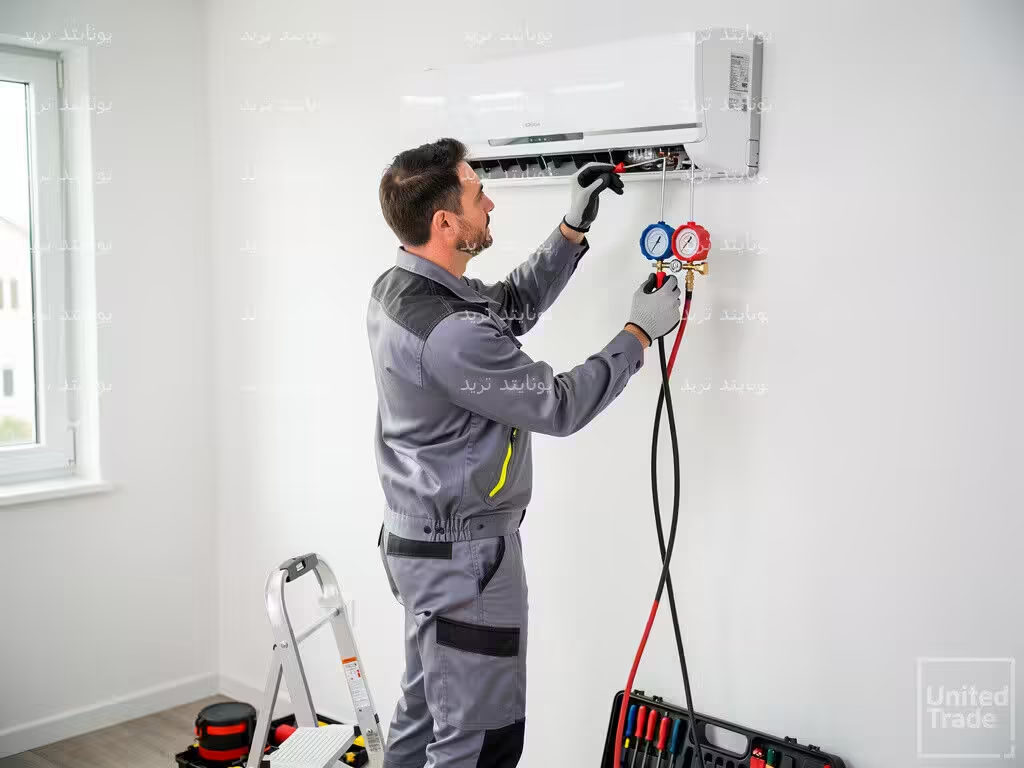
represents Air conditioning installation Proper air circulation is the basic foundation for ensuring efficient cooling and reducing electrical energy consumption in the long term. This article aims to provide you with first-hand applied knowledge about the engineering standards necessary to accurately install indoor and outdoor units, and avoid common malfunctions associated with Freon pressure and drain circuits.
Quick answer
Air conditioning installation Airing successfully requires installing the indoor unit on a solid, flat wall, taking into account the water drainage path with a slight slope, emptying air and moisture from copper pipes using a vacuum pump, and ensuring that the outdoor unit is installed in a well-ventilated place away from direct sunlight to avoid high refrigerant pressure.
The importance of choosing the ideal location for the units
The installation location of air conditioner parts directly affects the air flow rate and temperature distribution inside the room. Therefore, the indoor unit must be installed at a height of no less than two meters from the floor, leaving a free distance of at least 15 centimeters between the top of the air conditioner and the ceiling of the room to ensure that a sufficient amount of indoor air is drawn and recirculated very efficiently.
In contrast, the outdoor unit requires an open location that allows the condenser to dispose of the expelled heat freely and without reflux of hot air. As a result, it is preferable to avoid tight corners or walls facing nearby concrete barriers, because poor ventilation around the condenser leads to increased voltage on the compressor and a higher monthly electricity bill.
Conditions for installing the indoor unit
Installing the indoor unit requires using a water level ruler to adjust the metal plate very precisely. In addition, it is prohibited to tilt the unit in the opposite direction to the drain hose outlet, because any defect in the tilt angle will lead to condensation water collecting and overflowing onto the interior walls of the house, causing paint damage.
Outdoor unit ventilation requirements
The outdoor unit requires a vibration-resistant mounting base that is protected from corrosion and constant atmospheric moisture. Furthermore, shock-absorbing rubber pads should be placed under the mounting legs to prevent engine sounds and vibrations from being transmitted to the structural walls of adjacent rooms, and to provide a maintenance distance of at least 60 centimeters around the device.
Steps to install air conditioning with utmost precision
The installation process begins by locating the opening for copper pipelines and electrical connection cables through the exterior wall. Accordingly, the opening is made at a slight angle to the outside to protect the room from the entry of rainwater or the backflow of condensate drops coming from the natural drainage line.
This is followed by the stage of straightening and shaping the copper pipes for the refrigerant gas with great care to prevent any twisting in the pipes that reduces the cross-sectional area. For example, sharp bending of the pipes without using a bending zipper obstructs the flow of the refrigerant, causing a direct decrease in the cooling efficiency and making the device louder during operation.
- Fix the back panel bracket of the indoor unit with solid screws suitable for the wall type.
- Drill a hole for passing pipes with a diameter of 65 to 70 mm, with a downward slope.
- Insulate copper pipes with a suitable thermal insulator to prevent moisture condensation and loss of cooling energy inside the wall.
- Tighten the copper connections between the two units using a mechanical torque wrench to adjust the tightening force and avoid gas leakage.
- Connect electrical wires and signal cables according to the technical diagram attached by the manufacturer without modification.
Technical differences between common types of air conditioning
Installation requirements vary depending on the engineering design and type of cooling system used in the location in question. Therefore, the following table shows a technical comparison between the three most prominent air conditioning systems in terms of establishment requirements and operational characteristics:
| Air conditioning type | The nature of the construction foundation | Indoor noise level | Cooling efficiency in large areas |
|---|---|---|---|
| Split A/C | External copper pipe extension and drain hose | Very low and quiet | Medium (suitable for rooms up to 40 square metres) |
| Concealed air conditioning | Ducted air duct network and fully dropped ceiling | Almost non-existent within the space | Very high with homogeneous air distribution |
| Window air conditioning | Cracking an entire window opening with concrete or brick | Medium to high | Limited to small spaces only |
Criteria for checking pressure and emptying the refrigeration circuit
Discharging the hydraulic circuit using a vacuum pump is a crucial and indispensable stage in any Air conditioning installation sound. In other words, air or moisture atoms remaining inside the copper mesh chemically react with the lubricating oil and Freon gas, forming harmful acids that damage the gas compressor valves during short periods of operation.
The efficiency of the system as a whole starts from one stage Establishing copper pipes extending between the two units, as it is necessary to choose precise diameters that match the manufacturer’s specifications to facilitate the flow of the coolant. These extensions must also be insulated with great care, avoiding sharp bends that may hinder the movement of Freon or cause future leaks inside the walls.
The vacuum pump must be operated for a period of no less than twenty minutes until the pressure gauge indicator drops to 500 microns, or negative thirty inches of mercury. It should be noted that neglecting this procedure and replacing it with what is popularly known as expelling air using Freon represents a serious mistake that leads to reducing the life of the device and immediately voiding the manufacturer’s warranty.
This operational system is not complete without adopting a periodic schedule aimed at: Air conditioning maintenanceTo ensure that the compressor and heat exchanger fan continue to operate at the highest possible efficiency. Continuous monitoring contributes to the early detection of refrigerant gas leaks and cleaning the filters from accumulated impurities, which extends the life of the device and maintains the purity of the air inside the room.
Maintaining optimal performance of refrigerated units is required Conduct periodic air conditioning maintenance The goal is to check Freon levels and the integrity of the compressor and electrical circuits, in order to avoid a sudden decline in cold air flow. Continuous preventive inspection also contributes to treating blockages and leaks early before they escalate into complex mechanical failures that cost a lot to repair.
The efficiency of the device does not stop only at the stage of proper installation, but also extends to periodic follow-up via... Regular air conditioning maintenance Ensures filters are cleaned and refrigerant levels are carefully checked. This protective measure protects the compressor from thermal stress and prevents water leakage, extending the life of the entire system.
The efficiency of the entire system starts from one stage Establishing copper pipes Designed for transporting the refrigerant between the two units, precise diameters must be chosen and thermally insulated with the highest quality standards to avoid energy loss. Proper laying also requires avoiding sharp bends and ensuring proper inclinations to prevent oil retention and ensure the stability of the cooling cycle for many years.
Maintaining this ideal performance is not complete without setting a regular schedule for procedures Comprehensive air conditioning maintenanceThis includes cleaning the filters and checking the refrigerant levels to ensure that the compressor is not overworked. This preventive measure contributes to the early detection of any leaks or blockages in the air ducts, which extends the life of the device and ensures constant purity of internal air flow.
The efficiency of the entire system begins from the initial infrastructure preparation stage, as the refrigerant gas path requires extreme precision when implementing Establishing copper pipes To ensure smooth flow and excellent thermal insulation. Adhering to the recommended diameters and minimizing sharp bends during expansion will protect the compressor from premature fatigue and avoid any sudden media leaks in the future.
- Check the connection points and copper with soap suds or an electronic leak detector to ensure there is no venting.
- Monitor the stability of the pressure indicator for 15 minutes after stopping the vacuum pump to ensure that the system is completely sealed.
- Gradually open the gas valves with a designated Allen key to allow the refrigerant to flow into the path.
- Measure the mains voltage and actual operating current (amperes) and match them to the data recorded on the technical panel.
Mistakes that must be avoided to ensure the longevity of the air conditioner
Installation errors occur frequently as a result of haste or the use of technicians who are not scientifically qualified to deal with modern cooling circuits. For example, shortening the length of copper piping to a minimum of three meters results in transmission of hydraulic pulsation noise from the compressor to the indoor unit, disturbing residents.
In addition, over-tightening the tightening nuts causes the copper flange to crack and leak refrigerant very slowly over weeks. Therefore, it is always recommended to use a separate Armflex insulator for each pipe separately and not to combine the suction line and the expulsion line within one insulator, in order to avoid harmful heat exchange between the two lines and a decrease in the efficiency of the system.
Frequently asked questions
How long does it take to finish installing a new air conditioner?
The split air conditioning installation process, under normal circumstances, takes two to three hours per unit, including opening the wall vents, connecting, and testing the system pressure. The time may be extended if the copper wiring distance is long or requires external scaffolding.
How can I be sure of the success of the vacuum operation?
You confirm this by monitoring the digital pressure gauge until it reaches a reading of 500 microns, with the indicator remaining stable without rising for a quarter of an hour after disconnecting the pump. The stability of the indicator is the conclusive technical proof that the track is free of leaks and atmospheric humidity.
Can the outdoor unit be installed in a closed place?
The outdoor unit can never be placed in an enclosed space or an unventilated glass balcony, because the compressor will suffer from excessive heat buildup. This leads to frequent disconnection of the thermal cutter and damage to the cooling motor in a very short time.
Why should copper pipes be insulated separately?
Each copper pipe must be individually insulated to prevent heat transfer between the cold gas return line and the pressurized liquid line, and to avoid the formation of condensation water and corrosion of the copper. Insulating the two pipes together reduces the device's cooling capacity by more than 15%.
What is the recommended distance between indoor and outdoor units?
Typical distance is 3 to 5 meters to achieve a balance between vibration isolation and minimizing resistance to refrigerant flow. Avoid letting the path be less than 3 metres, and if the length exceeds 10 metres, an additional, measured amount of Freon must be added.
Proper implementation ensures long-lasting comfort
Performing air conditioning installation according to sound technical standards protects your financial investment and provides a comfortable indoor environment with balanced electricity consumption. Always make sure to follow Technical guide Choose a certified technician who uses specialized measuring tools to enjoy strong and sustainable cooling performance without sudden malfunctions.
















TQTAG76 Community dialogue
0 comments