
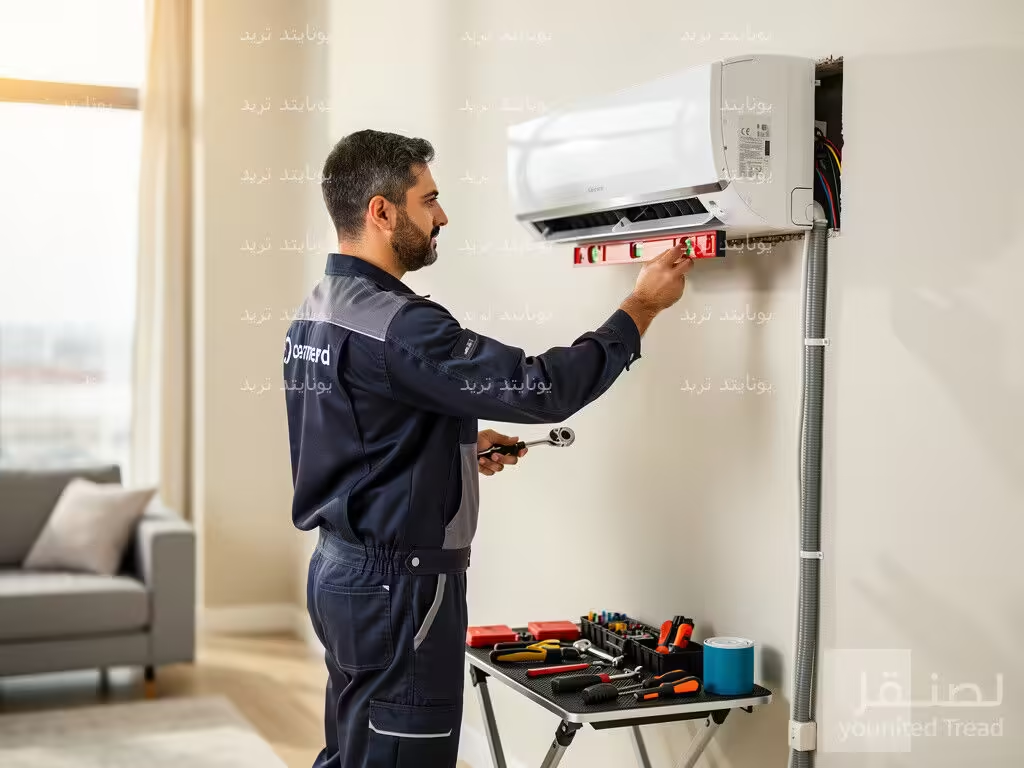
Common errors during laying of the cooling network and their impact on its lifespan
The process of laying copper extensions requires extreme precision to avoid complex mechanical problems that may appear after months of use, as incorrect practices lead to stress on the internal parts of the cooling system and significantly reduce its operational efficiency.
- Bending copper pipes at sharp angles without using a dedicated bending tool, which results in congestion of the refrigerant path and high pressure inside the exhaust line.
- Neglecting to operate the oil trap in the vertical lines when the outdoor unit is higher than the indoor unit, which prevents oil from returning to the compressor and causing it to burn.
- Using electrical cable sizes that are not compatible with the device’s consumption, which raises the temperature of the wires and leads to frequent power outages or damage to the control board.
- Exceeding the maximum permissible length of pipes without adding the compensatory charge specified by the manufacturer of Freon gas.
Comparison of specifications of standard and non-standard cooling paths
The following table shows the fundamental differences between equipment that conforms to engineering specifications and those that lack sound technical standards:
| Comparison | Matching standard equipment | Non-matching random processing |
|---|---|---|
| Quality of copper used | Certified pure copper with a thickness of no less than 0.8 mm to withstand high pressures | Light commercial brass is prone to cracking and leaking under constant operating pressure |
| Vacuum air and moisture | Use vacuum pump to draw air and reach specific micron level | Expelling air by forcing gas, leaving moisture to react, causing harmful acids |
| Install the outdoor unit | Use vibration-absorbing rubber feet on a rust-resistant metal stand | Direct installation on floors or walls without insulation, which transmits noise and vibration |
| Insulating electrical connections | Use insulated copper trays and protected with a cover against weather and dust | Tie the wires manually using regular adhesive tapes, which are damaged by heat and sun |
Post-commissioning procedures to measure performance
After completing operation, the technician must monitor the operation of the system for fifteen minutes to measure the temperature difference between the air entering the indoor unit and the air leaving it. The difference, which ranges between eight and twelve degrees Celsius, indicates the success of the adjustment process and the achievement of the cooling cycle for the maximum possible efficiency in energy consumption and the speed of reaching the required degree of cooling.
represents implementation Air conditioning installation A new crucial stage that determines the operational life and electricity consumption efficiency of the device for many years to come. This article helps you understand the technical path adopted for the mechanical and electrical connection, and avoid common mistakes that lead to damage to the compressor or leakage of the refrigerant, ensuring you a comfortable indoor environment and stable cooling with the highest possible efficiency.
Quick answer
Air conditioning installation Airing is a technical process that requires the indoor unit to be installed on a flat wall and connected to the outdoor unit via an insulated copper network with the air completely vacuumed out. This procedure requires adjusting water drainage tendencies, isolating connections and providing a free ventilation path for the compressor to ensure cooling efficiency and reduce energy consumption.
Basic conditions for choosing the location of the indoor and outdoor units
Choosing the correct placement for both units is the first step to ensuring regular airflow and avoiding heat reflux. The indoor unit should be installed on a strong wall that can withstand vibrations and be far away from direct heat sources.
Indoor unit installation requirements
The indoor unit requires a distance of at least 15 cm from the ceiling to ensure easy air intake, while leaving a distance of 10 cm from the sides. As a result, cool air flows uniformly throughout the room, while avoiding direct sunlight or doors that are too open.
Standards for placing the outdoor unit
The outdoor unit needs an open space to ensure that the heat generated by the condenser is dissipated without air obstructions. In addition, they must be installed on sturdy metal brackets with rubber dampers to absorb vibrations, while providing a maintenance distance of at least 50 centimeters from the surrounding walls.
Equipment and tools used in installation work
The installation process requires the use of specialized technical tools that ensure the integrity of mechanical connections and electrical circuits. The following table shows the most prominent tools used and the function of each to ensure accuracy of work:
| Technical tool | Basic function in installation | Impact on installation quality |
|---|---|---|
| Vacuum Pump | Draw air and moisture from the circuit | Protect the compressor and prevent moisture freezing |
| Manifold Gauge | Check refrigerant pressures and leaks | Adjust the charging amount and cooling stability |
| Flaring Tool | Forming the ends of copper pipes | Tighten the connection and prevent gas escaping |
| Digital water scale | Adjusting the level of the unit holder | Direct the flow of condensation water smoothly |
| Clamp Meter | Check voltage and amp consumption | Protect the electrical circuit from overcurrents |
Practical steps for connecting pipes and installing the cooling system
Copper connections require careful care to prevent kinks that impede coolant flow through the system. For example, improper bending causes gas throttling and overheating of the compressor, so a precise engineering sequence must be followed to ensure the integrity of the extension:
- Fix the indoor unit suspension plate using mounting screws and water level very carefully.
- Make a wall opening with a suitable diameter and with a slight outward slope to facilitate the drainage of condensation water.
- Extending copper pipes and insulating each line with an independent thermal insulator to prevent condensation and energy loss.
- Connect the electrical cables and ground the circuit according to the technical diagram attached to the device.
- Connect the copper ends using a flange expander tool and tighten the nuts with a specified torque wrench.
The importance of the air discharge process before operation
Vacuuming is a fundamental pillar in preventing damage to the air conditioner and ensuring its ideal performance in the long term. Moisture trapped inside the piping creates harmful acids that react with the lubricating oil and destroy the internal compressor valves.
The real success of the air conditioning system begins from one stage Establishing pipes Cooling according to sound engineering plans, as this ensures that severe bottlenecks are avoided and that Freon gas flow paths are controlled smoothly. Tight fitting at this stage also helps to effectively insulate the pipes and prevent the formation of harmful condensation on the building walls.
Unprofessional bending of copper pipes leads to suffocation of the refrigerant gas path, which raises the pressure inside the circuit and forces the compressor to work twice as hard. This constant mechanical stress significantly reduces the life of the device and makes... Air conditioning maintenance An urgent necessity to avoid sudden breakdowns and accumulation of costs.
It is considered practical Insulating air conditioning pipes A crucial step to keep the Freon cool and avoid the formation of watery condensation that may lead to internal leaks and damage to ceilings and walls. The tight thermal insulation of the pipes contributes to reducing pressure on pressure and saving energy consumption, ensuring the required cool airflow and the highest operating efficiency of the system.
Protecting the cooling network from future damage requires strict adherence to the application Air conditioning maintenance procedures Regular and according to a precise schedule. Periodic inspection helps in early detection of refrigerant leaks and mechanical blockages, ensuring high operating efficiency and avoiding sudden compressor malfunctions.
System efficiency begins with choosing the right paths from the beginning Installing air conditioning ducts Take into account the appropriate diameters and insulate them well to avoid loss of cooling energy or the occurrence of future leaks. The tight installation also ensures smooth flow of refrigerant and protects the network from vibrations resulting from constant operating pressure.
Bending copper pipes Using sharp angles or using tools not intended for bending can choke the refrigerant flow, which raises the pressure inside the compressor and accelerates the wear of its sensitive components. Negligence in thermally insulating these connections also causes moisture condensation and leakage, which paves the way for corrosion of metal parts and a decline in the device’s ability to cool over time.
To ensure the sustainability of these extensions and protect them from sudden malfunctions, the importance of conducting... Regular air conditioning maintenance It includes checking the Freon pressure and ensuring the integrity of the pipes' thermal insulation. These preventive measures not only maintain stable cooling quality, but also prevent refrigerant leakage and directly extend the life of the compressor.
How is the cooling circuit emptied?
The vacuum pump is connected to the service valve on the outdoor unit and operated for a period of not less than 20 continuous minutes. In contrast, the pressure gauge must be monitored to reach a deep vacuum of less than 500 microns, to ensure that the mesh is free of any latent air or moisture particles.
The efficiency of the entire cooling network depends on the accuracy of the work carried out Establishing copper pipes Choose diameters appropriate to the flow rate of the refrigerant. Proper installation ensures that hidden jams or leaks are avoided that could harm the air compressor in the long run.
Pressure stability test and leak detection
The meter valves must be closed after drawing is completed and wait for 15 minutes to monitor the stability of the indicator. It should be noted that any increase in the pressure reading means that there is a loose leak point in the tightening nuts, which requires re-examination and tightening before opening the refrigerant valves.
Engineering practices to avoid air conditioning installation errors
Some incorrect practices during implementation cause a reduction in cooling efficiency by more than thirty percent of the design capacity. Therefore, the approved technical rules must be adhered to to ensure stable performance and avoid premature malfunctions. The following points summarize the most important of these directives:
- Avoid increasing the length of the copper path beyond the manufacturer's recommended limit to avoid pressure drops.
- Use electrical breakers suitable for the capacity of the air conditioner to protect the electronic control panel from oscillations.
- Provide sufficient slope for the drain hose to avoid water stagnation, fungal growth, and water dripping into the room.
- Protect external insulated pipes with UV-resistant adhesive tape to ensure sustainability of the insulation.
Frequently asked questions
What is the ideal distance between the indoor and outdoor unit?
The ideal distance ranges between 3 to 5 meters to achieve the best hydraulic balance, knowing that exceeding 8 meters requires adding a compensatory amount of refrigerant to ensure cycle efficiency.
Is it possible to install a new air conditioner on an old copper network?
Yes, this is possible after washing the old network with special cleaning materials such as nitrogen gas to remove oils and suspended deposits, which prevents clogging of the expansion valves in the new device.
How do I know that the air conditioner water drain is working efficiently?
This can be tested by pouring half a liter of water into the drain pan of the indoor unit and ensuring that it comes out completely smoothly from the end of the external hose without any internal leakage.
Why shouldn't the air conditioner be turned on immediately after installation?
You must wait at least 30 minutes for the refrigerant oil to settle inside the bottom of the compressor, especially if the outdoor unit has been tilted or moved during transportation and installation.
What is the difference between separate insulation and double insulation for pipes?
Separate insulation encases each copper line individually to prevent heat transfer between the intake and exhaust lines, while combining them into a single insulator causes a significant loss in cooling efficiency.
Final recommendations to ensure cooling efficiency
Ensures adherence to technical standards when conducting Air conditioning installation Achieving the highest rates of electricity savings and stable temperatures inside rooms. Always remember that regular maintenance and cleaning the filters monthly maintains the results of proper installation and provides a healthy and pure environment for your home.
















TQTAG76 Community dialogue
0 comments