
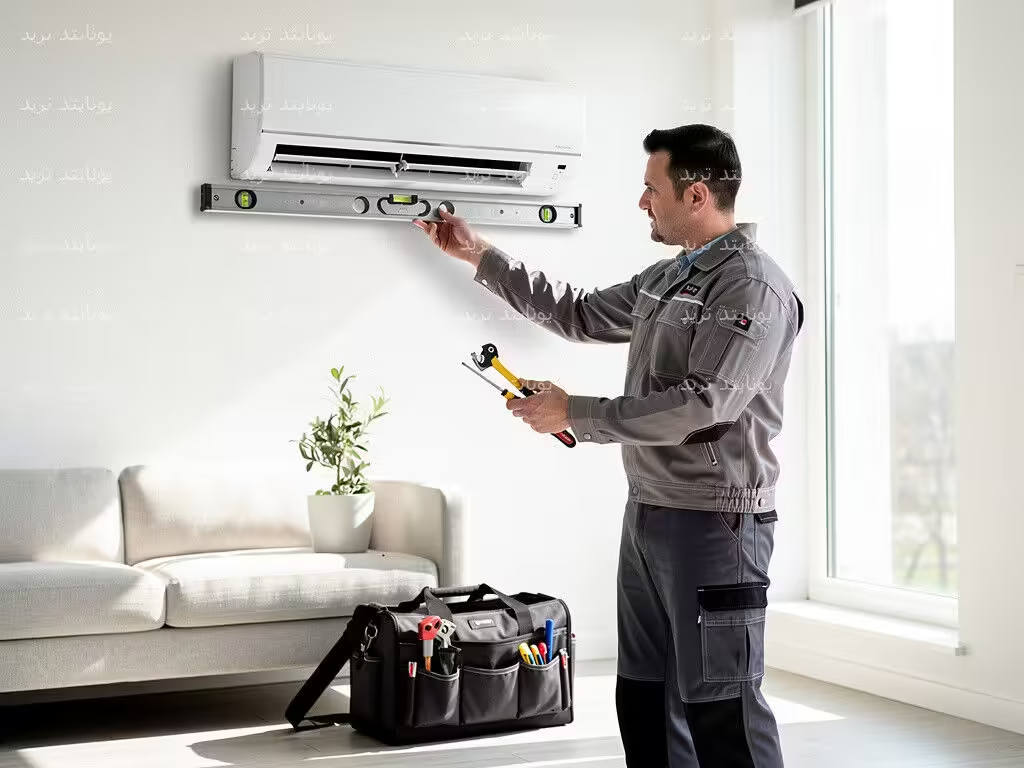
represents Air conditioning installation Properly engineered air is the basic foundation for ensuring stable cooling and reducing electrical energy consumption within residential and commercial buildings. This technical article gives you a comprehensive application guide covering the practical stages of installation, from thermal calculations to actual operation. This content helps you closely supervise technicians and avoid common mistakes that shorten the life of the device.
Quick answer
Air conditioning installation Airing is an integrated technical process for installing the indoor and outdoor units, connecting them with insulated copper tubes, and discharging the air precisely. Successful installation requires isolating the Freon paths, adjusting the water drain slope, and vacuum pump air intake to prevent damage to the compressor. Proper implementation ensures a reduction in electricity consumption by up to thirty percent compared to random installation.
Calculate the appropriate cooling capacity before purchasing
Choosing the appropriate air conditioner capacity depends on the area of the room and the nature of the thermal insulation of the surrounding walls and windows. For example, each room of twelve square meters requires a cooling capacity equivalent to approximately one and a half horsepower in average climate conditions. As a result, careful selection prevents the compressor from running for continuous periods in vain, preserving the internal components of the device for longer periods.
Standard heat load equation
The estimated calculation is based on multiplying the room area by the height and then by the recommended cooling rate for hot areas. Five hundred cooling units are then added to each glass window that receives direct sunlight throughout the day. In addition, an additional 200 units must be calculated for each person permanently occupying the space, to ensure that internal temperatures remain at peak levels.
Effect of additional thermal loads
Electrical appliances such as monitors, computers, and kitchen appliances increase actual cooling requirements to varying degrees. In other words, ignoring these heat sources when planning results in the air conditioning being unable to cool the space as quickly as required. Therefore, the contents of the room must be reviewed and its thermal energy calculated before purchasing the required model is approved to avoid wasting costs.
Criteria for determining locations for installing units
Installing the indoor unit requires choosing a strong wall that can withstand the weight of the device and provide smooth distribution of the cold air stream. A distance of no less than fifteen centimeters must be left between the top of the unit and the ceiling of the room to facilitate the process of air intake and circulation. It should be noted that staying away from direct heat sources ensures an accurate reading of the internal temperature sensor, which achieves balanced operation of the system.
Requirements for placing the outdoor unit
The outdoor unit needs an open, well-ventilated space to expel the heat absorbed from the inside with high efficiency and without air congestion. It is preferable to install the fan in a shaded place away from direct sunlight or strong winds laden with dirt and dust. Furthermore, a distance of at least half a meter must be left behind the condenser to facilitate regular maintenance and cleaning of the aluminum fins.
Controls the path of drainage lines and avoids leakage
Draining condensate water depends on the force of gravity when additional drainage pumps are not available within the system. A continuous slope of the hose should be provided at a rate of one centimeter for every meter of drainage path to ensure a smooth flow of water. On the other hand, any bend or height in the hose leads to water collecting and returning to the indoor unit, causing damage to walls and floors.
Air conditioning installation steps with mechanical precision
The work stages begin by determining the location of the hole in the wall with a slight external slope angle to prevent rainwater from seeping into the interior. Using measuring tools such as a water level helps ensure that the load-bearing metal plate is held completely level to prevent vibrations. These preliminary steps ensure that the Freon lines, electrical wires, and drain hose pass smoothly as one package without mechanical distortions.
- Fix the metal pegboard to the interior wall by sturdy steel anchor bolts.
- Drill a hole in the wall with a diameter of seven centimeters, giving it a slight downward outward slope.
- Preparing copper pipes and covering them with individual thermal insulation for each line with a highly durable external protection tape.
- Pass the bundle of tubes and cables through the opening and carefully hang the indoor unit on its mounted bracket.
- Install the outdoor unit's rail brackets on a concrete belt or hardwood floor using anchor bolts.
- Raise the outdoor unit and install it on stands with rubber cushions to absorb harmful vibrations.
Origins of connecting electrical refrigeration pipes
The correct connection between copper pipes represents a safety valve to prevent any refrigerant gas smuggling throughout the years of system operation. The flanging process requires the use of specialized tools to create rounded edges free of chips or fine metal chips. In addition, it is always recommended to tighten the nuts with a mechanical torque wrench to ensure tightening in accordance with the manufacturer's instructions without damaging the threads.
Vacuuming air and pulling moisture from the mesh
The process of emptying the system using a vacuum pump is an essential stage that cannot be skipped or neglected at all. The pump expels air and moisture from inside the copper tubes and evaporator of the indoor unit before opening the gas valves. As a result, vacuum prevents moisture droplets from freezing inside the expansion valve and also prevents decomposition of the compressor oil resulting from its reaction with oxygen.
Electrical connections and safety factors
The electrical wire sections must match the air conditioning capacity to avoid high line temperatures and burning of plastic insulators in the future. A separate circuit breaker should be allocated from the main panel of the building with earthing line attached to protect life. Therefore, choosing high-quality original copper cables protects devices from sudden voltage fluctuations.
Comparison of different cooling systems
The following table outlines the key differences between available systems to help you make the right decision for your space and budget.
It is a step Installing air conditioning ducts Copper plating with great care is one of the most important construction steps that precedes the final finishing of walls and ceilings. This procedure requires choosing copper diameters that match the manufacturer’s specifications and carefully thermally insulating them to prevent water condensation inside the walls, which ensures efficient refrigerant flow and protects the system from future Freon leaks.
The efficiency of the system does not stop at the limits of perfect installation only, but its sustainability is linked to a practical schedule that includes Regular air conditioning maintenance Protects the compressor and cooling paths from premature wear. Continuous monitoring, checking pressures, and cleaning filters contribute to reducing sudden failure rates and maintaining the highest levels of airflow.
Connecting the indoor and outdoor units requires extreme precision by following... Steps to install and connect air conditioner copper Carefully, to ensure that the cooling medium flows without any leakage or suffocation in the path. This includes choosing the appropriate geometric diameters and insulating the pipes with high-quality thermal materials, which directly affects the efficiency of the refrigeration cycle and reduces the effort on the compressor.
Once the installation process is completed successfully, maintaining efficient operational performance becomes indispensable, as regular maintenance plays a crucial role in Rapid cooling recovery For the home and ensuring fresh and stable air flow. Therefore, checking the air conditioner parts regularly and addressing minor faults extends the life of the device and prevents deterioration of the cooling quality over time.
The cooling network extension stage is a detailed step that requires extreme precision to avoid any leakage of Freon gas in the future. This includes implementation Establishing copper pipes With diameters that match the manufacturer’s specifications and are thermally insulated with the highest efficiency to protect the walls from condensation and achieve optimal cooling.
The efficiency of the system does not stop at the limits of perfect installation only, but its sustainability is linked to a periodic work schedule that includes Air conditioning maintenance Check the cooling cycle regularly. This preventive measure helps avoid unplanned malfunctions and maintain fresh air flow rates of the highest possible quality.
Maintaining this high operational efficiency requires a regular work schedule Air conditioning maintenance Air, including cleaning filters and carefully checking refrigerant levels. This continuous monitoring contributes to avoiding sudden mechanical failures and ensuring the continuity of fresh air flow with the lowest possible current consumption.
| System type | Noise level | Energy efficiency | Initial installation cost | The nature of maintenance required |
|---|---|---|---|---|
| Split air conditioner | Very low | High with inverter technology | Medium and economical | Periodic filter cleaning and intensive washing |
| Built-in air conditioner (window) | Medium to high | Medium to low | Very low | Pull out the device and wash it completely |
| Concealed central | Almost non-existent in the rooms | Too high for large blocks | High and requires ductwork | Maintenance of air ducts and central units |
| Mobile air conditioner | Relatively high | Low | No specialized installation fees required | Empty the water tank and clean manually |
Initial screening and commissioning protocol
The initial test begins by monitoring the movement of the fan and ensuring that there are no frictional sounds or abnormal vibrations in the external structure. The electrical current draw is measured with an ampere meter to compare it with the standard values recorded on the metal plate. In addition, examining intake and exhaust air temperatures helps determine the efficiency of field heat exchange.
The stage of extending cooling networks is a strategic step that requires extreme precision in choosing paths and determining appropriate copper diameters Installing air conditioning ducts With high quality, it protects the system from refrigerant leaks and avoids blockage of drain lines in the future. This advance procedure facilitates the connection of indoor and outdoor units with the highest possible flow efficiency, thus preserving the life of the air compressor.
- Check the copper contact points with a special soap solution to ensure that there are no gas leaks under pressure.
- Monitor the exit of waste water from the end of the external hose to ensure that there are no blockages in the sewer.
- Measure the temperature difference between the air inlet and outlet in the indoor unit, which should range between eight to twelve degrees Celsius.
- Ensure that the electronic board responds to the signals of the wireless controller and set the settings to cold mode.
Mistakes to avoid when installing air conditioning
Some unqualified technicians make fatal mistakes that lead to a decline in cooling quality and a significant increase in electricity consumption. For example, bending copper pipes by hand rather than with the proper tools is a major cause of choked refrigerant flow within a circuit. On the other hand, neglecting to use the water level leads to dew drops collecting inside the indoor basin and spilling on the home furniture.
Risks of short or long copper path
Appliance manufacturers specify a minimum pipeline length of at least three meters to absorb compressor sound pulses and prevent vibrations. On the other hand, exceeding the maximum permissible length without compensating for the Freon charge causes poor cooling and increases the load on the compressor. Therefore, adherence to the specifications included with each catalog ensures proper hydraulic balance of the refrigeration cycle.
Completely ignore thermal insulation
Leaving copper connection points without insulating coverage causes atmospheric water vapor to condense and fall into the dividing walls of the building. Furthermore, incomplete insulation causes the pipes to absorb ambient heat before it reaches the evaporator, reducing operational efficiency by significant proportions. Therefore, the tight external bonding tape represents an additional protective method to prevent the insulation from being torn by the sun and weather factors.
Frequently asked questions
What is the appropriate distance between the indoor and outdoor units?
The ideal distance is between a minimum of three meters and a maximum of ten meters for standard household appliances. This length helps dampen noise and facilitate smooth movement of refrigerant oil back into the compressor. Exceeding these lengths leads to the need to add new amounts of Freon to avoid poor efficiency.
Can room air conditioning be installed without a vacuum pump?
It is never permissible to operate the air conditioner without using a specialized vacuum pump to extract air and moisture from the copper mesh. Trapped air causes increased internal pressure on the compressor valves, causing them to wear out quickly over time. Moisture also combines with oil to form acids that corrode sensitive mechanical parts.
How do I know that the drain hose tilt is correct?
The drain path can be tested by slowly pouring a pint of water directly into the condensate pan of the indoor unit. Water comes out quickly and continuously from the outer side without any stagnant sediments remaining in the inner basin when the tilt is correct. If dripping or pooling occurs, the hose inclination must be adjusted immediately before final installation.
What is the best height to hang the indoor unit inside the room?
It is preferable to install the indoor unit at a height ranging between two meters and twenty centimeters from the room floor level. This height provides the best circulation for drawing in warm air and distributing cooled air evenly throughout the space. This height also makes it easier for users to open the front cover and clean the air filters regularly.
Why is it preferable to use an independent electrical circuit breaker for the air conditioner?
An independent breaker protects internal wiring and the compressor from damage in cases of sudden power outages or sudden voltage jumps. The compressor requires a high initial operating current, which may disconnect other circuits if it is in the same line. Moreover, the separate breaker makes it easy to disconnect electricity safely while performing regular maintenance.
Should additional Freon be added during a new installation?
Most devices come pre-charged with enough Freon for pipe lengths ranging from five to seven meters, according to the manufacturer's instructions. If the length of the actual copper wiring exceeds the length specified in the technical manual, an amount calculated in grams must be added. This procedure ensures that standard operating pressures are maintained without straining the compressor's electric motor.
Represents investment in Air conditioning installation Air conditioning according to scientific and engineering principles is your first step towards comfort and reducing maintenance and electricity bills in the long term. Always make sure to apply these technical standards and choose a specialized team that possesses the precise, approved tools to achieve the best possible performance for your device for many years.
















TQTAG76 Community dialogue
0 comments