
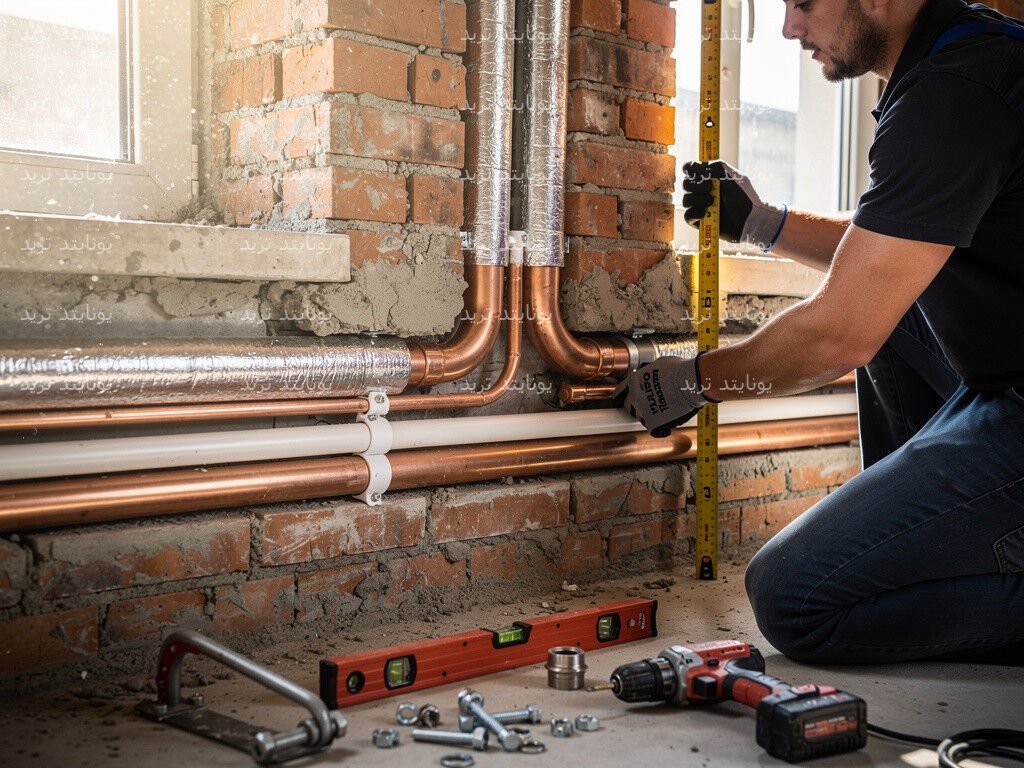
It is considered a stage Establishing pipes Air conditioning is one of the most important construction steps that maintains the interior aesthetic appearance and ensures maximum efficiency of the cooling system in the long term. This article aims to provide you with a comprehensive, practical guide to determining paths, choosing the appropriate materials, and avoiding costly refrigerant leakage problems. We will learn in detail all the engineering stages necessary to prepare an integrated cooling network free of common operational errors.
Quick answer
Establishing pipes Conditioning is the process of preparing wall and floor tracks for copper pipes, water drainage lines and control cables before final finishing work. Successful establishment is characterized by the selection of copper diameters that match the manufacturer's specifications, tight thermal insulation that prevents condensation and pressure testing with nitrogen to ensure there are no leaks.
What are the technical requirements before starting to establish extensions?
The pre-implementation phase requires careful study of the distribution of thermal loads within the rooms to determine the correct locations of the indoor and outdoor units. Furthermore, architectural plans should be reviewed to avoid copper ducts conflicting with electricity or sewage networks. Early planning helps reduce extension lengths, which reflects positively on the efficiency of the refrigerant gas compressor and reduces the cost of consumable materials.
In addition, the horsepower of each appliance must be determined in advance, since pipe sizes vary based on the cooling capacity required. As a result, careful selection ensures that you do not run into the problem of hydraulic tightness that stresses the mechanical actuator. You must also ensure that the outdoor unit is easily accessible in the future to carry out periodic inspection and regular maintenance work without obstacles.
Stages of preparing copper and drainage paths inside the walls
The practical step begins by determining the path of the cooling line on the wall at a studied height, usually ranging from 20 to 30 centimeters below the concrete ceiling. For example, a chipping missile is used to make straight, regular slots in bricks without weakening the structural structure of the room. This engineering method reduces future cracks in the plaster and paint layer compared to traditional random cracking methods.
After the duct excavation is completed, flexiball hoses or durable plastic ducts are installed to protect the bundle of pipes inside. It should be noted that it is necessary to provide a separate channel for the water drainage line with a slope of no less than 1% to facilitate the flow of water resulting from the dehumidification process. On the other hand, neglecting this tendency leads to water refluxing and seeping into the room, causing damage to furniture and decorations.
The most important engineering standards for the air conditioning piping network
Total quality is based on Establishing pipes Adaptation requires adherence to standard copper pipe diameters and thicknesses to withstand the high pressures of modern refrigerant gas. Therefore, pure, impurity-free, cold-drawn copper should be used in accordance with internationally approved standard specifications. The following table shows the most important approved technical characteristics and specifications for the main foundation components:
| Foundation element | Recommended standard specifications | Basic function |
|---|---|---|
| Copper pipes | Thickness not less than 0.032 inches (Korean or American) | Transfer the refrigerant between the indoor and outdoor units safely |
| Thermal insulation (Armaflex) | 9 to 13 mm thickness, fire resistant | Prevent the condensation of water vapor and maintain the temperature of the liquid |
| Drainage pipes | 1" diameter gray PVC plastic with compression fit | Drain the condensate water from the evaporator to the nearest drain point |
| Electricity and control cables | Multi-terminal insulated copper wires (4 or 5 terminals) | Conducting electrical power and transmitting self-control signals |
| Protective tape (tube protector) | Moisture and sunlight resistant adhesive tape | Completely assemble the package and protect it from mechanical friction |
Steps to protect and isolate cooling lines from damage
Thermal insulation is the first line of defense against energy loss and mold spots caused by surface moisture condensation. Accordingly, each copper pipe is covered with a completely independent insulating hose before bringing them together, to avoid heat transfer between the intake and exhaust lines. High-density individual insulation contributes to enhancing system performance and significantly reducing energy consumption throughout the summer months.
Moreover, the bundle consisting of two copper lines, drain tube and signal wires are wrapped by strong and cohesive plastic protection tape. In other words, this outer layer prevents dust and cement water from entering during construction and plastering work into the wall openings. As a result, the pipes remain completely intact and protected from chemical corrosion that may be caused by the alkaline substances present in the construction mortar.
Mistakes technicians make during burial and installation
Making some simple implementation errors causes huge financial losses that are difficult to treat after the completion of the decoration and finishing works. To avoid these problems, we have compiled for you a list of the most common mistakes to completely avoid during field supervision:
The next stage requires extreme precision in installing the indoor and outdoor units and precisely adjusting the electrical connections to ensure efficient airflow. The safety of the entire system depends on following the technical principles Air conditioning installation, especially with regard to air discharge and refrigerant pressure testing to avoid any future malfunctions.
The quality of establishment is not complete unless it adheres to periodic procedures that include: Air conditioning maintenance To ensure the integrity of the insulation and that the drain lines do not become clogged over time. Regular inspection prevents the build-up of impurities in the refrigeration cycle and reduces excessive energy consumption, protecting the compressor from sudden breakdowns and extending the life of the entire equipment.
The success of the extension process requires following precise procedures that ensure efficiency Plumbing for connecting copper pipes Starting from choosing the appropriate thickness of the walls according to the gas pressure to the tight mechanical connection. Tests must also be conducted to completely empty the air and charge the system to ensure that the path is free of any moisture or leaks that may disrupt the operation of the cooling unit later.
Maintaining the efficiency of cooling lines requires application Engineering standards for implementing extensions Installations with extreme precision, especially when determining the diameters and thicknesses of pipes suitable for different pressure rates. Compliance with these technical controls and the use of approved preparation tools also helps avoid cracks and reduce the possibility of leakage in the long term.
The final stage requires extreme precision to ensure that the system operates at the highest efficiency, as the results of proper establishment depend on the implementation of steps Air conditioning installation According to the correct technical standards. This includes securing the indoor and outdoor units securely, and evacuating the circuit of air and moisture to ensure smooth refrigerant flow and a longer lifespan for the device.
The quality of construction is not complete except by adhering to periodic plans that ensure the sustainability of the units’ work and avoid sudden malfunctions. As it includes Air conditioning maintenance Building gas pressures checked and filters and drain lines thoroughly cleaned. This regular preventive measure extends the life of the cooling system and significantly reduces electrical energy consumption.
The efficiency of the system does not depend only on proper establishment, but sustainability of performance requires action Regular air conditioning maintenance For early detection of any decline in gas pressure or blockage in filters. This regular follow-up contributes to extending the life of the devices and avoiding sudden malfunctions that may waste the cooling efficiency designed for the place.
- Bend copper pipes directly by hand without using a zipper or mechanical crimping tool, which causes the flow of Freon to be choked off.
- Bury copper solders inside walls or under floors without keeping them exposed in emergency inspection boxes.
- Using poor insulation or insufficient thickness, which causes water to leak into the walls and the appearance of dampness.
- Leaving the ends of the pipes open and exposed during finishing, allowing dust and moisture to enter the circuit.
- Connecting the air conditioning drainage network directly to the sewer lines without creating a water barrier (siphon) that prevents the backflow of unpleasant odors.
Procedures for checking pressure and ensuring network integrity
The structural testing phase is the crucial step to ensure the integrity of the extensions before they are covered with concrete or shellwork. For example, a technician welds the pipe ends and connects a pressure gauge to charge the network with dry nitrogen gas under pressure up to 250 psi. Using nitrogen instead of regular air helps prevent moisture and oxidized oxygen from entering the internal cooling paths.
The final stage after preparing the extensions requires extreme precision, as the performance of the entire system depends on the implementation of steps Air conditioning installation According to sound technical standards. This includes securing the indoor and outdoor units securely, and evacuating air from the circuit to ensure efficient refrigerant flow and avoid any future mechanical failure.
- Charge the copper lines with dry nitrogen gas gradually to ensure there is no sudden venting.
- Monitor the pressure gauge (manometer) for at least 24 to 48 continuous hours.
- Use specialized soap foam to carefully inspect soldering points and visible connections.
- Empty the nitrogen after ensuring that the reading is stable, then seal the ends tightly until the units are installed.
Frequently asked questions
What is the right time to start extending the air conditioning network?
Foundation usually begins after completing the construction of walls and before starting plastering work and establishing electricity and plumbing. This timing allows the tracks to be excavated freely and without damaging any existing finishes on site.
Do air conditioning pipes differ depending on the type of gas?
Yes, R410A air conditioners require greater copper thickness compared to old R22 gas to withstand its higher operating pressure. Therefore, you must always ensure that the copper specifications match the gas used to prevent explosion and leakage.
How to drain air conditioning water correctly?
The drain pipe is directed with a continuous slope towards the nearest designated sanitation point and a siphon is installed to trap odors. In addition, it is preferable to insulate the drain pipe to prevent water condensation from forming on its outer surface inside the wall.
Where is it preferable to place the external unit of the air conditioner?
Place the outdoor unit in a well-ventilated and shaded place as much as possible, away from sources of dust and direct heat. An extension distance that does not exceed the limits recommended in the manufacturer's manual must also be observed to maintain propulsion efficiency.
What is the difference between Korean copper and American copper?
Both types are of superior quality, high purity, and fully compatible with the highest international quality standards for pressure resistance. In contrast, cost and ease of forming vary slightly with Muller slightly superior in major engineering applications.
Why are pipes pressurized with nitrogen specifically?
Nitrogen gas is used because it is an inert gas and completely free of moisture and impurities that may damage the mechanical parts of the compressor. Furthermore, high nitrogen pressure reveals the finest microscopic holes that do not appear with normal air pressure.
The success of installing air conditioning ducts requires extreme precision in implementation and the selection of high-quality materials that guarantee the safety of the facility and the comfort of residents for many years. Do not hesitate to seek the help of specialized technical teams to conduct the necessary checks and approve the cooling paths in your home to ensure a refreshing and economical summer environment.
















Community dialogue
0 comments