
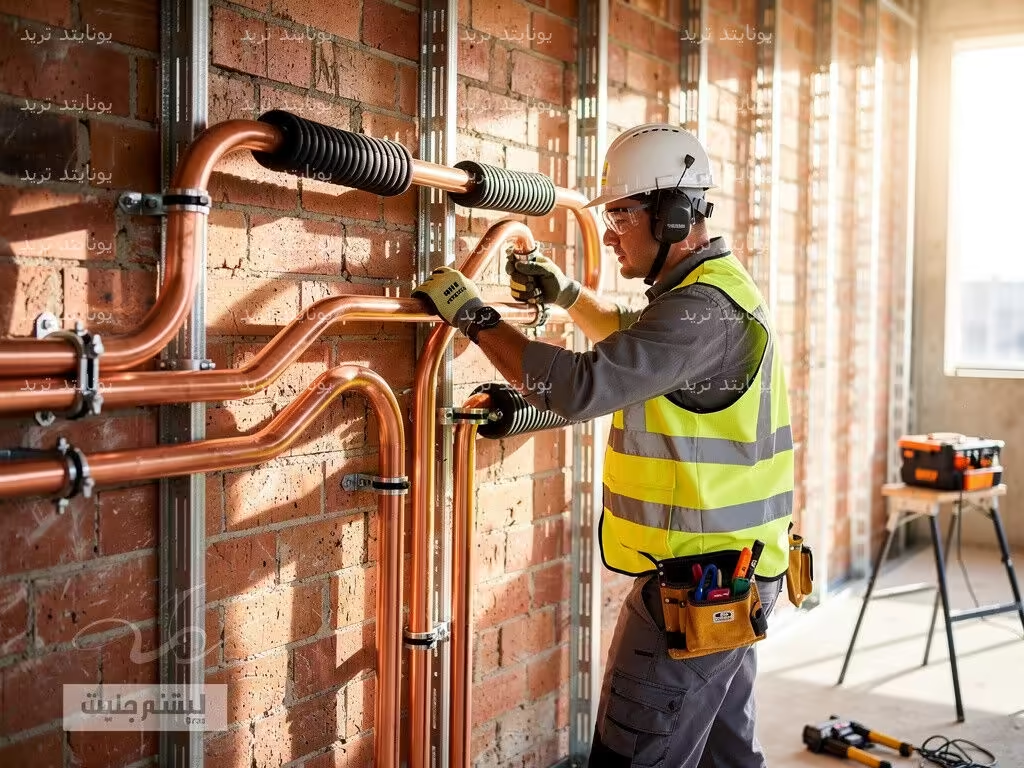
represents Establishing pipes Air conditioning is the basic foundation for ensuring that the cooling system operates at the highest operational efficiency and without sudden future malfunctions. Pre-planning copper paths and water drainage during the first finishing stages saves huge costs that may result from crushing or modification later. This article provides a comprehensive engineering guide outlining best practices for laying, insulation, and technical safety testing of various cooling networks.
Quick answer
Establishing pipes Conditioning is the process of pre-laying copper piping, control cables, and water drainage lines within walls or suspended ceilings before the final finishing stages. This step ensures that the system is protected from leakage, reduces energy consumption, and provides an aesthetic appearance for the place without the need for any future breakage.
Engineering criteria for choosing cooling network paths
Determining the refrigerant piping route requires careful study of the vertical and horizontal distances between the indoor and outdoor units to avoid mechanical stress on the compressor. The total length of the track should not exceed the manufacturers' recommended limits, which typically range from 10 to 25 meters in standard household units. Furthermore, reducing the number of bends in the path prevents sudden drops in refrigerant pressure.
Avoiding installation near main electrical connections or direct heat sources such as hot water lines prevents loss of cooling efficiency. Therefore, it is always preferable to provide sufficient space around the pipes to allow periodic inspections and preventive maintenance operations to be carried out without structural obstacles.
Standard specifications for copper pipes and installation supplies
The quality and sustainability of cooling depends on the purity of the copper material used and the thickness of its walls to withstand high gas pressures, especially with modern cooling media. Korean or South African type seamless copper tubes are used because they have a purity exceeding 99.9%, which prevents the formation of microscopic holes in the long term.
Pipe diameters according to cooling capacity
The diameters of the intake and exhaust lines vary according to the horsepower of the air conditioner:
- 1.5 HP devices: 3/8" diameter intake line, 1/4" diameter ejection line.
- 2.25 to 3 HP devices: 1/2" or 5/8" diameter intake line, 1/4" diameter ejection line.
- 4 to 5 HP devices: 3/4" diameter intake line, 3/8" diameter ejection line.
In addition, multi-terminal approved copper electrical cables are required to transmit control signals between the two units, selecting a wire cross section that matches the total electrical load.
Technical comparison between cooling pipe insulation materials
Thermal insulation plays a crucial role in preventing moisture condensation on pipes and protecting walls from structural damage. The following table shows the fundamental differences between the most popular insulation materials used in pre-extensions:
| Insulator type | Raw material | Thermal conductivity coefficient | Moisture and fire resistance | Estimated shelf life |
|---|---|---|---|---|
| Armoflex insulation (foam rubber) | Elastomeric | Very low (0.034 W/m.K) | Excellent resistance to flame spread | 15 – 20 years |
| White polyethylene insulation | Compressed polyethylene foam | Medium (0.040 W/m.K) | Good but affected by high temperature | 5 – 8 years |
| Glass wool (with aluminum foil) | Treated fiberglass | Low (0.036 W/m.K) | Fire resistant and weak to water | 10 - 12 years |
Steps to implement the installation of air conditioning ducts inside walls and ceilings
The implementation work begins by determining the appropriate heights for the installation locations of the indoor units to avoid conflicting with the gypsum decorations or furniture. Vertical wall ducts are dug to a depth that allows the package of pipes and insulation to be accommodated without protruding beyond the level of the cement plaster. For example, it is preferable to place rigid PVC hoses to protect the copper bundle from nails or direct contact with building materials.
- Determine the locations and heights of the indoor units precisely, taking into account a distance of 15-20 cm from the concrete ceiling.
- Carrying out crushing work in walls at right angles and avoiding breaking concrete columns or load-bearing beams.
- Pass the insulated pipe bundle inside the plastic protective conduit and secure it with metal padlocks.
- Extending water drainage lines with a slope of no less than 1% to avoid water stagnation and blockage of the path.
- Close the ends of copper pipes with soldering or copper plugs to prevent the entry of dust and moisture.
As a result, the piping system remains fully protected throughout plastering and painting completion periods without the copper being exposed to any mechanical deformation.
Pressure and vacuum testing procedures for copper mesh
The pressure inspection stage is a mandatory step to completely ensure that the extension network is free of any invisible leaks before closing the walls. The network is pressurized with dry inert nitrogen gas at a pressure of 350 to 450 pounds per square inch (PSI) for a period of not less than 24 continuous hours. On the other hand, it is strictly prohibited to use atmospheric air or refrigerant gas in this test to avoid introducing moisture that causes oxidation of the pipes.
require Air conditioning installation process Carefully choose the ideal location for the indoor unit away from direct heat sources, taking into account the inclination of the drainage pipes to ensure water flow and prevent leakage. The secure installation of the outdoor unit on rust-resistant steel bases ensures the stability of the device and reduces noise and vibrations resulting from operation.
It should be noted that the double pressure gauge must be monitored throughout the test period, as any decrease in the reading indicates the presence of a leak that needs immediate treatment. After the test is successful and the indicator is confirmed to be stable, the nitrogen is emptied in preparation for the air vacuum (vacuum) process during the final installation.
This proper establishment is not complete without following a periodic schedule of operations Air conditioning maintenance Air, to ensure the safety of Freon gas pressure and the cleanliness of filters and condensers from accumulated dust. Taking care of continuous preventive inspection protects the compressor from premature damage and significantly reduces electrical energy consumption in the long term.
The process of installing the units requires extreme precision, starting with avoiding common errors in laying cooling networks that negatively affect the lifespan of the device, all the way to strict adherence toTechnical standards When choosing the locations of the indoor and outdoor units. Comparing standard and non-standard cooling paths reveals the fundamental difference between professional installation and random solutions, which ensures sustainable cooling efficiency and avoids any premature operational failures.
Implementing a cooling network requires reliance on... Copper wiring guide To accurately choose the appropriate diameters and thicknesses for each cooling capacity. Installation practices and effective connection techniques also ensure that any leakage of Freon gas is prevented and that pressures within the system are maintained for the longest operational period.
This proper establishment is not complete without following a regular schedule of procedures Regular air conditioning maintenance Ensures the long-term integrity of mechanical and electrical circuits. This includes checking refrigerant levels and cleaning the filters and evaporator to avoid any blockages that could overburden the compressor and reduce air quality.
This system is completed by moving to a stage Air conditioning installation With high precision, as the correct installation of the internal and external units requires taking into account the ventilation dimensions and balancing the Freon outlet to ensure that it does not leak. Compliance with technical standards during installation protects the operating pressure of the device and ensures that maximum cooling rates are achieved with the lowest possible energy consumption.
The importance of regular maintenance of the cooling system goes beyond just keeping the air cool, to constitute real prevention from sudden malfunctions and the accumulation of deposits inside the pipes. Investing in actions Regular air conditioning maintenance Ensures sustained compressor efficiency and minimizes electromagnetic energy consumption. This continuous monitoring also contributes to prolonging the life of the device and protecting home decor from possible water leaks.
The next stage requires extreme precision when executing an operation Air conditioning installation To ensure that the connections match the pre-extensions and avoid any refrigerant gas leakage. The ideal performance of the indoor and outdoor units depends on balancing the installation and adjusting the thermal insulation very carefully to reduce energy consumption.
Common errors that lead to damage to pre-cooling extensions
Some technicians make the mistake of insulating the intake and exhaust tubes together within one insulating jacket, which causes heat to transfer between the two lines and a decrease in efficiency. Therefore, each copper tube must be insulated with an independent thermal insulator with a thickness of at least 9 mm before wrapping it with external protective tape. Furthermore, bending pipes manually without using a dedicated bending spring results in choking of the gas stream and damage to the compressor.
On the other hand, neglecting to operate the oil trap in vertical installations exceeding a height of 5 meters leads to the retention of lubricating oil in the evaporator. This problem prevents the return of oil to the compressor, which ultimately leads to the electric motor burning as a result of internal friction.
Frequently asked questions
What is the ideal time to start installing air conditioning ducts?
The most appropriate time is during the initial construction and finishing phase after completing the building walls and electrical installations and before starting the cement plastering work. This timing allows the extensions to be completely hidden without the need to distort the trim or break up the finished walls.
How is the quality of copper pipes tested before burial?
It is tested by injecting the system with dry nitrogen gas under pressure of up to 400 pounds per square inch for a full day while monitoring the pressure gauge. The stability of the indicator throughout this period is conclusive evidence of the integrity of the connections and the absence of any venting in the network.
Can old air conditioning ducts be used with new appliances?
Yes, it can be used provided that it is chemically cleaned with specialized solvents and ensuring that its diameters and thickness match the requirements of the new device and the type of cooling medium used. If the old pipes are of poor thickness, they will not withstand the pressures of modern gases such as R410A.
What is the difference between armoflex insulation and polyethylene insulation?
Armoflex insulation, made from synthetic rubber, excels in preventing condensation and resisting water absorption and fires for many years. While polyethylene insulation is considered a less efficient and economical option, it is subject to hardening and corrosion quickly over time.
Why must the suction line be insulated separately from the ejection line?
Because the intake line carries cold gas while the exhaust line carries hot, high-pressure gas, and combining them in one insulator leads to unwanted heat exchange that reduces the efficiency of the device. Separate insulation keeps the heat content of each line separate.
When do we need to install an oil trap in the air conditioning piping network?
An oil trap is needed when the outdoor unit is higher than the indoor unit by a vertical distance exceeding 4 to 5 meters. This trap helps return the refrigerant oil with the refrigerant to the compressor to prevent its mechanical damage.
Provides adherence to precise engineering standards during Establishing pipes Air conditioning provides operational efficiency that lasts for many years without costly surprises or leaks. Always make sure to use a certified technical team and use original materials that match the specifications to ensure the protection of your real estate investment and the saving of energy.
















TQTAG76 Community dialogue
0 comments