
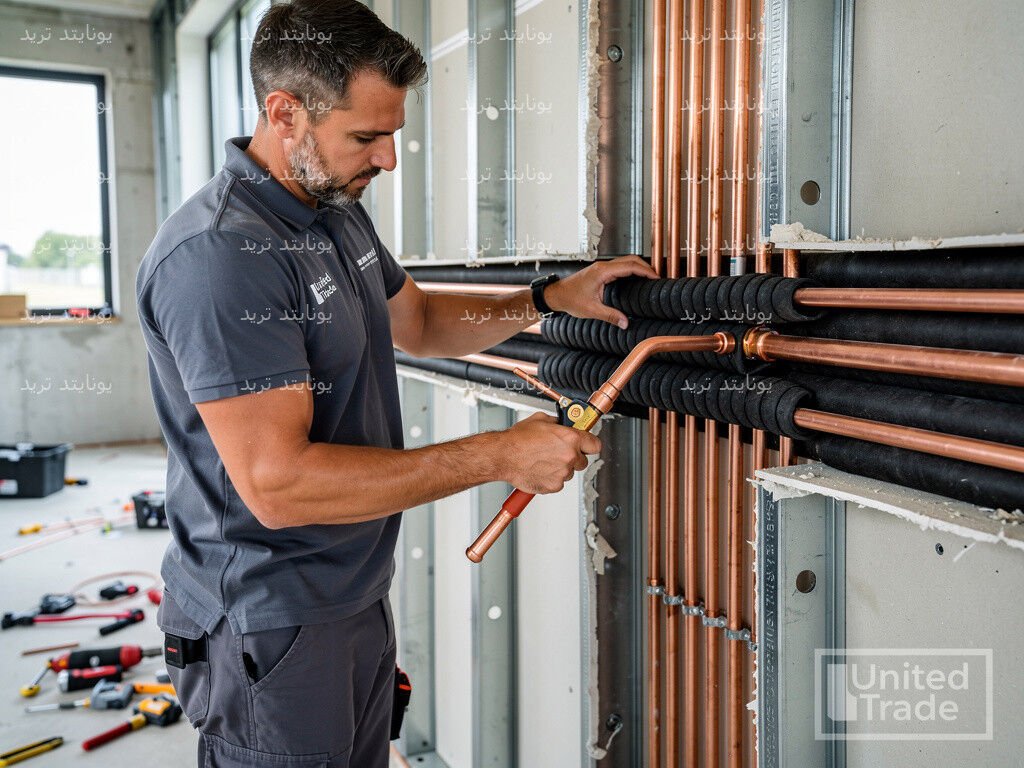
Early planning of cooling networks represents a fundamental basis for ensuring efficient cooling inside modern buildings and avoiding cracking of walls later. Helps implement Establishing pipes Professional air conditioning extends the life of the air compressor and significantly reduces electrical energy consumption. In this practical guide, you will learn about the standard specifications for copper diameters, thermal insulation methods, and how to avoid common drain and gas errors through proven and reliable application steps.
Quick answer
Establishing pipes Air conditioning is the process of preparing and burying a network Copper pipeWater drainage lines and control cables inside walls or false ceilings before final finishes. The success of the installation is based on the use of pure copper insulated with Armoflex, avoiding sharp bends, and pressurizing the network with nitrogen gas to ensure that there are no leaks before closing the paths.
What are the architectural prerequisites for cooling networks?
The right path requires careful study of furniture distribution schemes and ventilation and heat sources inside the rooms to ensure regular air flow. The locations of the indoor units shall be determined at a height of not less than two meters and twenty centimeters above the level of the finished floor to avoid direct drafts. In addition, the outdoor unit should be in a well-ventilated location that is easily accessible in the future for preventive maintenance.
Studying thermal loads contributes to determining the cooling capacity required for each space with extreme accuracy. For example, a room of sixteen square meters usually requires a device with a capacity of one and a half horsepower, which pre-determines the dimensions of the pipes to be laid. Therefore, this advance planning prevents any conflicts between cooling extensions and electrical pipes or other sewerage networks inside the walls.
Choosing sizes and thicknesses of copper pipes
The diameters of the intake and exhaust lines depend on the type of refrigerant used and the horsepower of the equipment specified in the mechanical design table. Common refrigeration equipment has a half-inch intake tube and a quarter-inch exhaust tube for medium capacities. It should be noted that any inadvertent reduction in copper wall thickness leads to pipe explosion under high operating pressures of R410A gas.
It is always preferable to use Korean or American certified L or K copper due to its flexibility and high resistance to oxidation and internal corrosion. In contrast, thin commercial pipes cause major problems during bending or connection operations and lead to invisible leaks within the concrete. The following table shows the engineering criteria for choosing the appropriate diameters according to the air conditioning capacity:
| The cooling capacity of the device | Suction line diameter (in.) | Extrusion line diameter (in.) | Default maximum path length (meters) |
|---|---|---|---|
| 1.5 HP (12,000 BTU) | 3/8 or 1/2 | 1/4 | 15 |
| 2.25 HP (18,000 units) | 1/2 | 1/4 | 20 |
| 3 HP (24,000 units) | 5/8 | 1/4 or 3/8 | 25 |
| 5 HP (36,000 units) | 3/4 or 5/8 | 3/8 | 30 |
Steps to implement the installation of air conditioning piping on site
The actual work stages begin after the completion of the block construction work and before starting to extend the structural plastering or internal plastering. Working in a regular sequence ensures that the lines remain intact throughout the finishing and painting periods without being punctured by nails. Successful implementation requires adherence to several specific actions, including the following:
- Determine the locations of the internal and external units accurately, while marking the path of the crack in the walls using a water level to avoid random tendencies.
- Dig the extension ducts to a sufficient depth of not less than five centimeters inside the bricks to prevent pipes from protruding after surveying work.
- Gently straighten the copper coils and use mechanical bending tools of matching sizes to avoid choking the internal duct.
- Coating copper pipes with closed-pore rubber insulation and wrapping them and electricity cables with moisture-proof adhesive tape.
- Fix the piping bundle inside the wall using insulated metal jumpers to prevent copper from rubbing with caustic building materials.
- Perform a dry nitrogen pressure test at 300 psi and leave it for at least 48 hours to detect any leaks.
Furthermore, tightly soldered copper plugs must be installed at the ends of the exposed lines to protect them from the ingress of dust, dirt and cement residue. As a result, the cooling circuits remain completely clean and dry until the final units are installed and commissioned.
The importance of thermal insulation and condensate water drainage
Effective thermal insulation prevents the phenomenon of external condensation on the walls and the subsequent deformation of paints and the formation of harmful fungi and bacteria. Each copper tube must be insulated separately with high quality foam insulation such as Armoflex with a thickness of at least nine millimetres. In other words, placing the intake and exhaust tubes inside one insulator causes reverse heat transfer, which leads to a sharp drop in cooling efficiency.
As for water drainage lines, it is required Establishing pipes PVC with a minimum diameter of one inch while maintaining a proper geometric slope. These lines must be directed to the nearest designated sanitation point, taking into account the installation of an odor trap to avoid the reflux of unpleasant gases into the room. Moreover, it is preferable to insulate the drain line also inside the wet walls to avoid the formation of dew drops on the external surfaces of the pipes.
Common mistakes when installing air conditioning pipes and how to avoid them
Many unqualified workers make serious mistakes that cost owners huge amounts of money to fix after the final decorations are complete. Lack of practical experience leads to damage to new units shortly before commissioning due to neglect of proper installation standards. Mispractices that you should be careful of include the following points:
The next stage requires extreme precision to ensure that the system operates at the highest efficiency, as it includes steps Air conditioning installation Professionally install the internal and external units, evacuate the air from the copper circuits, and carefully test the refrigerant gas pressure to prevent any future leaks. This proper procedure helps ensure a balanced distribution of cool air throughout the room without straining the engine.
- Bend copper tubes manually without a dedicated bending machine, which causes the refrigerant path to be choked and the compressor to burn out quickly.
- Avoid pouring water into the condensate drain lines to test the flow and ensure that the path is free of any cement blockage.
- Using poor electrical cables or with weak wire sections that cannot handle the start-up amperage of modern air conditioning motors.
- Burying the pipes directly under the cement without protecting them with flexible polymer conduits that absorb the natural thermal expansion of the metal.
- Leaving the ends of the pipes open throughout the finishing period allows atmospheric moisture to enter and damage the lubricating oil inside the compressor.
Therefore, pipe routes should always be documented with photographs and metric measurements from structural angles before covering them with plaster layers. This simple step will avoid accidents of piercing pipes or nails, wall decorations and curtains later.
The quality of these extensions is not complete without commitment to periodic procedures that include: Air conditioning maintenance Air conditioning and checking refrigerant gas levels and filter cleanliness regularly. These preventative steps help maintain strong fresh airflow and prevent moisture buildup or blockage of drainage paths within the system. Early detection of mechanical malfunctions also ensures that devices continue to operate at peak operational efficiency throughout the summer.
The efficiency of the cooling system does not depend only on the quality of the installation, but also requires periodic follow-up, including services Regular air conditioning maintenance To check Freon gas pressures and clean internal filters and condensers. This monitoring contributes to the early detection of any blockage or leakage in the piping network, which protects the air compressor from sudden malfunctions and maintains the highest flow of fresh air.
The next stage requires extreme precision to ensure that the indoor and outdoor units are installed in perfect alignment and that the Freon and electrical lines are securely connected. Following the technical steps approved in Air conditioning installation Air ensures balanced air flow and prevents any future leaks that may affect the overall performance of the system.
After its installation is complete, the system requires careful periodic monitoring to maintain quality performance. It guarantees action Regular air conditioning maintenance Clean filters and check refrigerant levels effectively. This preventive measure contributes to avoiding sudden malfunctions and maintaining the purity of the air flowing throughout the place.
The next stage requires extreme precision to ensure that the internal and external units are installed in perfect alignment to prevent the leakage of Freon gas or waste water. Success depends Air conditioning installation With high efficiency, we choose the appropriate height for the indoor unit to distribute the air homogeneously within the room, while ensuring good ventilation for the external condenser to ensure the ideal performance of the system.
Quality inspection and delivery of implemented air conditioning networks
Dry nitrogen gas pressure testing represents the difference between professional and random work in this mechanical field. It is strictly prohibited to use ordinary air or oxygen gas in pressure tests because atmospheric air introduces fatal moisture into the Freon circuits. It should be noted that monitoring the pressure gauge indicator allows one hundred percent certainty of the integrity of the weld joints and the durability of the network.
In addition, it is necessary to inspect the electrical wiring paths and ensure that the copper sections match the technical specifications of the air conditioning manufacturer. On the other hand, the supervising technician ensures that all directions of the water drainage pipes are matched before signing the final field receipt report, which gives the owner a long-term safety document.
Frequently asked questions
What is the best time to implement the installation of air conditioning ducts in the building?
The best timing is after the walls are built and before plastering and painting work begins. This timing allows lines to be easily extended and paths drilled without disturbing the finish or distorting the paint.
How much does it cost to establish a copper air conditioning network per meter approximately?
The cost depends on the thickness of the copper, the diameter of the pipe, and the type of thermal insulator used, and usually ranges between varying prices depending on the fluctuations of the global metal market. It is always recommended not to sacrifice quality in favor of a low price to avoid high repair costs later.
Can air conditioning ducts be buried directly inside concrete floors?
Yes, it can be passed through floors provided that it is placed inside strong plastic protective sleeves that can withstand the weight of concrete and labor pressure. This hard shell protects the copper pipe and its insulation from tearing or crushing during floor casting.
How can I ensure that there are no leaks in buried copper pipes?
This is done by filling the network with dry nitrogen gas under a pressure of up to 300 pounds per inch and installing a measuring clock to monitor the indicator. If the indicator remains constant for two full days, this is conclusive evidence that the network is free of any hidden holes.
What is the difference between Korean copper pipes and Chinese air conditioning pipes?
Korean pipes are characterized by high metal purity, uniformity in inner wall thickness, and excellent ability to withstand pressures and bending corners. On the other hand, some Chinese commercial products may contain impurities and thickness variations that lead to subsequent problems.
Why should the suction line and ejection line be insulated separately?
Each line must be insulated to prevent heat exchange between the cold gas line and the warm liquid line, ensuring the efficiency of the mechanical refrigeration cycle. Insulating them together within one shell leads to a significant waste of cooling efficiency and high electricity consumption.
Represents investment in Installing air conditioning ducts A proactive engineering move that protects your property and ensures a comfortable and sustainable indoor climate all year round. Always make sure to seek the help of certified technicians and apply precise inspection and pressure requirements before completing your interior finishes, so that you can start operating your cooling system with absolute confidence and peace of mind.
















Community dialogue
0 comments