
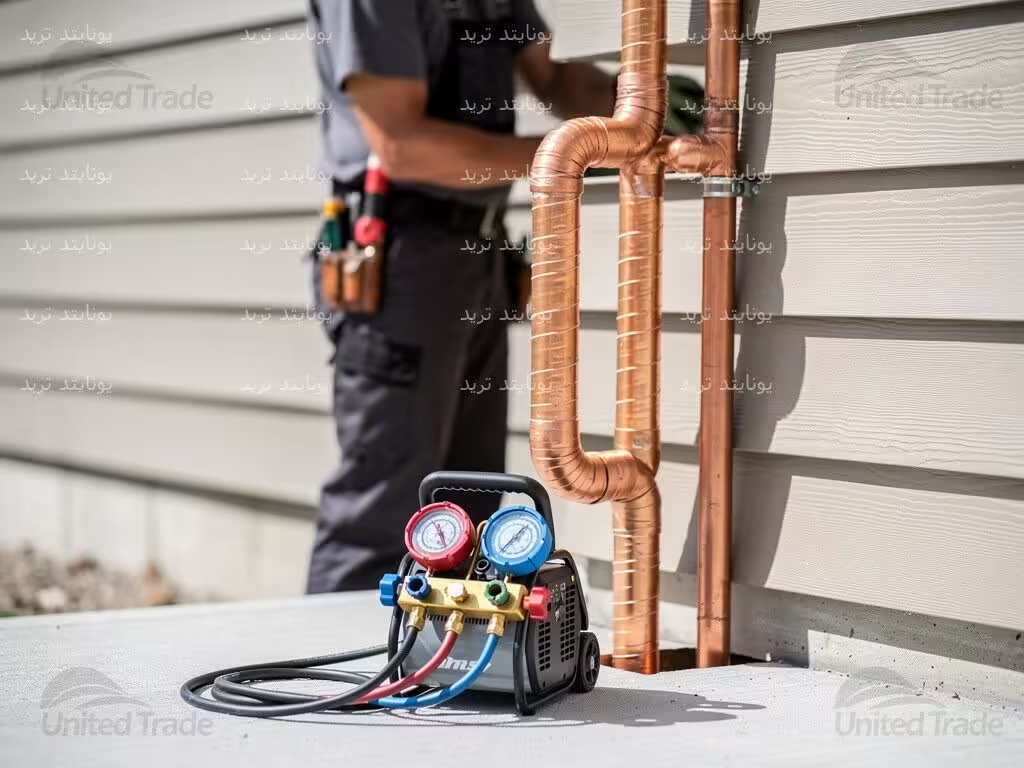
The extension of the air conditioning ducts represents the vital artery that connects the internal and external units to transport refrigerant gas with extreme efficiency, as the stability of cooling and the life of the compressor depend on the accuracy of this path. This guide aims to provide you with the technical standards for preparing lines, adjusting copper diameters, and applying leak-proof thermal insulation methods in accordance with approved international standards.
Quick answer
Air conditioning ducting is the process of installing a network of insulated copper pipes to transport refrigerant compound and lubricating oil between the indoor and outdoor air conditioner units. This process requires choosing copper diameters that match the manufacturer’s specifications, while adhering to not exceeding the permissible length, and insulating each individual line with high-density Armoflex material. Proper implementation ensures that the compressor is protected from damage and prevents loss of Freon gas inside the building.
Basics of choosing copper tubes for cooling circuits
The efficiency of the cooling network depends entirely on the purity and quality of the pipes used, as it is preferable to rely on soft annealed copper intended for air conditioning and refrigeration. This type has a chemical purity of up to 99.9%, which gives it high flexibility during bending and tremendous resistance to the high pressures of modern refrigerants. As a result, high-quality copper reduces the possibility of microscopic cracks that could cause imperceptible leakage of Freon.
Copper pipes are available in two main classifications, the most famous of which are Type L and Type K, and the thickness of the inner wall of the pipe varies between them. For example, Type L is used in the majority of residential applications because it can withstand pressures up to 450 psi. In contrast, technicians prefer the K-type in commercial facilities and factories where extension distances impose greater operating stresses and vibrations.
Pipe diameters and their effect on the speed of the cooling medium
The device manufacturer determines the diameter of the gas intake line and the liquid line with geometric precision that is related to the capacity of the compressor. Choosing a diameter that is too small results in restricted gas movement and high pressure on the engine, while using a larger diameter results in a decrease in flow velocity. Consequently, the refrigerant oil is unable to return to the compressor, causing it to mechanically burn out after a short period.
When designing the route, the device catalog should be reviewed, especially for devices operating with R410A or R32 gas. These vehicles operate at operating pressures that are more than 50% higher than the old gases, which requires careful checking of the copper wall thickness before starting installation.
Steps for architectural preparation and determining mechanical paths
A successful path requires engineering planning that begins before pouring concrete and finishing the walls, in order to avoid random crushing later. Paths should be as short and straight as possible to avoid compressor fatigue and reduce electrical energy consumption. It should be noted that each additional bend in the pipe path is equivalent to an estimated increase in line length of half a linear meter.
Technicians carry out the process of extending the air conditioning ducts after accurately determining the location of the water drain and the electrical supply source to ensure the harmony of the entire system. It is strictly prohibited to bury pipes directly inside concrete without PVC insulating plastic protection sleeves. These sleeves protect copper from corrosion resulting from chemical reactions in cement materials and facilitate future pipe withdrawal and replacement.
- Determine the point where the lines exit the wall at a slight incline towards the outside to drain water condensation smoothly.
- Install and secure the protective sleeves to prevent their compression during casting and internal finishing works.
- Use specialized mechanical bending tools instead of manual bending to prevent coagulation or snapping of the copper walls.
- Secure pipe openings with tight copper covers throughout the construction period to prevent dust and moisture from entering.
The importance of double thermal insulation and cooling network protection
Thermal insulation represents the protective wall of the air conditioning network to prevent atmospheric water vapor from condensing around the cold copper pipes. Neglecting or poor insulation leads to moisture seeping into the gypsum ceilings and damage to the paint, in addition to the loss of cooling capacity before the gas reaches the indoor unit. Therefore, the use of closed-cell elastomeric foam is the standard option to ensure resistance to vapor leakage.
The gas suction line and the liquid line must be completely insulated separately and not combined within one thermal insulator. Combining them together results in reverse heat transfer between the two lines, which significantly reduces the efficiency of the dynamic cooling cycle. In addition, the external insulation exposed to the sun must be protected by wrapping it with protective tapes resistant to ultraviolet rays to ensure that it does not crack over the years.
Technical standards for pressure and vacuum tests
The testing and inspection phase is the standard that separates professional work from random installation of air conditioning networks. The inspection begins by pressurizing the lines with dry inert nitrogen gas at a pressure of at least 350 to 400 psi for 24 hours. This test helps detect even the tiniest holes in welding points or mechanical connections before actual operation begins.
It requires an operation Air conditioning installation Following strict engineering standards that begin with choosing the appropriate location and carefully installing the units to ensure regular air flow. The success of this stage also depends on tight electrical and mechanical connections to avoid vibrations and noise, which ensures high operating efficiency and saves energy consumption in the long term.
Next comes the step of vacuuming out the air and moisture using a deep suction vacuum pump to achieve a negative pressure of up to 500 microns. The presence of moisture inside the pipes causes it to react with the refrigerant oil, producing corrosive acids that destroy the compressor's electrical coils. Therefore, using a digital micron gauge is an urgent necessity to ensure that the path is completely free of invisible water droplets.
The first construction phase requires implementation Installing air conditioning ducts With high engineering precision to ensure its protection from damage during subsequent finishing works, and to avoid sharp bends that impede the movement of the cooling medium. Pre-planning wall and ceiling paths ensures that cooling efficiency is maintained and future maintenance is easy to perform without the need for any additional break-ins.
The efficiency of regular maintenance of air conditioning systems depends fundamentally on checking the integrity of the thermal insulation of the pipes, as this insulation prevents water condensation that may lead to corrosion of copper lines or damage to the surrounding electrical circuits. So, action Air conditioning maintenance Regular preventative care ensures the maintenance of cooling quality and avoids any leaks that may harm the operational life of the device.
Maintaining flow efficiency requires continuous periodic monitoring of the cooling system as a whole, as processes contribute Regular air conditioning maintenance In checking common faults early and avoiding low pressure of the refrigerant within closed circuits. Continuous checking of electrical connections and compressor condition also helps improve cooling and reduce energy consumption to its lowest levels.
It requires a stage Installing air conditioning ducts Extreme engineering care begins with precisely determining the diameters of the copper lines in a way that is compatible with the capacity of the units, through applying the necessary precautions to protect the extensions from damage during architectural finishing works. These preparations are not complete without conducting pressure tests using dry nitrogen gas, to ensure that the system is completely free of any leaks that may affect the cooling efficiency in the future.
The efficiency of the entire system starts from one stage Establishing pipes Cooling inside walls and ceilings. This step ensures that copper lines are protected from mechanical damage and reduces sharp bends that impede the flow of the cooling medium. Proper and isolated burying of these extensions during structural finishing also contributes to preserving the aesthetics of the place and avoiding any breaking or costly future modification work.
The extension process requires careful selection of the diameters of the copper pipes in proportion to the capacity of the device to ensure the flow of the refrigerant without obstructions, with the necessity of thermally insulating these lines with great care to prevent loss of energy or moisture condensation. The commitment toProper Installation Criteria The system not only protects against gas leakage, but also ensures optimal cooling efficiency which extends the operational life of the compressor.
The efficiency of cooling is not limited only to the quality of the initial establishment, but its sustainability is linked to adherence to a periodic schedule that includes Air conditioning maintenance Check the Freon cycle regularly. Careful monitoring of pressures and cleanliness of the exchangers ensures that the compressor is protected from premature fatigue, and detects any blockages or hidden leaks in the pipes before they get worse.
It requires an operation Air conditioning installation Strict engineering standards are followed, including balanced mechanical installation of the units to ensure smooth Freon circulation and avoid annoying vibrations. Proper application of the connection steps also ensures that the circuit is completely sealed, which increases energy efficiency and prevents sudden malfunctions.
The efficiency of the entire system starts from one stage Establishing pipes Buried air conditioning inside walls or under floors, as this procedure requires choosing paths that are as short and straight as possible to avoid pressure drops. Care must also be taken to protect these extensions with protective sleeves that prevent friction with building materials and ensure the safety of the cooling lines in the long term.
It requires an operation Air conditioning installation Following strict engineering standards, including balanced mechanical installation of the units to reduce vibrations and noise generated during operation. It should also be ensured that electrical circuits are tightly connected to ensure a stable current flow that protects devices from sudden malfunctions.
Comparison of cooling path specifications and implementation practices
The following table shows the basic differences between correct track installation practices and common errors that lead to a decline in the efficiency of the entire mechanical system:
| Evaluation standard | Correct professional implementation | Common unacceptable errors |
|---|---|---|
| Line isolation | Insulate each tube individually with thick foam | Combine the suction line and liquid with one insulator |
| Pipe bending | Use a wide radius mechanical bender | Bending by hand, causing the tube to choke |
| Leak test | Pressurize the system with dry nitrogen gas | Use refrigerant gas or compressed air |
| Moisture discharge | Air intake up to 500 microns with a pump | Formal discharge in minutes without a digital scale |
| Installation and path | Fix pipes every 1.5 m with insulated brackets | Leave the pipes free to move and exposed to vibration |
Factors affecting the efficiency of long cooling lines
Some architectural designs require outdoor units to be placed on rooftops while indoor units are located on lower floors, increasing the overall distance. As a result, mechanical stress losses occur that limit the device's ability to reach the required cooling temperatures. These cases require providing the circuit with vertical oil traps in the suction line every five meters high to ensure the smooth return of oil to the compressor.
Furthermore, extending air conditioning ducts beyond the manufacturer standard requires adding a supplemental Freon charge calculated in grams for each additional meter. The additional gas is weighed with a precise electronic balance consistent with the manufacturer's instructions rather than relying on approximate pressure clock readings. These measures ensure that the compressor remains in a safe and stable operating environment for many years without sudden breakdowns.
- Calculate the equivalent length of all elbows and connections added to the overall line path.
- Install oil traps to ensure that oil deposits do not collect inside the home evaporator.
- Adding an accurate compensatory charge of Freon gas according to what is specified in the technical catalog.
- Use anti-vibration stands to prevent noise from being transmitted to the structural structure.
Frequently asked questions
What is the maximum permissible length of pipe run?
The maximum depends on the capacity of the air conditioner and its engineering design, and usually ranges from 15 to 25 meters in conventional split air conditioners. Exceeding these specified distances without taking special compensatory measures leads to a noticeable decrease in cooling efficiency and an increase in the electrical load on the compressor.
Can aluminum pipes be used as an alternative to copper in air conditioners?
Copper pipes are always the better choice compared to aluminum due to their high rigidity and excellent resistance to gas pressures and atmospheric corrosive conditions. Aluminum is difficult to weld in the field and is susceptible to quick puncturing by moisture and salts, making it impractical for buried or long-term cooling networks.
How do you protect the external air conditioner pipes from direct sunlight?
The external insulation is protected by covering it with a specialized protective tape that is resistant to ultraviolet rays or inserting it within rigid plastic ducts that protect it from environmental factors and birds. This covering prevents the thermal insulation foam from breaking down, thus keeping the cooling compound cool before it reaches the building interior.
Why must the two Freon lines be isolated separately?
Each line must be individually insulated to prevent heat exchange between the relatively warm liquid line and the cold gas line returning to the compressor. Combining them into a common insulation reduces evaporation efficiency and increases energy consumption, as well as potentially creating internal water condensation that damages ceilings.
What is the importance of making an oil trap in vertical pipes?
The oil trap collects volatile lubricating oil droplets with Freon and smoothly returns them to the compressor motor during vertical ascent. This engineering procedure helps prevent drying out of the compressor's mechanical parts and protects it from premature burnout when the two units are spaced high.
Final tips to ensure installation safety
Investing in the quality of copper and its engineering insulation represents the basic foundation for a comfortable and energy-efficient air conditioning system. Always hire certified technicians who have digital meters and vacuum pumps to ensure tight connections. You can check the air conditioning network early and apply these guidelines to avoid expensive repair costs in the future and enjoy the highest performance of the cooling system.
















TQTAG76 Community dialogue
0 comments