
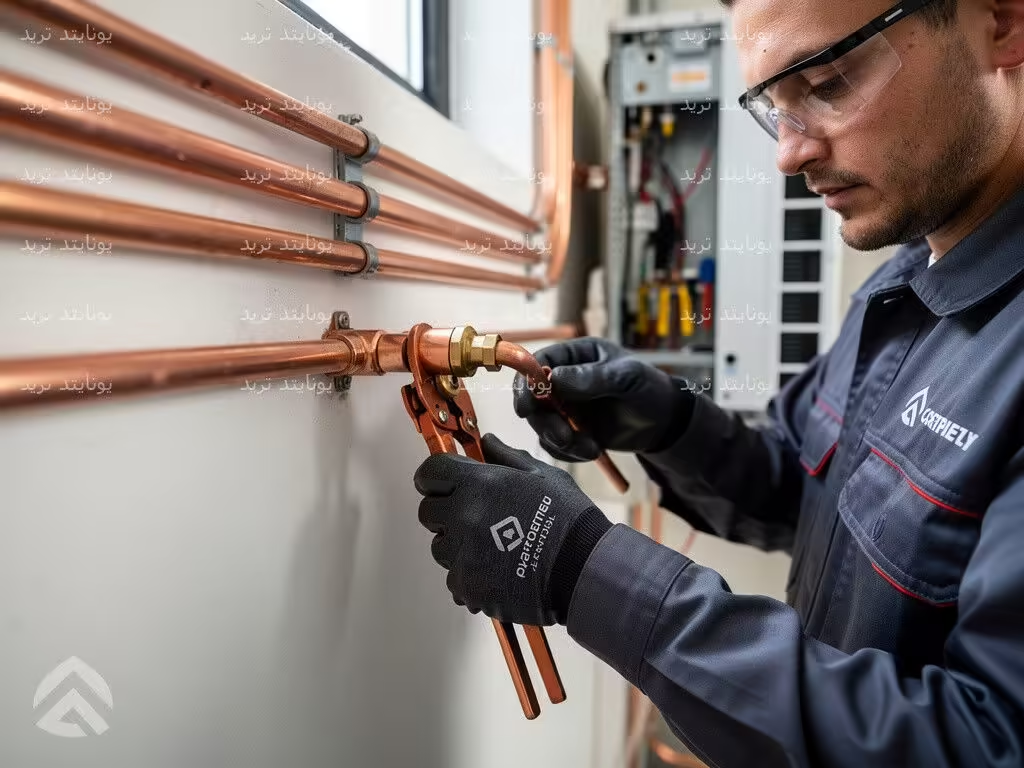
The process of extending air conditioning ducts is considered the main artery for the stable and long-term operation of the cooling cycle in residential and commercial facilities. This article explains the scientific and practical steps for installing Freon lines, with a focus on avoiding common mistakes that cause poor efficiency. Here you will learn how to adjust paths, choose the appropriate thicknesses, and protect pipes against structural damage to ensure the highest performance of your equipment.
Quick answer
Extending air conditioning ducts is the installation of an insulated copper piping network connecting the indoor and outdoor units to transfer the refrigerant with balanced efficiency. This procedure requires the use of pure, impurity-free copper with tight thermal insulation to avoid condensation and cooling decline. This process ensures that the compressor is protected from premature burnout and maintains constant gas pressure throughout the operating period.
What are the basic requirements before starting to extend copper lines?
The pre-installation phase requires careful architectural study of the module locations to determine the shortest and least curved path possible. Reducing the overall distance between the two units helps significantly reduce the mechanical stress on the air compressor. As a result, power consumption is reduced and the device's lifespan increases naturally and continuously.
Furthermore, the building walls and duct paths must be checked to avoid intersection with electrical installations or sewer pipes. This advance planning prevents any sudden mechanical damage to the cooling pipes during subsequent finishing work. In addition, it must be ensured that safe passage holes are provided using insulating plastic bushings that protect the metal ends from direct contact with the concrete.
Technical preparation steps to effectively extend cooling paths
The practical procedure begins with preparing the extension package consisting of the two suction and liquid lines and the electrical signal cable inside a flexible, moisture-resistant protective screed. This assembly ensures that the foam insulation is protected from tearing while being pulled into plaster walls or cavities. Therefore, the internal arrangement of the bundle is a crucial factor in preventing compression of one of the two tubes and changing its internal diameter.
The following order shows the correct steps for preparing the mechanical track:
- Cleaning the interior wall and determining the natural slope towards the outside to facilitate the drainage of moisture drops.
- Measure the actual distance accurately, adding five percent to cover the bend angles and final attachment points.
- Inserting copper tubes into the Armoflex insulator with a thickness of no less than nine millimeters for each tube individually.
- Close the ends of the pipes tightly with special tapes to prevent the entry of dust particles or structural moisture during pulling.
- Fix the net using rubber-lined metal jumpers at regular distances not exceeding one meter to avoid vibration.
Determining factors for choosing appropriate copper diameters and thicknesses
The choice of pipe diameter depends entirely on the horsepower capacity of the air conditioner specified by the manufacturer. It should be noted that any reduction in the diameter of the intake line leads to throttling of the return gas and overheating of the mechanical engine. On the other hand, excessive diameter slows the return of lubricating oil to the compressor, which threatens its rapid damage.
For example, two-ton wall air conditioners often use a five-eighths-inch tube for steam and a quarter-inch for pure liquid. Strict adherence to this compliance ensures a standard flow speed of the refrigerant compound that prevents the accumulation of mechanical grease in the corners of the evaporator. Therefore, you should always review the technical catalog before installing any sizes in walls and ceilings.
| Air conditioner capacity in tons | Recommended drag line diameter | Recommended liquid line diameter | Minimum thickness of copper wall |
|---|---|---|---|
| 1.5 tons (18,000 units) | 1/2 inch | 1/4 inch | 0.71 mm |
| 2.0 tons (24,000 units) | 5/8 inch | 1/4 inch | 0.81 mm |
| 2.5 tons (30,000 units) | 5/8 inch | 3/8 inch | 0.81 mm |
| 3.0 tons (36,000 units) | 3/4 inch | 3/8 inch | 0.89 mm |
Best thermal insulation practices to protect Freon pathways
Proficient thermal insulation protects the refrigerant from gaining external heat that impairs heat exchange within the suspended indoor unit. In other words, without high-density insulation, Freon will lose its coolness before it reaches the place it needs to be cooled and cooled. Moreover, the insulation prevents the formation of water dew drops on the surfaces of the pipes, which protects the gypsum ceilings from moisture and mold.
The approved specifications for gas line insulation include the following points:
- Separate the cold suction line from the warm liquid line completely and avoid collecting them inside one common insulating tube.
- Use specialized rubber adhesives at insulation joints to prevent moisture-laden air from leaking onto the metal surface.
- Covering external insulators exposed to the sun with aluminum protection tapes that are resistant to ultraviolet rays and disintegration.
- Visually inspect the insulating layer to ensure that it is free of any local compression that reduces its required effective thickness.
How do copper bending errors affect cooling efficiency?
Vigorous manual bending causes severe throttling in the inner duct of the tube, obstructing the free flow of compressed Freon gas. As a result, the pressure in the circuit rises before the throttling zone and the thermal efficiency of the cooling coils decreases significantly. It should be noted that correct bending always requires the use of radial mechanical benders that maintain a circular cross-section.
The next stage requires initiation Air conditioning installation According to engineering standards that ensure the secure installation of the internal and external units and that the connections conform to the technical specifications. Proper installation helps avoid mechanical vibrations and reduces stress on the cooling cycle, which maintains the efficiency of the device and extends its life.
In addition, microscopic cracks resulting from repeated bending of the pipe at the same point cause slow leakage that does not appear immediately. For example, a system may survive the initial soap check but gradually lose its charge after months of continuous operation. Therefore, copper pipes should be handled with caution and paths with gradual, wide-angle bends should be chosen.
The first construction phase requires extreme care when starting Installing air conditioning ducts Copper, to ensure its protection from damage during finishing works and pouring concrete. This includes identifying the shortest, least curved paths, while carefully insulating the lines to avoid thermal condensation and maintain the future cooling efficiency of the devices.
Regular maintenance of the cooling system is an indispensable necessity to ensure the safety of the pipes from corrosion or Freon gas leakage, as regular technical inspections contribute to maintaining the device’s performance and accurately adjusting operating pressures. Sticking to a schedule Air conditioning maintenance A preventive measure that extends the lifespan of the units and prevents sudden malfunctions that may affect the cooling efficiency.
The efficiency of the cooling system does not depend only on the quality of the installations, but also requires certification Regular air conditioning maintenance Ensures that operating indicators are monitored and any technical defect is addressed early. This procedure helps maintain stable Freon pressures and reduces high energy consumption, which prevents corrosion of delicate components and ensures that the system operates at its highest efficiency for many years.
requires Engineering planning of air conditioning paths Avoid passing cooling lines inside concrete floors as much as possible to reduce the risk of damage and difficulty of maintenance. When necessary, the pipes must be insulated and passed inside rigid PVC pipes to protect them from mechanical stresses and construction weights.
Completing this system efficiently requires attention to one stage Establishing copper pipes Inside the walls and ceilings before finishing the building, to ensure that they are not exposed to bending or blockage during subsequent construction work. Accurately performing this pre-extension and selecting the appropriate pipe diameters for each cooling capacity saves the owner the costs of future break-ins and repairs.
require Air conditioning maintenance Continuously inspecting the integrity of pipe connections and ensuring that they are free of any minute leaks that may lead to pressure erosion. Regular attention to the integrity of the paths ensures continued cooling efficiency and protects the system from sudden malfunctions resulting from Freon gas leakage.
The success of this establishment is not complete without developing a periodic plan that includes: Air conditioning maintenance air and regularly monitor its operational efficiency. Continuously checking gas pressure and cleaning filters and condensers ensures the integrity of the installations and prevents a decline in cooling performance over time.
Successful completion of the refrigeration cycle requires several steps Air conditioning installation According to precise technical standards, including securely fastening the internal and external units. Proper connection of electrical connections and adjustment of refrigerant flow ensures that the system operates at the highest energy efficiency and longest possible life.
It is a stage Establishing copper pipes Inside walls and ceilings is a crucial proactive step that precedes the final finishes, ensuring that the cooling network is protected from future mechanical damage. This procedure requires tightly insulating the lines and using diameters that match the cooling capacity of the units to ensure unobstructed flow of refrigerant.
Requires implementation of High efficiency air conditioning installation Taking into account the precise installation of the internal and external units and the tight connection of the copper network to ensure the flow of the refrigerant without any leakage. Controlling inclinations and securing electrical connections also contribute to enhancing system pressure stability and avoiding premature engine failure.
Pressure and vacuum tests to ensure extension integrity
Pressure testing the system with dry nitrogen gas is the critical step to verify that there is no porosity in the welding points. The procedure requires injecting the system with pressure of up to three hundred pounds per square inch and leaving it for at least twenty-four hours. On the other hand, it is absolutely prohibited to use oxygen gas or normal atmospheric air in this test to avoid the risk of explosion and oxidation.
Immediately after the successful pressure test, the air vacuum step comes using a vacuum pump to completely extract the moisture and non-condensable gases. This vacuum process prevents the interaction of water molecules with the cooling oil, a reaction that produces chemical acids that corrode the electric motor windings. Therefore, it is not permissible to rely on expelling the air using a traditional Freon spray, as some non-specialized technicians do.
Frequently asked questions
What is the maximum distance allowed when extending air conditioning ducts?
The standard distance ranges between ten to fifteen meters in most separate household air conditioners without the need to increase the oil charge. If the track exceeds this length, specific amounts of Freon gas must be added for each additional meter according to the manufacturer's schedule. This procedure ensures that the operating pressure reaches the required rate without stressing the components of the refrigeration cycle.
Can copper pipes be buried directly under tiles?
Copper pipes may not be buried directly under tiles without passing them inside rigid plastic pipes intended for mechanical protection. Cement compounds react with copper over time, causing chemical corrosion that leads to perforated pipes and gas leaks. Also, placing them inside ducts makes it easy to pull them out and replace them in the future when any emergency occurs without breaking the floors.
Why does the copper pipe sweat after turning on the air conditioner?
The pipe sweats due to the contact of the warm, humid atmospheric air with the cold copper surface, which lacks adequate insulation, and water condensation occurs immediately. This display indicates damage or tear in the Armoflex insulation surrounding the cold line in that specific area. The solution requires replacing the damaged part of the insulation and sealing its ends with moisture-proof tape.
When do we need to install an oil trap in the air conditioning network?
The need for an oil trap arises when the outdoor unit is higher than the indoor unit by a vertical distance exceeding three metres. This curved trap helps collect the mechanical oil and push it back towards the compressor by the force of the gas flow. This engineering solution prevents the compressor from being deprived of continuous lubrication and burning out due to oil being trapped inside the bottom evaporator.
Should I replace the old copper when replacing the air conditioner?
It is always recommended to replace the old copper grille if the new machine is running with a different refrigerant such as R410A or high pressure R32 gas. The oils used with these gases vary and are chemically incompatible with residual residues from old gases such as R22. A complete piping change avoids clogging of expansion valves and damage to the new compressor.
How do I know that the air conditioning pipes have a hidden leak?
A hidden leak usually appears as a gradual weakening of the air coming out of the unit, with a layer of ice forming on the outside intake line. In addition, dark oil spots may be observed over copper parts or contact points, where lubricating oil leaks out along with the gas. Electronic detectors and pressure gauges confirm the presence of this leak with complete accuracy.
Extending air conditioning ducts represents an engineering investment that requires precision in selecting materials and implementation in accordance with international cooling standards to avoid energy waste and recurring maintenance costs. Always ensure that certified technicians perform installations and nitrogen pressure tests before completing architectural finishes. Start today by inspecting your home's cooling ducts to ensure a comfortable summer and highly efficient cooling performance.
















TQTAG76 Community dialogue
0 comments