
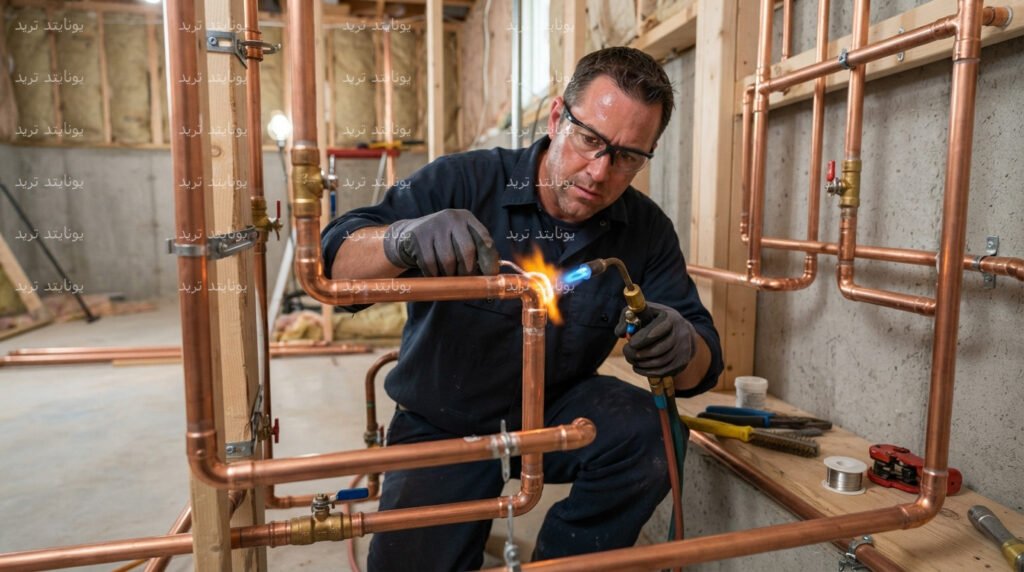
practical Installation of copper pipes It represents the basic foundation for ensuring the efficiency of air conditioning systems and preventing recurring malfunctions in the future. This article aims to explain the precise technical standards that must be followed during construction, highlighting approved materials and proper welding techniques. Adherence to these engineering rules ensures sustained cooling performance and protects your equipment from compressor fatigue caused by common installation errors.
Quality standards for materials used in extensions
Depends on quality Installation of copper pipes Directly ensures that materials comply with international standard specifications to ensure they can withstand high operating pressures. It is always recommended to rely on pipes that meet specifications ASTM B280 Or Japanese standard JIS-H3300 To obtain the best quality and purity of copper. Using poor quality materials exposes the system to the risk of internal corrosion and refrigerant leakage over time.
❓ The importance of high-density thermal insulation
Thermal insulation is an integral part of the foundation process, as it prevents water condensation inside the walls and protects pipes from external factors. Insulation of some type must be used Armaflex With a thickness ranging from 3/8 to 1/2 inch for maximum possible protection. This insulation keeps the refrigerant cool and prevents heat loss, which increases the overall efficiency of the system and extends the life of the piping.
Determine the diameters of pipes according to the air conditioning capacity
The diameter of the pipe must be chosen very precisely based on the capacity of the air conditioner in tons or horsepower according to the official manufacturer’s catalog. Choosing inaccurate sizes directly leads to compressor fatigue, causing a noticeable weakness in cooling performance. The following table shows a summary of the most important standards and technical specifications approved for professional establishment operations.
| Technical standard | 🏆 Editor's choice | Required specifications |
|---|---|---|
| Copper type | ASTM B280 ✓ | Globally approved |
| Insulation thickness | 1/2 inch ✓ | High density |
| Welding inside the wall | ✗ Forbidden | High risk |
| Nitrogen use | ✓ | Essential for protection |
| Overall evaluation | ★ 9.8/10 | Complete professionalism |
Important note: You must ensure that you obtain official approval from the air conditioner manufacturer before starting the installation to ensure that the warranty period applies to the device and installations. Skipping this step may result in losing free maintenance rights in the future, so make documenting the work a top priority.
Professional welding techniques to prevent leaks
It is strictly prohibited to perform any welding inside the walls to avoid the possibility of future leaks that will be difficult to access and maintain. requires Installation of copper pipes High skill in using welding flame with pass Nitrogen gas Inside the pipes during the operation. This step prevents the formation of internal oxides that often lead to system blockage and subsequent compressor damage.
The previous steps illustrate the optimal path for carrying out the work, as it begins with a careful inspection and ends with a final test to ensure that there are no pressure leaks before closing the walls permanently.
Advantages and disadvantages
Features:
- Ensuring the continuity of cooling with high efficiency for many years.
- Protect the compressor from damage resulting from incorrect operating pressures.
- Preventing water condensation and damage to walls thanks to good insulation.
- Maintaining the value of the official warranty for approved devices.
Disadvantages:
requires Installing effective air conditioning Choose copper pipes of approved thickness and conform to international specifications to ensure the flow of refrigerant without leakage. The technician's skill in implementing welding connections and ensuring thermal insulation is a crucial step to prevent energy loss and maintain the device's lifespan.
It requires a stage Installing air conditioning ducts Extreme care in choosing the shortest and safest paths within walls or floors to avoid sharp bends that impede the flow of the refrigerant. This procedure also requires installing copper lines with sturdy supports and applying tight thermal insulation before closing structural openings to prevent moisture condensation. This precise engineering setting contributes to maintaining system pressure and ensuring efficient cooling for many years.
These foundational equipments are integrated directly into the stage Air conditioning installation According to the correct technical principles, this step requires carefully adjusting the connections and installing the internal and external units professionally. Paying attention to the details of this stage ensures efficient circulation of the refrigerant gas and prevents any future leaks or vibrations.
Maintaining this level of efficiency is only complete through a regular, focused schedule Air conditioning maintenance Air and check the refrigeration cycle carefully. Early detection of any potential leakage or blockage in the filters avoids worsening malfunctions and extends the life of the operating units. This preventive measure ensures that fresh air continues to flow with the highest efficiency and lowest possible energy consumption.
It requires an operation Installation of copper pipes High engineering precision begins with choosing the appropriate diameters and goes through professional welding techniques to prevent any possible leakage of the cooling medium. Adherence to copper pipe installation standards ensures that gas flows completely smoothly, which enhances the efficiency of the system and prolongs its operational life for many years.
The importance of air conditioning care does not stop only at the establishment stage, but extends to include... Regular maintenance programs Which protects the device from corrosion and dust accumulation. A thorough inspection ensures continued cooling efficiency and extends the life of your compressor, avoiding unexpected costly repair costs.
Requires a step Installing air conditioning ducts Careful planning of the expansion paths and choosing the appropriate diameters compatible with the capacity of the devices to avoid a drop in the pressure of the refrigerant. This extension also requires that the lines be carefully insulated and securely fixed to avoid condensation and protect the network from vibration or mechanical damage in the long term.
Once you have proper establishment, stand out Air conditioning maintenance As a periodic necessity to maintain sustainable performance and avoid a decline in cooling capacity over time. Regular preventive inspection of internal components and cleaning of filters directly contribute to extending the life of the device and reducing energy consumption.
It requires a stage Installing air conditioning ducts Careful planning of the paths inside the walls and floors to avoid sharp bends that may impede the flow of the refrigerant. It is also required to use high-quality thermal insulators to protect the installations from water condensation and damage over time, which maintains stable pressure within the circuit and overall cooling efficiency.
- Higher initial establishment cost compared to uncertified raw materials.
- It requires trained workers and specialized technicians to ensure that standards are implemented.
- Difficulty in correcting errors after completing the plastering or painting process.
❓ Editor's judgment and final rating
The overall rating for the process is 9.6/10. Investing in high-quality materials and applying stringent installation standards is an imperative choice for anyone looking for sustainable cooling performance. This option is specifically suitable for new buildings and villas that seek to maintain the efficiency of their equipment and reduce regular maintenance bills.
Requires implementation of Air conditioning installation With high efficiency, taking into account the ideal air distribution within the space and installing the internal and external units according to requirements that prevent vibration and noise. Drainage paths and electrical connections must also be carefully checked before operation to ensure stability of the cooling cycle and long-term protection of mechanical components.
Frequently asked questions
❓ What are the risks resulting from not insulating copper pipes?
Failure to insulate the pipes leads to water condensation around them, causing moisture in the walls and damage to the paint, in addition to a decrease in cooling efficiency due to energy loss.
❓ Can copper pipes be installed with a diameter smaller than the recommended one?
No, you must adhere to the pipe diameter specified in the air conditioner catalog; Because using a smaller diameter increases the operating pressure and causes the compressor to wear out quickly.
❓ How do I ensure that copper pipes do not leak?
The real guarantee comes from conducting a careful pressure test of the pipes before closing the walls, completely refraining from welding inside the wall, and using approved copper materials.
❓ Why is nitrogen gas used during welding?
Nitrogen gas is used to prevent the formation of copper oxides inside the pipes, which deposit over time and lead to clogging of the expansion valves and damage to the refrigeration cycle.
❓ When should old copper pipes be replaced?
It is recommended to replace the pipes if they show signs of corrosion, have lost their elasticity, or when an air conditioner with a significantly higher cooling capacity than the previous one is installed.
Follow these technical directions when implementing Installation of copper pipesYou will ensure optimal cooling performance and avoid high maintenance costs. Do not hesitate to request a specialized technician to evaluate the extensions and ensure that they comply with the required specifications.
















Community dialogue
0 comments